Indian Markets Tumble as Middle East Conflict Escalates

Synopsis
On March 6, the Indian stock markets experienced significant losses, driven by escalating tensions in the Middle East. The Sensex and Nifty both fell sharply, reflecting investor apprehension amid geopolitical instability.
Key Takeaways
Sensex fell by 1,097 points, closing at 78,918.
Nifty declined by 315 points, ending at 24,450.
Market volatility increased, with India VIX rising over 11 percent.
Geopolitical tensions significantly impacted investor sentiment.
Oil prices surged sharply due to ongoing conflicts.
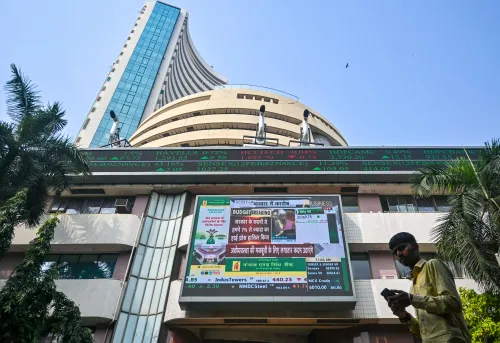
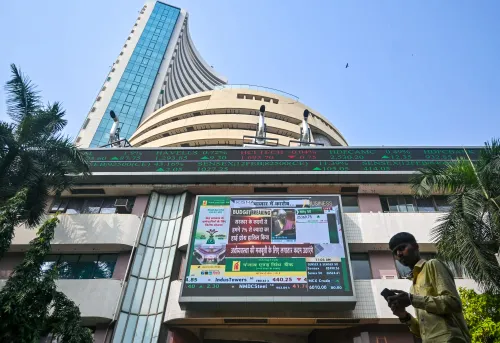
Mumbai, March 6 (NationPress) The Indian stock markets faced significant declines on Friday, primarily due to the escalating conflict between the US–Israel and Iran, now in its seventh day.
By the end of trading, the Sensex dropped by 1,097 points, equivalent to a 1.37 percent decrease, concluding at 78,918. Meanwhile, the Nifty index fell 315 points or 1.27 percent, settling at 24,450. The Nifty bank sector experienced substantial selling pressure, plummeting by 2.15 percent to close at 57,783.
The broader market reflected similar trends, with the Nifty Midcap 100 index declining by 0.63 percent, and the NSE Smallcap 100 index seeing a minor drop of 0.11 percent. The Nifty Next 50 also fell, losing 0.34 percent.
In contrast, shares of microcap companies showed some strength, as the Nifty Microcap 250 index only decreased by 0.08 percent.
Most sectoral indices closed in the red, with the exceptions being FMCG and IT, which saw slight gains. The Nifty private bank, PSU bank, and real estate sectors were among the largest losers, down by 2.19 percent, 2.11 percent, and 1.91 percent, respectively.
Defence stock prices and select public sector enterprises surged by as much as 9 percent on the National Stock Exchange (NSE).
Out of the 4,357 stocks listed on the BSE, 1,833 rose, 2,355 fell, and 169 remained unchanged. A total of 180 stocks reached their upper circuit limits while 162 hit their lower circuit.
The Indian rupee depreciated by 0.09 percent against the US dollar, ending the day at 91.84 per dollar.
Global oil rates soared as Iran launched missiles and drones across the Gulf, targeting an oil refinery in Bahrain. Brent crude recorded an intraday peak above $86, while US crude finished above $81 per barrel after an 8.5 percent surge last night.
Market analysts indicated that the 24,500 level is crucial support for the Nifty index, while key resistance levels for the Nifty Bank are identified at 59,000 and 58,500.
Market volatility surged sharply, with the India VIX increasing by over 11 percent compared to the previous close, indicating rising unease among investors and a noticeable shift towards risk-averse strategies, as noted by analysts.
aar/na
Point of View
Maintaining a cautious yet informed stance is crucial for navigating these turbulent times. The situation calls for a vigilant approach to investment strategies amid rising market uncertainties.
NationPress
13 Oct 2026
Frequently Asked Questions
What caused the recent drop in the Indian stock markets?
The decline in the Indian stock markets was primarily triggered by escalating tensions in the Middle East, particularly the ongoing conflict involving the US–Israel and Iran.
What were the closing figures for Sensex and Nifty?
The Sensex closed down by 1,097 points at 78,918, while the Nifty fell by 315 points to finish at 24,450.
How did the broader market perform?
The broader market mirrored the benchmark indices, with the Nifty Midcap 100 losing 0.63 percent and the NSE Smallcap 100 declining by 0.11 percent.
Which sectors were the biggest losers?
The Nifty private bank, PSU bank, and realty sectors were the top losers, declining by 2.19 percent, 2.11 percent, and 1.91 percent, respectively.
What impact did the geopolitical situation have on oil prices?
Oil prices surged as Iran launched missiles across the Gulf, hitting an oil refinery in Bahrain, with Brent crude reaching an intraday high above $86.