India's 100 GW nuclear push by 2047 opens doors for global firms
Synopsis
India wants to grow its nuclear fleet more than tenfold, from 8.9 GW to 100 GW by 2047. An EY-Parthenon study says the opportunity favours global firms that bring technology, localisation and patience rather than those seeking ownership or quick sales. The Kalpakkam fast breeder could make India only the second nation after Russia to run one commercially.
Key Takeaways
India plans to expand nuclear capacity from about 8.9 GW to 100 GW by 2047 .
An EY-Parthenon study advises global firms to pursue compliant partnerships in technology, localisation and execution rather than direct ownership.
Small modular reactors and Bharat small reactors are seen as key to 24x7 clean power for industry.
India announced a 900 GW non-fossil ambition in late September, nearly double its 500 GW by 2030 target.
India ranks third globally in clean power capacity at just over 300 GW , behind China and the US.
A fully operational PFBR at Kalpakkam would make India the second country after Russia to run a commercial fast breeder reactor.
India's plan to scale up nuclear power capacity to 100 GW by 2047 could transform nuclear energy from a niche contributor into a core pillar of the country's low-carbon power system, according to a new report. The report, published by Gulf Today and citing an EY-Parthenon study, says the expansion creates major opportunities for global technology providers, investors and industrial users willing to commit to long-term partnerships.
India currently operates about 8.9 GW of nuclear capacity. Reaching the 100 GW target would require a large build-out over the next two decades, supported by a diversified reactor mix.
Nuclear as Firm Power for the Grid
The report presents nuclear energy as a reliable baseload source that can complement intermittent renewables. “Nuclear energy is being positioned as a firm power source that can complement renewables and support energy security, grid stability and decarbonization,” the report said, citing the EY-Parthenon study.
This matters because solar and wind output varies with weather and time of day. Nuclear's round-the-clock generation profile could help balance a grid that is adding renewable capacity rapidly.
What Global Players Are Being Advised
According to the report, global nuclear companies would do better with compliant partnerships focused on technology, localisation and project execution than by seeking direct ownership of assets.
“The country’s emerging nuclear ecosystem will likely reward players that bring technology, capital, localization, safety culture and long-term partnership intent. The most credible strategies may be those that align with India’s sovereign priorities while solving real project-level challenges – cost, execution, financing and industrial demand,” the report noted.
The report also cautioned international nuclear companies against treating India as a short-term vendor market. It said newer models such as small modular reactors and Bharat small reactors could be important for industrial decarbonisation because they can supply 24x7 clean power.
India's Wider Clean Energy Targets
The nuclear ambition sits within a larger clean energy push. India has set a goal of installing clean power to supply over 1 billion homes by 2035. It has also approved nearly $20 billion in power grid upgrades to ease bottlenecks that stop some solar and wind energy from reaching consumers.
In late September, India announced a 900-gigawatt ambition for non-fossil power sources, including solar, wind, hydropower and nuclear energy. That is nearly double its existing target of 500 gigawatts of clean power by 2030.
The shift follows a global move toward cleaner power. India's current clean power capacity of just over 300 gigawatts ranks it third in the world, behind China and the United States.
Kalpakkam Breeder Reactor Signals Technical Maturity
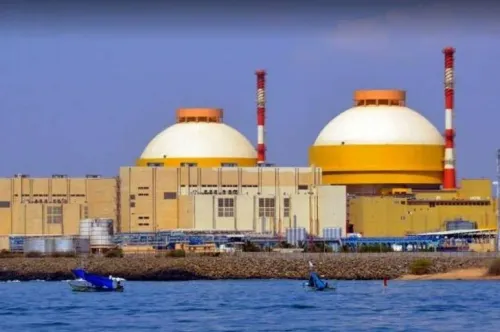
The report praised progress at India's indigenously designed and built Prototype Fast Breeder Reactor (PFBR) at Kalpakkam. It said the project shows growing confidence in the country's advanced reactor technology.
Once the PFBR is fully operational, India will become only the second country in the world, after Russia, to operate a commercial fast breeder reactor, the report added.
The pace of new reactor approvals, partnership frameworks and project financing will show whether the 100 GW goal can move from projection to delivery over the next two decades.
Point of View
Held back for decades by cost overruns, liability concerns and slow project execution. The report's advice to foreign firms to partner rather than own quietly acknowledges that sovereign control will stay non-negotiable, which may limit how much private capital actually arrives. Kalpakkam's breeder reactor is a real technological milestone, but the 100 GW goal will be decided by financing models and construction timelines, not ambition alone.
NationPress
26 Nov 2026
Frequently Asked Questions
What is India's nuclear power target for 2047?
India aims to expand its nuclear power capacity to 100 GW by 2047, up from about 8.9 GW today. The expansion is expected to rely on a diversified mix of reactor technologies.
Why does the report say India's nuclear plan matters for global investors?
An EY-Parthenon study cited in the report says the expansion creates large opportunities for global technology providers, investors and industrial users seeking long-term partnerships. It advises compliant partnerships in technology, localisation and execution rather than direct ownership.
What role will small modular reactors play in India?
Small modular reactors and Bharat small reactors could be key to industrial decarbonisation by supplying 24x7 clean power, according to the report. It cautions foreign firms against treating India as a short-term vendor market.
What is the Prototype Fast Breeder Reactor at Kalpakkam?
It is an indigenously designed and built advanced reactor at Kalpakkam. Once fully operational, India will become only the second country after Russia to operate a commercial fast breeder reactor.
What are India's overall clean energy targets?
India announced a 900 GW non-fossil power ambition in late September, nearly double its existing target of 500 GW of clean power by 2030. Its current clean power capacity of just over 300 GW ranks third globally, behind China and the United States.