India's cooking gas prices remain world's lowest, govt data shows
Synopsis
India's domestic LPG price hasn't moved even as the global benchmark surged 46% since February — the Strait of Hormuz closure pushed Saudi LPG contract prices from $543 to $790 per tonne, yet PMUY households still pay ₹642 per cylinder against a supply cost exceeding ₹1,600. The widening gap raises pointed questions about how long this subsidy buffer can hold.
Key Takeaways
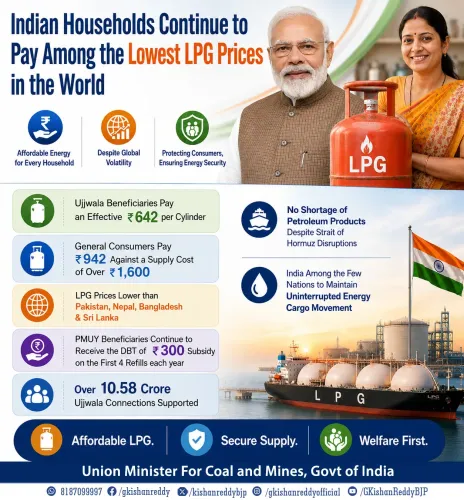
PMUY beneficiaries pay an effective ₹642 per 14.2 kg cylinder after a ₹300 DBT on the first four refills annually.
General consumers in Delhi pay ₹942 per cylinder, against a supply cost now exceeding ₹1,600 .
The blended LPG benchmark has risen approximately 46% since February 2025 , driven by the Strait of Hormuz closure.
The Saudi Contract Price for LPG climbed from $543 per tonne in February to $790 per tonne in June.
India imports roughly 60% of its LPG requirements, making it directly exposed to international price swings.
Commercial cylinder prices are revised monthly in line with global benchmarks; domestic cylinder prices are not.
The Petroleum Ministry on Sunday, 7 June stated that Indian households continue to pay among the lowest prices for cooking gas globally — cheaper than any neighbouring country and well below rates in advanced economies such as the United States, Australia, and Canada. The announcement comes amid a sharp rise in international LPG benchmark prices following disruptions in the Strait of Hormuz.
What Consumers Are Actually Paying
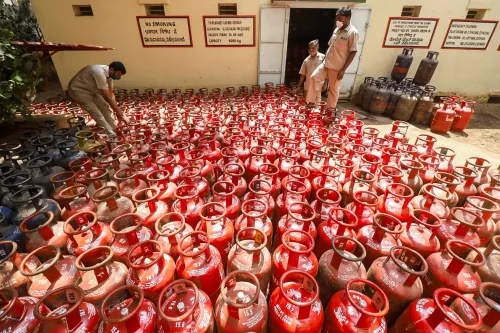
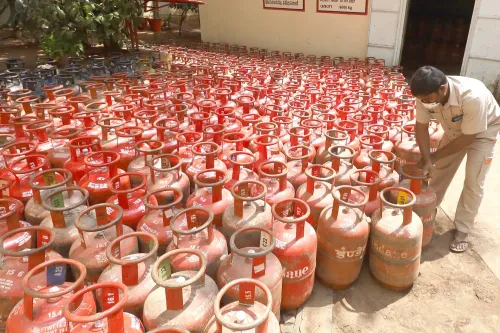
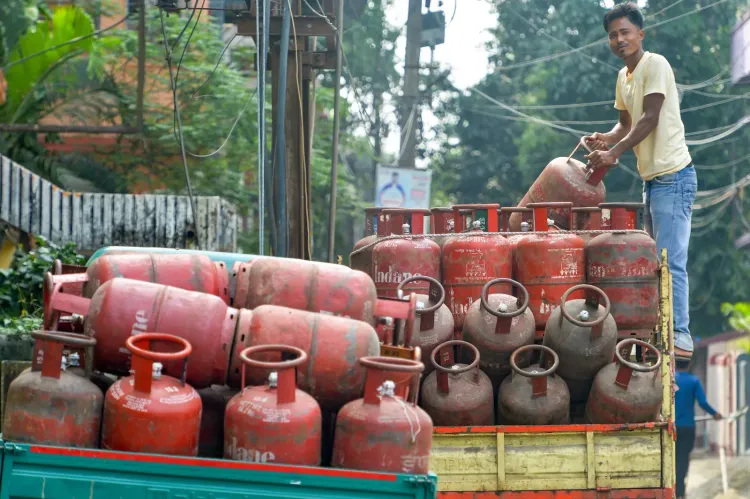
A beneficiary under the Pradhan Mantri Ujjwala Yojana (PMUY) pays an effective ₹642 for a 14.2 kg domestic cylinder, after accounting for a direct benefit transfer (DBT) of ₹300 per cylinder on the first four refills each year. The general consumer in Delhi pays ₹942 per cylinder. By contrast, the actual cost to supply the same cylinder has climbed to over ₹1,600, according to the ministry.
'This support is unchanged. Even a non-PMUY household would pay about ₹700 below the market-linked cost of the cylinder. Retail prices differ marginally across locations on account of distribution costs,' the ministry said in a statement.
How the Global Price Surge Has Widened the Gap
India historically imports around 60 per cent of its LPG requirements, with the landed cost tracking the Saudi Contract Price (CP) set monthly by Saudi Aramco. Expressed as the 50:50 propane-butane blend used for India's LPG supply, the Saudi CP stood at approximately $543 per tonne in February — before geopolitical disruption reshaped the market.
Following the closure of the Strait of Hormuz in late February, the April contract price — the first set after the disruption tightened Mideast Gulf exports — surged to $775 per tonne, with propane at $750 and butane at $800. By June, the blended benchmark had edged further to $790 per tonne. The blended LPG benchmark has thus risen by approximately 46 per cent since the pre-crisis February level, and the cost of the imported molecule has risen with it, the ministry noted.
Domestic vs Commercial Pricing: A Key Distinction
The ministry clarified that commercial cylinders — used by hotels and businesses — are revised automatically every month as a direct pass-through of the international benchmark price. The domestic cooking cylinder, however, is not subject to this automatic revision. The government continues to modulate the effective price to the consumer for domestic LPG, absorbing the gap between supply cost and retail price.
What This Means for Households
Any household — PMUY or otherwise — can purchase as many cylinders as needed at ₹942. The PMUY subsidy structure is designed to broadly cover the average annual consumption of a typical Ujjwala household, estimated at around four refills per year. This effectively brings the per-cylinder cost down to ₹642 for the most economically vulnerable consumers. With the international benchmark up nearly half since February, the implicit subsidy burden on the government has grown considerably — a fiscal dimension the ministry did not quantify in its statement. How long the current price support holds will depend on whether global LPG prices stabilise or continue their upward trajectory.
Point of View
600 per cylinder, the government is absorbing a widening gap that it has not quantified publicly. The PMUY DBT architecture is sound in design, but the silence on total subsidy outlay — at a time of sustained Hormuz-linked price pressure — is a conspicuous omission. India's LPG pricing has historically been a political third rail; the real question is whether the current buffer is a policy commitment or a pre-election posture that becomes harder to sustain if $790-per-tonne benchmarks persist into Q3.
NationPress
23 Oct 2026
Frequently Asked Questions
What is the current LPG cylinder price for PMUY beneficiaries in India?
A Pradhan Mantri Ujjwala Yojana (PMUY) beneficiary pays an effective ₹642 for a 14.2 kg domestic cylinder, after receiving a direct benefit transfer of ₹300 per cylinder on the first four refills each year. The general consumer in Delhi pays ₹942 per cylinder.
Why is India's cooking gas price so much lower than the supply cost?
The government actively moderates the retail price of domestic LPG, absorbing the difference between the market-linked supply cost — now over ₹1,600 per cylinder — and the consumer price. This implicit subsidy has grown as international LPG benchmarks have surged following the Strait of Hormuz disruption.
How has the Strait of Hormuz closure affected LPG prices?
The closure of the Strait of Hormuz in late February tightened Mideast Gulf LPG exports, pushing the Saudi Contract Price from roughly $543 per tonne in February to $775 per tonne in April and further to $790 per tonne by June — a rise of approximately 46% in the blended benchmark.
Are commercial LPG cylinder prices also regulated like domestic ones?
No. Commercial cylinders used by hotels and businesses are revised automatically every month as a direct pass-through of the international benchmark price. Only the domestic cooking cylinder price is modulated by the government and shielded from automatic monthly revisions.
How much of India's LPG does it import?
India imports approximately 60% of its LPG requirements. The landed cost of these imports tracks the Saudi Contract Price set monthly by Saudi Aramco, making Indian supply costs directly sensitive to global price movements.