India energy security backed by diversified oil imports, says ex-BPCL director
Synopsis
A former BPCL insider has laid out how India kept petrol, diesel, and LPG flowing to 33 crore households despite global crude prices surging 150 per cent — through diversified sourcing, inter-ministry coordination, and 11 years of infrastructure investment that rarely makes headlines.
Key Takeaways
Former BPCL Marketing Director Sukhmal Kumar Jain says India's energy security has become a robust and resilient system backed by diversified crude imports.
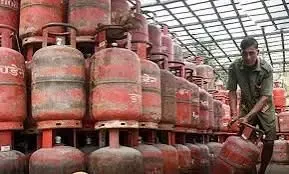
India expanded LPG imports to Argentina , the United States , Algeria , and Japan , shielding 33 crore LPG households and 8 crore petrol pump customers from supply disruptions.
Global crude prices rose by nearly 150 per cent during the period under review; India's twin priorities were availability and affordability .
Coordination among the Ministry of External Affairs , Ministry of Petroleum and Natural Gas , Indian Oil , BPCL , and Hindustan Petroleum was cited as the backbone of crisis management.
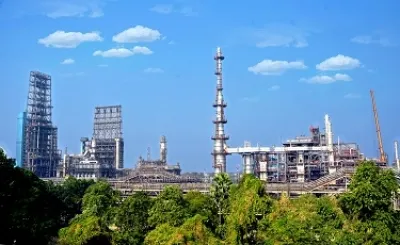
India has invested in refinery modernisation, pipeline infrastructure, LNG terminals , and strategic petroleum reserves over the past 11 years .
India's energy security framework has matured into a robust and resilient system, underpinned by diversified crude oil imports, expanded refining capacity, and tightly coordinated crisis management, former Bharat Petroleum Corporation Limited (BPCL) Marketing Director Sukhmal Kumar Jain said on 1 July in New Delhi. Jain's assessment offers a rare insider account of how India navigated successive global supply shocks without triggering domestic fuel shortages.
How India Diversified Its Energy Sources
According to Jain, the government significantly strengthened the country's energy ecosystem over the past decade by broadening crude oil import sources, scaling up refining capacity, building out strategic petroleum reserves, and deepening coordination among public sector oil marketing companies. He noted that India maintained active engagement with all international energy partners to keep fuel flows uninterrupted.
'During periods of global uncertainty and supply disruptions, continuous monitoring, alternative supply arrangements and timely decision-making ensured that the availability of petrol, diesel and LPG remained unaffected across the country,' Jain said.
LPG Imports Expanded to New Geographies
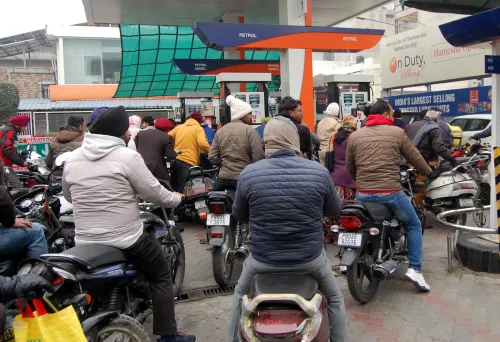
On the LPG front, India significantly expanded its import basket to include Argentina, the United States, Algeria, and Japan, reducing dependence on any single corridor. The result, Jain said, was that roughly 33 crore LPG households and nearly 8 crore petrol pump customers did not face any major supply disruptions. LPG cargoes continued to reach India safely even as global freight and supply chains came under stress.
Availability and Affordability: The Twin Priorities
'The first priority was ensuring availability, which is a key factor for any commodity. The second factor is affordability. As we all know, global crude prices increased by almost 150 per cent,' Jain said. The dual mandate — keeping shelves stocked while cushioning consumers from price volatility — shaped every policy decision during the crisis period, he added.
Inter-Ministry Coordination Was the Backbone
Jain credited the synergy between the Ministry of External Affairs, the Ministry of Petroleum and Natural Gas, shipping agencies, and oil companies — including Indian Oil, Bharat Petroleum, and Hindustan Petroleum — as the single biggest strength during challenging periods. Regular review meetings allowed authorities to monitor fuel stocks, respond to emerging gaps, and communicate accurate information to the public, preventing panic buying or unnecessary stockpiling.
Decade of Infrastructure Investment Paying Off
Over the past 11 years, India has made substantial investments in refinery modernisation, pipeline infrastructure, LNG terminals, city gas distribution networks, and strategic petroleum reserves, Jain noted. These investments, he argued, have materially enhanced India's preparedness to absorb future supply disruptions — positioning the country to respond faster and with greater flexibility than in previous decades. As global energy markets remain volatile, the resilience built through this infrastructure push is expected to serve as a critical buffer in the years ahead.
Point of View
And they deserve to be read in that light. The claim that 33 crore households faced no major supply difficulty is significant — but it sits alongside the equally significant admission that global crude prices rose 150 per cent, a pass-through burden that Indian consumers did absorb through elevated retail prices. The real story is not just that supply held; it is the fiscal and diplomatic cost of holding it. India's diversification into LPG from Argentina and Japan is a structural shift that rarely gets attention — and it signals a quiet but meaningful reorientation of energy diplomacy away from traditional Gulf dependence. The 11-year infrastructure investment narrative also raises a pointed question: if the system is now this resilient, why do retail fuel price revisions still lag crude movements so asymmetrically?
NationPress
1 Jul 2026
Frequently Asked Questions
What did former BPCL Marketing Director Sukhmal Kumar Jain say about India's energy security?
Jain said India's energy security has evolved into a robust and resilient system supported by diversified crude oil imports, expanded refining capacity, and coordinated crisis management. He made these remarks on 1 July in New Delhi, drawing on his experience overseeing fuel supply during periods of global disruption.
How did India ensure uninterrupted LPG supply during global supply disruptions?
India expanded its LPG import sources to include Argentina, the United States, Algeria, and Japan, reducing dependence on any single corridor. Close coordination between the Ministry of External Affairs, the Ministry of Petroleum and Natural Gas, shipping agencies, and oil companies ensured cargoes continued to reach India safely.
How many Indian households were protected from LPG supply disruptions?
According to Jain, approximately 33 crore LPG households and nearly 8 crore petrol pump customers did not face any major supply difficulties, even as global markets came under stress.
What infrastructure investments has India made to strengthen energy security?
Over the past 11 years, India has invested in refinery modernisation, pipeline infrastructure, LNG terminals, city gas distribution networks, and strategic petroleum reserves. These investments, Jain said, have significantly enhanced the country's ability to absorb future supply disruptions.
By how much did global crude prices rise during the period Jain referred to?
Global crude prices rose by almost 150 per cent during the period under review, according to Jain. He said ensuring both availability and affordability of fuel remained India's twin priorities throughout this period.