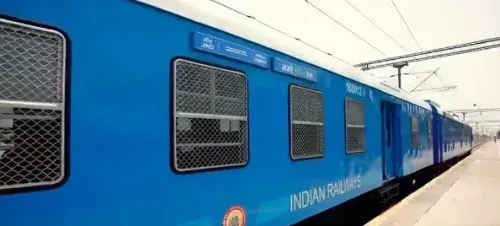
India's hydrogen train covers 1,200 km, cuts 3,200 litres of diesel
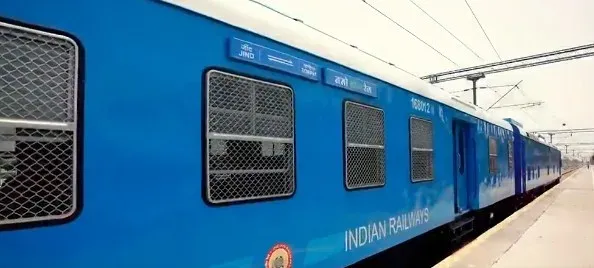
Synopsis
India's first indigenous hydrogen train has crossed 1,200 km in operation while saving over 3,200 litres of diesel — and the Railways has quietly retained the IP rights, setting up a potential export play. With Delhi trials next and a 2,400 kW propulsion system built entirely in-house, this is less a technology demo and more a strategic bet on hydrogen as India's next rail export.
Key Takeaways
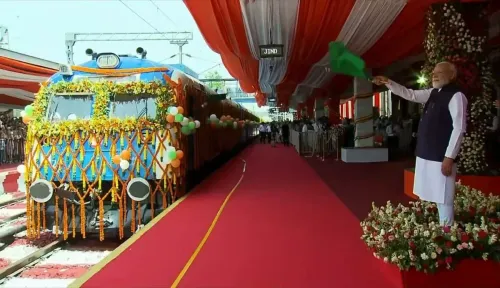
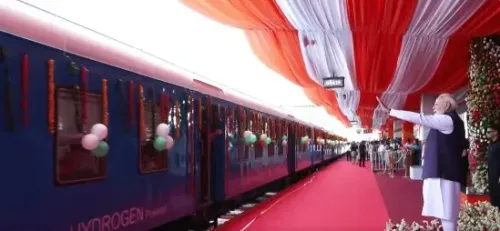
India's first hydrogen train — a 10-coach indigenous model — has covered over 1,200 km , saving more than 3,200 litres of diesel.
The train runs on a 2,400 kW hydrogen propulsion system with zero tailpipe carbon emissions , emitting only water vapour.
Green hydrogen is stored at up to 500 bar , with a total capacity of approximately 3,000 kg .
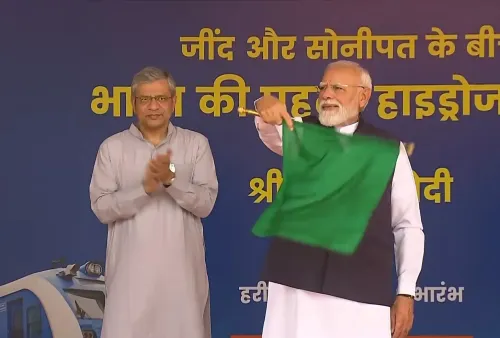
Successful trials conducted on the Jind–Sonipat corridor; Delhi route trials are expected to begin soon.
Union Minister Ashwini Vaishnaw confirmed India has retained full IP rights , paving the way for future technology exports.
India's first hydrogen-powered train — an indigenous 10-coach model that emits only water vapour — has successfully completed over 1,200 kilometres of operation, saving more than 3,200 litres of diesel in the process, according to an official statement released on Saturday, 25 July. The milestone marks a significant step in Indian Railways' push toward zero-emission rail mobility.
How the Technology Works
The train generates electricity onboard through a chemical reaction between hydrogen and oxygen, producing water vapour as its only by-product. The process is entirely smoke-free, with zero tailpipe carbon emissions — making it the cleanest form of rail propulsion currently in operation in India.
The locomotive is powered by two hydrogen driving power cars delivering a combined output of 2,400 kW, supported by lithium iron phosphate batteries and dedicated hydrogen cylinders. Green hydrogen is stored at pressures of up to 500 bar, dispensed at 350 bar, with a total storage capacity of approximately 3,000 kg.
Safety Systems and Standards
Multiple independent safety systems are integrated into the train to detect leaks, heat, flames, and smoke. These are backed by automatic shut-off mechanisms, continuous ventilation, and compliance with international safety standards and all mandatory validation protocols — addressing a key concern around hydrogen's flammability in enclosed rail environments.
Trials and the Road Ahead
The train has already demonstrated successful operation on the Jind–Sonipat corridor. According to the official statement, trials on the Delhi route are expected to begin soon, signalling a broader rollout ambition.
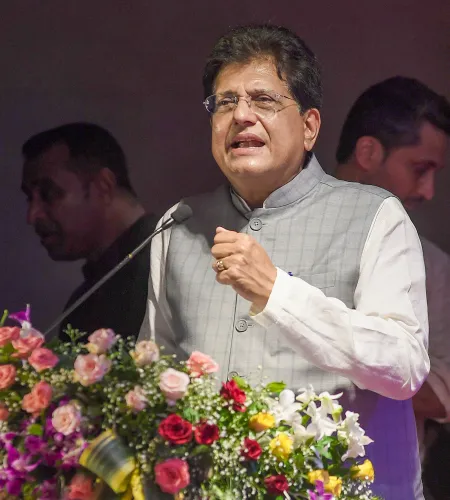
Union Minister for Railways Ashwini Vaishnaw confirmed that India has retained full intellectual property (IP) rights over the hydrogen train technology, opening the door for potential exports. 'Railways has developed a complete 2,400 kW hydrogen propulsion system for the transportation sector, which has been fitted in this train. This technology is completely indigenous and reflects the vision of an 'Aatmanirbhar Bharat',' Vaishnaw said.
India's Larger Hydrogen Rail Ambition
This is not an isolated project — it is the centrepiece of Indian Railways' effort to build an end-to-end indigenous hydrogen rail ecosystem. Vaishnaw noted that hydrogen is emerging as a critical fuel globally, and the Railways has undertaken several initiatives to promote its adoption across the sector. Notably, by retaining IP rights, India positions itself not merely as a consumer of clean technology but as a potential exporter — a rare distinction in the global green mobility race.
With Delhi route trials on the horizon and export potential now formally acknowledged, the hydrogen train programme is poised to move from proof-of-concept to policy centrepiece.
Point of View
200-km milestone is credible and the technology is genuinely significant — but the more consequential detail is the IP retention. Most large infrastructure nations import clean-tech and pay royalties for decades; India has structured this so it can flip that equation. The real test, however, is scalability: a single corridor demonstration between Jind and Sonipat is a long way from a national hydrogen rail network, and the infrastructure for green hydrogen production and dispensing at scale does not yet exist. The Delhi route trial will be the first stress test of whether this is a replicable system or a well-engineered showcase.
NationPress
25 Jul 2026
Frequently Asked Questions
What is India's first hydrogen train and how does it work?
India's first hydrogen train is an indigenous 10-coach model that generates electricity through a chemical reaction between hydrogen and oxygen, emitting only water vapour. It is powered by two hydrogen driving power cars delivering 2,400 kW, supported by lithium iron phosphate batteries and green hydrogen stored at up to 500 bar.
How far has the hydrogen train travelled and what fuel has it saved?
The train has successfully covered over 1,200 kilometres, saving more than 3,200 litres of diesel consumption in the process, according to an official Ministry of Railways statement issued on 25 July.
Where has the hydrogen train been tested and where will trials happen next?
The train has completed successful operations on the Jind–Sonipat corridor. According to the official statement, trials on the Delhi route are expected to begin soon.
Does India own the technology behind the hydrogen train?
Yes. Union Minister Ashwini Vaishnaw confirmed that India has retained full intellectual property rights over the indigenous hydrogen train technology, which he said paves the way for future exports.
Why is the hydrogen train considered a clean technology?
The train produces zero tailpipe carbon emissions, with water vapour as its only by-product. The process is smoke-free and uses green hydrogen, making it the cleanest form of rail propulsion currently available in India.