Unlocking a ₹3 Lakh Crore Opportunity: Jal Jeevan Mission 2.0
Synopsis
The Jal Jeevan Mission 2.0 is set to unlock a staggering ₹3 lakh crore in operations and maintenance opportunities, transforming rural water supply management and ensuring sustainable access to clean drinking water.
Key Takeaways
Jal Jeevan Mission 2.0 focuses on sustainable water management.
It aims to create Rs 3 lakh crore in operations and maintenance opportunities.
Funding has increased to Rs 8.69 lakh crore, more than doubling the original outlay.
Implementation timeline extended to December 2028 .
Local governance plays a vital role in service delivery.
New Delhi, March 24 (NationPress) The Jal Jeevan Mission 2.0 is poised to create an astonishing Rs 3 lakh crore opportunity in operations and maintenance as it transitions from merely constructing infrastructure to ensuring sustainable management of water connections, according to a report released on Tuesday.
The report by ICRA highlighted that the mission's total funding has more than doubled to Rs. 8.69 lakh, and the shift towards a service delivery model will benefit the Engineering, Procurement, and Construction (EPC) sector.
Moreover, the extension of timelines and increased funding is expected to enhance receivable cycles, aiming to reduce them to below 60 days by September 2026, compared to the current delays of over six months in various states.
The implementation goal for achieving 100 percent coverage for 19.4 crore rural households has been postponed to December 2028, moving from the earlier target of 2024.
Organized manufacturers with the capability to scale production, particularly in the PVC (polyvinyl chloride) and HDPE (high-density polyethylene) sectors, are set to gain from this transition.
This new focus on functionality, operational uptime, and energy efficiency favors brands with robust service networks and technical expertise.
From FY25 onward, significant reductions at the revised estimate stage have highlighted a stark contrast between allocated budgets and actual spending, revealing execution challenges, quality issues, and a policy shift towards sustainable service delivery.
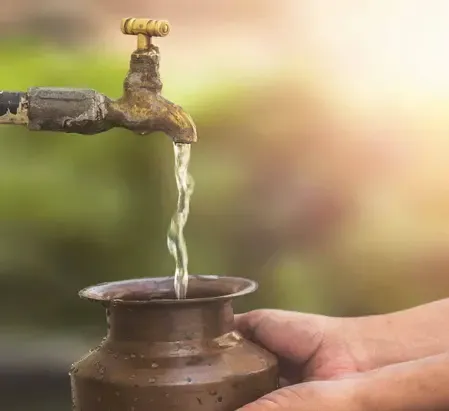
The Jal Jeevan Mission (JJM), initiated in August 2019, aims to ensure access to safe and adequate drinking water through tap connections and is an extension of the National Rural Drinking Water Programme.
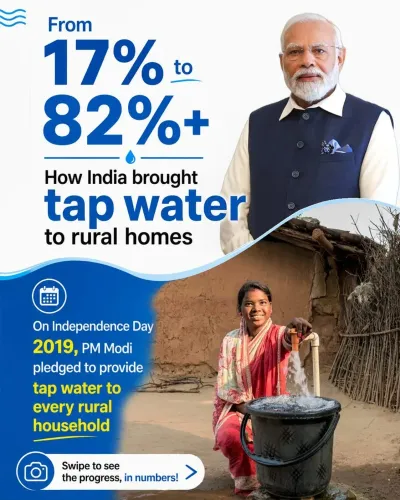
Since its inception, the number of households with tap water connections has surged nearly fivefold from 323.6 lakh to 1,582.3 lakh, increasing rural coverage to over 81 percent as of February 2026.
Despite achieving high coverage, the ongoing presence of deficiencies has made the shift to a quality-service approach essential, as noted by the firm.
JJM 2.0 emphasizes dependable service delivery through operational and maintenance systems, water quality monitoring, and digital oversight via the Sujalam Bharat platform.
Additionally, it places Gram Panchayats and local institutions at the forefront of implementation, treating rural water supply as an essential local public utility rather than a one-off infrastructure endeavor.
aar/pk
Point of View
I believe the Jal Jeevan Mission 2.0 represents a significant shift towards sustainable water management in rural India. The financial implications are profound, and the emphasis on quality service delivery marks a progressive approach to public utilities. This mission is not just about infrastructure; it’s about creating a reliable system that prioritizes the needs of rural communities.
NationPress
25 Sept 2026
Frequently Asked Questions
What is the Jal Jeevan Mission 2.0?
The Jal Jeevan Mission 2.0 is an initiative aimed at providing sustainable access to safe drinking water through operational and maintenance systems, with a focus on rural areas.
How much funding is allocated to the Jal Jeevan Mission 2.0?
The total funding for the Jal Jeevan Mission 2.0 has exceeded ₹8.69 lakh crore.
What are the new timelines for the mission's implementation?
The timeline for achieving 100% coverage for 19.4 crore rural households has been extended to December 2028.
What benefits does the mission provide to manufacturers?
Organized manufacturers, especially in PVC and HDPE segments, are expected to benefit significantly from the mission's focus on sustainable service delivery.
What role do local institutions play in the Jal Jeevan Mission 2.0?
Gram Panchayats and village institutions are central to the implementation of the Jal Jeevan Mission, treating rural water supply as a local public utility.