KOSPI falls 57 points in 4th straight loss as oil, rate fears weigh
Synopsis
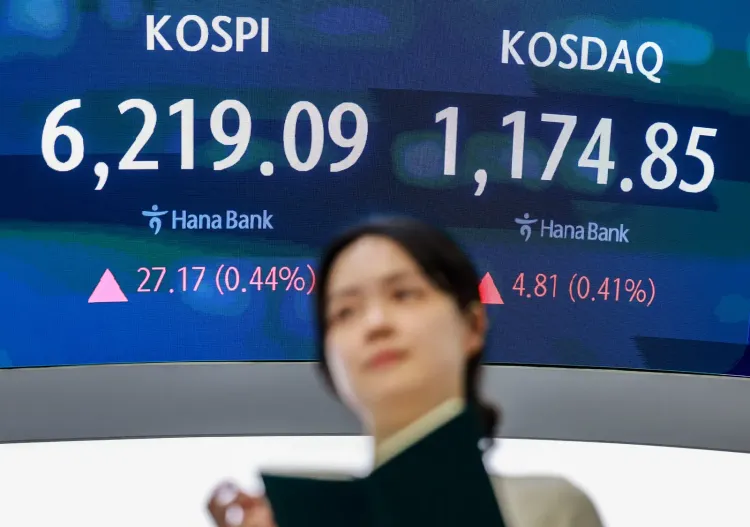
Seoul's KOSPI logged a fourth straight losing session on 15 September, shedding 57 points as Brent Crude topped US$107, US 10-year Treasury yields breached 5 percent, and AI industry caution added to investor nerves. The only bright spot: Korean battery makers rallied sharply on Trump's criticism of Ford's China EV partnerships.
Key Takeaways
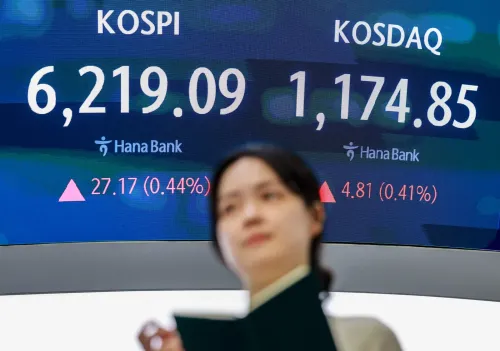
KOSPI fell 57.11 points (0.85%) to 6,627.26 on Tuesday, 15 September 2026 — its fourth consecutive losing session .
Institutional and foreign investors sold a combined net 2.48 trillion won worth of shares; retail investors were net buyers of 833.13 billion won .
Brent Crude rose ~ 1.6% to above US$107/barrel ; 10-year US Treasury yields crossed 5% .
Hanwha Aerospace tumbled 6.51% and LIG Defence & Aerospace fell 4.82% on profit-taking.
Battery makers bucked the trend: LG Energy Solution up 3.98% , Samsung SDI up 2.82% .
The Korean won weakened to 1,359.4 per dollar, down 12.1 won from the previous session.
The Korea Composite Stock Price Index (KOSPI) closed 57.11 points lower at 6,627.26 on Tuesday, 15 September 2026, marking its fourth consecutive session of losses as investors grappled with rising global oil prices, elevated US Treasury yields, and growing caution around the pace of artificial intelligence (AI) development. The Korean won also weakened against the US dollar, adding to the risk-off mood in Seoul.
Key Developments
The benchmark index shed 0.85 percent on the day, with trade volume remaining light at 274 million shares valued at 16.2 trillion won (approximately US$11.9 billion). Losers outnumbered winners by a wide margin — 621 to 253. Institutional and foreign investors collectively offloaded a net 2.48 trillion won worth of shares, while retail investors moved in the opposite direction, making net purchases of 833.13 billion won.
What Drove the Decline
Lee Kyoung-min, an analyst at Daishin Securities, noted that while no fresh negative catalysts had emerged, 'investors seemed to be sensitive to external uncertainties, such as rates and additional rises in global oil prices.' Brent Crude, the international benchmark, rose approximately 1.6 percent to above US$107 per barrel, following a breach of the 5 percent threshold on yields of 10-year US Treasurys. Markets are also closely watching the US Federal Reserve's rate-setting meeting this week, which is widely expected to deliver a further rate hike.
Sectoral Movers
Samsung Electronics, the top-cap bellwether, edged down 0.2 percent to 248,500 won, while SK hynix fell 0.41 percent to 1,690,000 won. Defence stocks saw sharper declines on profit-taking: Hanwha Aerospace tumbled 6.51 percent to 1,063,000 won, and LIG Defence & Aerospace dipped 4.82 percent to 671,000 won.
Against the broader tide, battery makers outperformed. LG Energy Solution rose 3.98 percent to 365,500 won, and Samsung SDI gained 2.82 percent to 547,000 won, reportedly buoyed by US President Donald Trump's formal criticism of Ford Motor Company over its business ties with Chinese automotive firms — a development seen as benefiting non-Chinese battery suppliers.
Currency and Bond Markets
The Korean won was quoted at 1,359.4 won per US dollar as of 3:30 pm local time, down 12.1 won from the previous session. Bond prices fell in tandem with equities, pushing yields higher: the three-year Treasury yield rose 6.6 basis points to 4.091 percent, while the five-year government bond yield added 6.6 basis points to 4.345 percent.
What's Next
The direction of Seoul equities in the near term will hinge on the outcome of the Fed meeting and any further signals from AI industry leaders on development timelines. A rate hike confirmation could compound pressure on high-valuation tech and growth names, while sustained oil prices above US$107 risk feeding through to corporate cost structures across the region.
Point of View
And an oil price that is now doing its own damage to corporate margins and consumer confidence in an import-dependent economy. The battery sector's resilience is real but narrow — it owes more to Washington's geopolitical hostility toward Chinese EV supply chains than to any organic demand signal. Until the Fed signals a credible pause, Seoul's broader market has little to anchor a recovery on.
NationPress
15 Sept 2026
Frequently Asked Questions
Why did Seoul stocks fall for a fourth straight session on 15 September?
The KOSPI fell for the fourth consecutive session as investors weighed rising global oil prices, US Treasury yields crossing 5 percent, and caution around AI development timelines. Analyst Lee Kyoung-min of Daishin Securities attributed the decline to sensitivity around external uncertainties, including rates and oil prices, rather than any new domestic negative catalyst.
Where did the KOSPI close on 15 September 2026?
The KOSPI closed at 6,627.26, down 57.11 points or 0.85 percent on the day. Trade volume was light at 274 million shares worth 16.2 trillion won, with losers outnumbering winners 621 to 253.
Which stocks fell the most on the Seoul exchange?
Defence stocks bore the sharpest losses on profit-taking: Hanwha Aerospace fell 6.51 percent to 1,063,000 won, and LIG Defence & Aerospace dropped 4.82 percent to 671,000 won. Chip giants Samsung Electronics and SK hynix also closed lower, though by smaller margins.
Why did battery stocks rise even as the broader market fell?
LG Energy Solution and Samsung SDI gained 3.98 percent and 2.82 percent respectively, reportedly lifted by US President Donald Trump's formal criticism of Ford Motor Company over its business partnership with Chinese automotive firms. Investors interpreted this as a potential boost for non-Chinese battery suppliers.
What is the outlook for Seoul markets in the near term?
Markets are closely watching the outcome of the US Federal Reserve's rate-setting meeting this week, which is widely expected to deliver a rate hike. A sustained Brent Crude price above US$107 per barrel and any further signals from AI leaders on slowing development could continue to weigh on investor sentiment in Seoul.