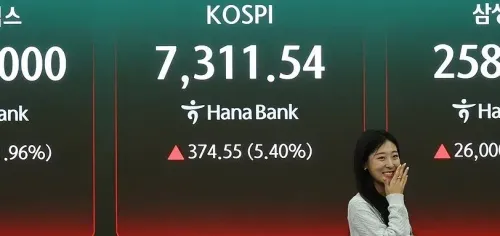
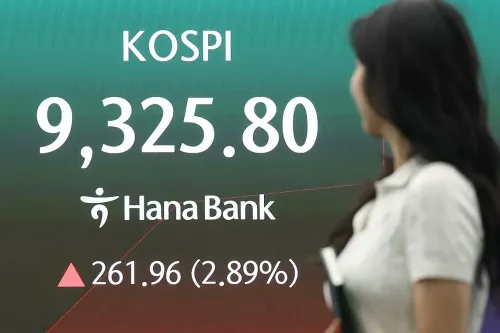
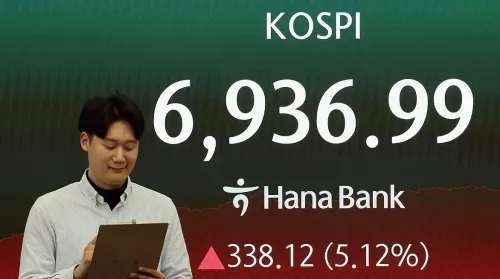
KOSPI gains 32 points to 7,003 on tech bargain hunting despite rate, oil headwinds
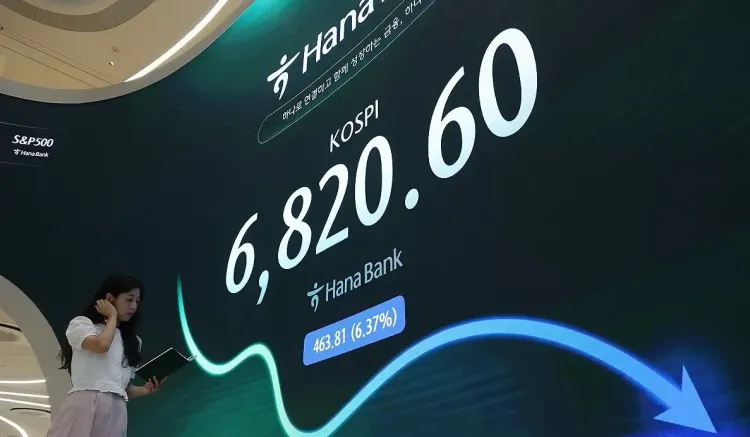
Synopsis
South Korea's KOSPI closed above 7,000 for the session, with institutional buyers and bargain-hunting in tech stocks overcoming a negative open. Despite real macro headwinds — rising rates, oil price swings — improving earnings expectations are giving bulls just enough reason to stay in the market.
Key Takeaways
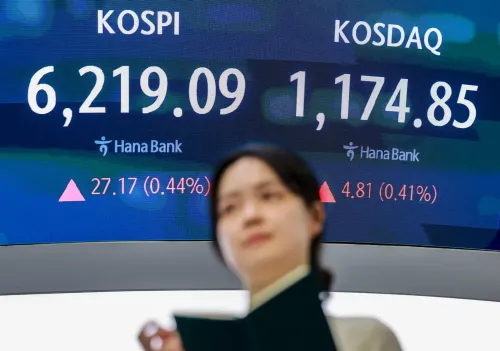
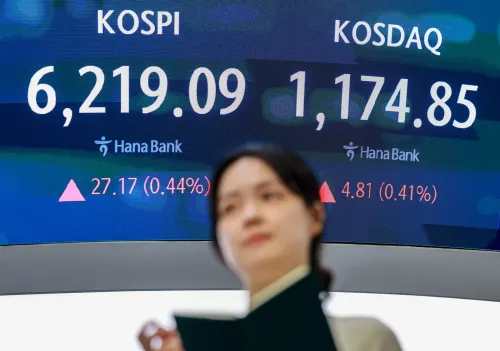
KOSPI rose 32.39 points ( 0.45% ) to close at 7,003.74 on 2 October .
Trade volume stood at 227.64 million shares worth 15.29 trillion won (~ US$11.32 billion ).
Institutions net bought 381.38 billion won ; foreigners and individuals were net sellers.
SK hynix rose 0.44% ; Samsung Electronics was flat; Samsung Electro-Mechanics gained 1.28% .
Korean won firmed to 1,350.6 per dollar , up 7.8 won from the prior session.
Three-year Treasury yield fell 7.3 basis points to 3,937 as bond prices rose.
South Korea's benchmark Korea Composite Stock Price Index (KOSPI) ended 32.39 points, or 0.45%, higher at 7,003.74 on 2 October, as investors moved into beaten-down technology counters on bargain hunting, even as concerns over rising interest rates and elevated crude oil prices weighed on sentiment. The Korean won also firmed against the US dollar, closing at 1,350.6 won per dollar as of 3:30 pm local time, up 7.8 won from the previous session.
Market Overview
The index opened in negative territory before recovering through the session. Trade volume was relatively light, with 227.64 million shares worth 15.29 trillion won (approximately US$11.32 billion) changing hands. Advancing stocks outnumbered decliners by 500 to 359.
Buying was led by institutional investors, who net purchased 381.38 billion won worth of shares, offsetting net selling by foreign investors (143.78 billion won) and individual investors (1.72 trillion won).
Tech Heavyweights: Mixed Signals
Blue-chip technology names saw divergent moves. Samsung Electronics, the market bellwether, ended unchanged at 276,000 won. SK hynix, the chip giant, rose 0.44% to 1.84 million won, while its parent company SK Square gained 0.43% to 1.16 million won.
Samsung Electro-Mechanics, an electronics component affiliate of Samsung Electronics, was among the stronger performers, rising 1.28% to 1.58 million won.
What Analysts Are Saying
Han Ji-young, an analyst at Kiwoom Securities, said the market is navigating a complex macro backdrop. 'The domestic stock market is surrounded by macroeconomic uncertainties, including rising interest rates and increased volatility in oil prices, but expectations for an earnings recovery are improving, providing upward momentum,' Han said.
This framing aligns with a broader pattern visible across Asian markets in recent weeks: volatility driven by global rate signals, with selective tech buying providing a floor during down sessions.
Bond Market and Global Context
Bond prices moved higher in Seoul, with yields easing. The three-year Treasury yield fell 7.3 basis points to 3,937, and the five-year government bond yield shed 7.1 basis points to 4.129. Bond prices and yields move inversely.
Overnight on Wall Street, US markets also closed modestly higher after benchmark Treasury yields retreated from multi-decade highs. The Dow Jones Industrial Average rose 0.04%, the S&P 500 gained 0.19%, and the tech-heavy Nasdaq Composite edged up 0.04%, though gains were capped by rising crude oil prices.
What to Watch Next
With interest rate trajectories in the US and South Korea both in flux, and crude oil prices adding another layer of unpredictability, Korean equities remain sensitive to global macro developments. An improvement in corporate earnings expectations could provide a more durable floor for the KOSPI in the sessions ahead.
Point of View
000 is technically meaningful, but calling it a trend reversal would be premature. Institutional buying is doing the heavy lifting while foreign and retail investors continue to exit — a divergence that typically signals fragility rather than conviction. Earnings recovery expectations are the real wildcard: if Q3 results disappoint, the macro headwinds from rates and oil could reassert quickly. The fact that Samsung Electronics, the single most-watched gauge of Korean tech health, was flat rather than leading the charge says something about the limits of this bounce.
NationPress
2 Oct 2026
Frequently Asked Questions
Why did the KOSPI rise on 2 October despite macro concerns?
The KOSPI rose 32.39 points to 7,003.74 as institutional and bargain-hunting investors bought into major technology stocks, offsetting broader concerns about rising interest rates and oil price volatility. Improving expectations for corporate earnings recovery provided additional upward momentum, according to analysts.
How did Samsung Electronics and SK hynix perform on 2 October?
Samsung Electronics ended unchanged at 276,000 won, while SK hynix rose 0.44% to 1.84 million won. Samsung Electro-Mechanics was the stronger performer among tech-linked stocks, gaining 1.28% to 1.58 million won.
What happened to the Korean won on 2 October?
The Korean won strengthened against the US dollar, closing at 1,350.6 won per dollar as of 3:30 pm local time — up 7.8 won from the previous session's close.
How did US markets perform overnight ahead of the Seoul session?
US markets closed modestly higher overnight as Treasury yields eased from multi-decade highs. The Dow Jones rose 0.04%, the S&P 500 gained 0.19%, and the Nasdaq Composite added 0.04%, though gains were limited by rising crude oil prices.
What are the key risks facing South Korean equities going forward?
Analysts point to rising global interest rates and crude oil price volatility as the primary near-term headwinds for the KOSPI. A sustained improvement in corporate earnings would be needed to sustain any rally, with the next major trigger likely to come from US Federal Reserve signals and Q3 earnings releases.