KOSPI sell-side sidecar triggered as South Korea stocks plunge 4.54%
Synopsis
South Korea's stock market activated a rare sell-side sidecar circuit-breaker on Friday after the KOSPI plummeted 4.54% — the trigger being a deepening global reckoning over AI returns. Even Anthropic's record-breaking IPO debut the night before couldn't stop the rout, with Samsung Electronics shedding over 6% and foreign investors offloading nearly 761 billion won in a single session.
Key Takeaways
South Korea's Korea Exchange (KRX) activated a sell-side sidecar on 20 November , suspending programme trading for five minutes from 11:54 a.m.
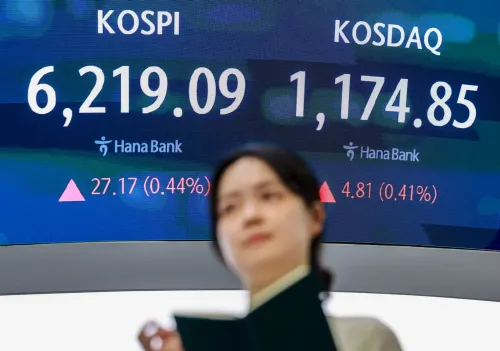
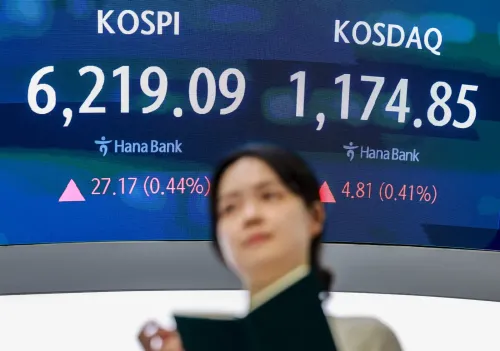
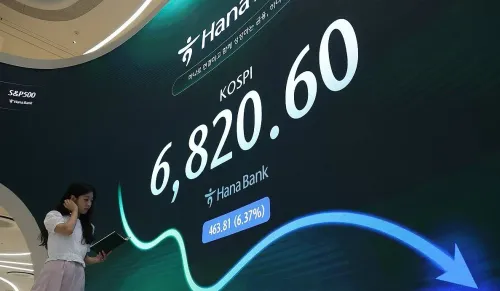
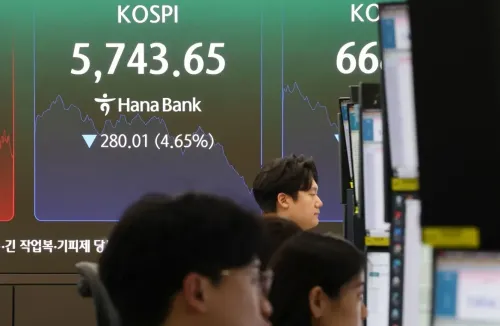
The KOSPI fell 233.2 points (4.54%) to 4,904.69 as of 11:55 a.m. local time.
Samsung Electronics dropped 6.09% and SK Hynix declined 5.75% , leading the technology sector rout.
Foreigners sold a net 760.54 billion won ; institutions offloaded a net 443.61 billion won ; individuals absorbed a net 1.01 trillion won .
Anthropic's Wall Street IPO — shares up 17% at $97.17 — failed to ease concerns over AI infrastructure returns.
The Korean won weakened to 1,338.30 per US dollar, down 4.2 won from the prior close.
South Korea's bourse operator activated a sell-side sidecar for the benchmark Korea Composite Stock Price Index (KOSPI) on Friday, 20 November, after the index plunged sharply amid mounting concern over whether massive investments in artificial intelligence (AI) infrastructure will generate sustainable returns. Programme trading for KOSPI-listed shares was suspended for five minutes from 11:54 a.m., according to the Korea Exchange (KRX).
How Deep the Fall Was
The KOSPI surrendered 233.2 points, or 4.54%, to trade at 4,904.69 as of 11:55 a.m. local time — one of the steeper single-session declines the index has seen in recent months. A sell-side sidecar is triggered when the KOSPI 200 Futures Index falls 5% or more for at least one continuous minute, a circuit-breaker mechanism designed to slow panic selling and restore orderly trading.
AI Concerns Overshadow Anthropic's Record IPO
Anthropic's Wall Street debut, which saw the company's shares soar 17% above their initial public offering price of $83 to close at $97.17 on Thursday, failed to lift sentiment in Seoul. Despite being described as the biggest IPO ever, analysts noted it was insufficient to alleviate broader sector anxiety. Investors remain unconvinced that the industry's massive borrowings will translate into returns commensurate with capital deployed — a concern that has been building through the second half of 2025 and into 2026.
Overnight in the United States, the Dow Jones Industrial Average fell 2.19% and the tech-heavy Nasdaq Composite declined 2.25%, compounding the negative mood heading into the Seoul session.
Sector-by-Sector Damage
Technology stocks led the rout in Seoul. Market bellwether Samsung Electronics fell 6.09%, while chipmaking rival SK Hynix declined 5.75% — both companies heavily exposed to AI-related semiconductor demand cycles. Top carmaker Hyundai Motor dropped 4.3%, and defence conglomerate Hanwha Aerospace Industries shed 1.9%.
Not all counters were in the red. Leading budget carrier Jeju Air rose 5.14%, and Hanjin KAL — parent firm of Korean Air — jumped 11.1%, bucking the broader trend on sector-specific tailwinds.
Foreign and Institutional Selling
Institutions sold a net 443.61 billion won (approximately US$331 million) worth of shares, while foreigners offloaded a net 760.54 billion won. Individual investors were the primary buyers, absorbing a net 1.01 trillion won in what analysts typically characterise as 'retail bottom-fishing.' The Korean won weakened to 1,338.30 against the US dollar as of 11:20 a.m., down 4.2 won from the previous session's close.
What Markets Are Watching Next
The central question facing investors is whether the AI infrastructure buildout — which has driven enormous capital expenditure across chipmakers, data-centre operators, and cloud platforms — will produce revenue and profit growth large enough to justify those outlays. Until clearer evidence of monetisation emerges, any negative signal from AI-adjacent markets risks triggering outsized sell-offs in semiconductor-heavy indices like the KOSPI. Further US macro data and earnings guidance from major tech firms are expected to set the tone in the near term.
Point of View
But concrete monetisation data has consistently lagged capital deployment. Anthropic's blockbuster IPO was supposed to be a confidence moment for the sector — instead, it highlighted how thin the margin for disappointment has become. For export-dependent indices like the KOSPI, where Samsung and SK Hynix dominate weighting, any crack in the AI demand narrative is amplified. The real risk is that retail investors absorbing institutional and foreign selling at these levels are catching a falling knife if the AI capex cycle turns before returns materialise.
NationPress
20 Nov 2026
Frequently Asked Questions
What is a sell-side sidecar in the South Korean stock market?
A sell-side sidecar is a circuit-breaker mechanism activated when the KOSPI 200 Futures Index falls 5% or more for at least one continuous minute. Once triggered, programme trading for KOSPI-listed shares is suspended for five minutes to restore orderly market conditions.
Why did the KOSPI fall sharply on 20 November?
The KOSPI fell 4.54% to 4,904.69 primarily due to investor concern over whether the heavy capital investment in AI infrastructure will generate adequate returns. Overnight losses on Wall Street — the Dow down 2.19% and the Nasdaq down 2.25% — added to the pressure.
Did Anthropic's IPO help stabilise markets?
No. Despite Anthropic's shares closing 17% above their IPO price of $83 at $97.17 on Thursday, the debut failed to ease broader anxiety over AI sector returns. Markets viewed the record IPO as insufficient evidence that the AI buildout will produce commensurate profits.
Which South Korean stocks fell the most?
Samsung Electronics led losses with a decline of 6.09%, followed by SK Hynix at 5.75% and Hyundai Motor at 4.3%. Defence firm Hanwha Aerospace Industries shed 1.9%. Against the trend, Jeju Air rose 5.14% and Hanjin KAL surged 11.1%.
How did foreign investors respond during the sell-off?
Foreign investors sold a net 760.54 billion won worth of South Korean stocks during the session, while institutional investors offloaded a net 443.61 billion won. Individual retail investors were net buyers, absorbing approximately 1.01 trillion won.