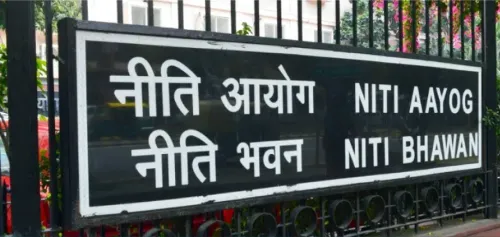
'Made in India' sports brand needs athletes, corporates and youth: NITI Aayog
Synopsis
NITI Aayog's Sanjeet Singh has flagged a striking structural challenge: 90 per cent of India's sports goods manufacturers are MSMEs battling non-financial, regulatory bottlenecks — not capital shortages. His call for athletes, corporates and youth to co-own the 'Made in India' sports brand signals a shift from government-led mandates to ecosystem-wide ownership.
Key Takeaways
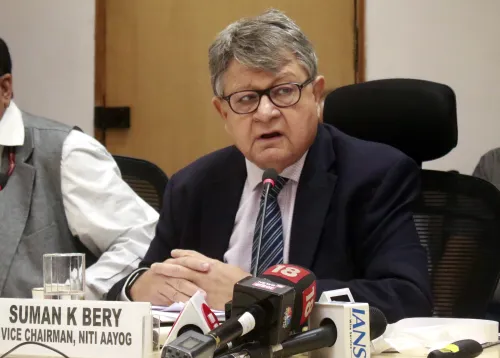
Sanjeet Singh , Senior Advisor at NITI Aayog , called for a collective effort by athletes, corporates, youth, and platforms like Sportscom to build the 'Made in India' sports brand on 25 August .
The government has treated sports goods and equipment manufacturing as a strategic growth area for over a decade .
NITI Aayog developed a dedicated roadmap under Aatmanirbhar Bharat , later converted into a scheme by the Ministry of Youth Affairs and Sports .
90 per cent of sports goods manufacturers in India are MSME units .
Most industry challenges are non-financial — stemming from regulatory and procedural bottlenecks, not access to capital.
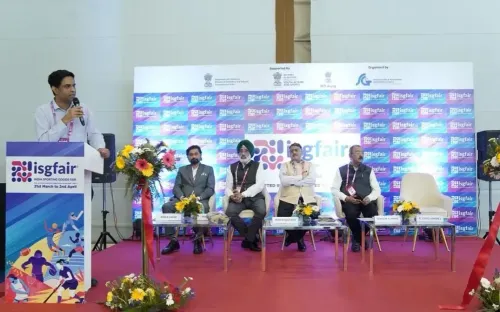
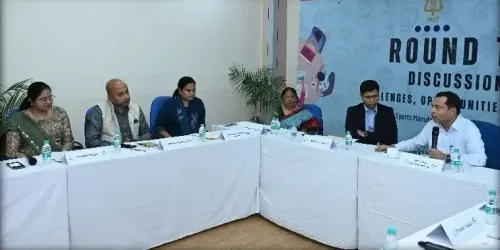
Sanjeet Singh, Senior Advisor at NITI Aayog, on Tuesday, 25 August called for a collective national effort to build a globally recognised 'Made in India' brand in sports goods and equipment manufacturing, stressing that the responsibility cannot rest with any single individual or institution. Speaking at an industry event in New Delhi, Singh underlined that athletes, corporates, young people, and platforms such as Sportscom must all play an active role.
Strategic Focus on Sports Manufacturing
Singh noted that the government has treated sports goods and equipment manufacturing as a strategic growth area for over a decade. Under the Aatmanirbhar Bharat initiative, NITI Aayog developed a dedicated roadmap for the sector, which was subsequently converted into a formal scheme by the Ministry of Youth Affairs and Sports.
'Branding is the essential lifeblood of making things work. But we don't have to wait for branded products to be able to boost our manufacturing in India. Simultaneously, our goal should be the 'Made in India' brand,' Singh said.
MSMEs at the Core, Regulatory Hurdles Persist
Detailed studies and interactions with manufacturers revealed that the majority of challenges are non-financial in nature. Singh pointed out that 90 per cent of sports goods and equipment manufacturers in India are MSME units, and that their primary pain points stem from regulatory and procedural bottlenecks rather than access to capital.
'Our detailed studies and interactions with the various manufacturing units that are manufacturing sports goods and equipment, and mind you, 90 per cent of them are MSME units, have shown that most of the challenges are essentially coming from non-financial issues relating to regulations and bottlenecks,' he said.
Easing Business Conditions as a Growth Lever
Singh emphasised that resolving these regulatory constraints would be central to expanding India's domestic sports manufacturing ecosystem. Improving ease of doing business for MSME-scale manufacturers, he argued, could significantly scale up India's production capacity and export competitiveness in the segment.
Positioning India as a Global Sports Goods Hub
The overarching objective, Singh said, is threefold: strengthen domestic manufacturing, develop homegrown Indian brands, and bring together all stakeholders across the sports ecosystem. This convergence, he argued, is what would ultimately position India as a competitive global hub for sports goods and equipment. The push aligns with broader government ambitions to raise India's share in global sports equipment exports, a market currently dominated by a handful of countries.
Point of View
Not sequentially — challenges the conventional wisdom that India must first scale output before worrying about brand equity. More telling is the MSME finding: if 90 per cent of the sector's producers are small units held back by regulatory friction rather than capital constraints, then finance-led schemes alone will not move the needle. The real policy gap is in deregulation and procedural simplification, not incentive design. India has a credible manufacturing base in sports goods — particularly in Jalandhar — but global brand recognition has remained elusive. Without naming and resolving specific bottlenecks publicly, the call for collective effort risks staying aspirational.
NationPress
25 Aug 2026
Frequently Asked Questions
What did NITI Aayog say about the 'Made in India' sports brand?
NITI Aayog Senior Advisor Sanjeet Singh said building the 'Made in India' brand in sports goods requires a collective effort involving athletes, corporates, youth, and industry platforms — not just government action. He made these remarks on 25 August in New Delhi.
What is the government's roadmap for sports goods manufacturing in India?
Under the Aatmanirbhar Bharat initiative, NITI Aayog prepared a dedicated roadmap for the sports goods and equipment sector. This was subsequently converted into a formal scheme by the Ministry of Youth Affairs and Sports.
What are the biggest challenges facing India's sports goods manufacturers?
According to NITI Aayog's detailed studies, most challenges are non-financial — primarily regulatory and procedural bottlenecks. Since 90 per cent of manufacturers are MSME units, easing compliance burdens is seen as critical to sector growth.
Who are the key stakeholders in building India's sports manufacturing ecosystem?
Sanjeet Singh identified athletes, sportspersons, young people, corporate houses, and platforms such as Sportscom as essential participants. He stressed that no single entity can carry the responsibility of brand-building alone.
Why does India's sports goods manufacturing matter globally?
India aims to position itself as a competitive global hub for sports goods and equipment. The sector's growth is linked to broader goals of expanding domestic manufacturing capacity and increasing India's share in global sports equipment exports.