Anand Mahindra Hails Puri's Tap Water Mission and Jal Sathis
Synopsis
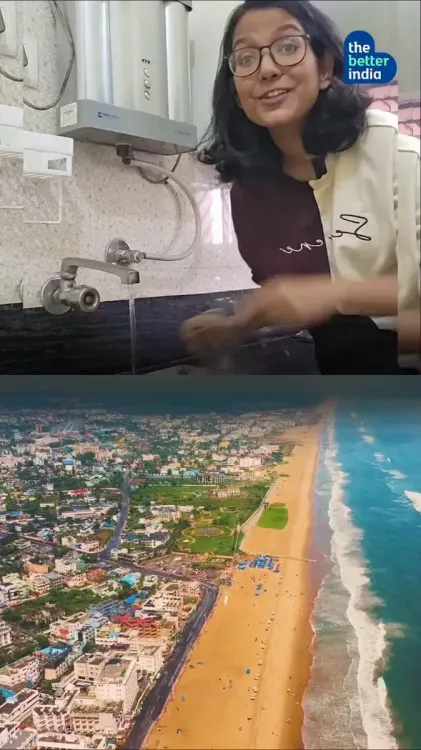
Mahindra Group chairman Anand Mahindra spotlighted Puri's city-wide drinkable tap water achievement on June 8, 2026, crediting Odisha's Drink from Tap Mission and the Jal Sathis — local women water guardians — as proof that coordinated governance can rapidly transform everyday public services.
Key Takeaways
Anand Mahindra highlighted Puri, Odisha as a city where residents can now drink directly from the tap, calling it a governance model worth emulating.
Odisha launched its Drink from Tap Mission in Puri around 2021-22 , targeting direct municipal water consumption without household filtration.
Jal Sathis — local women volunteers — served as water quality monitors and community trust-builders, a key factor in the programme's success.
Mahindra noted the transformation took 'just a few years,' crediting alignment between political leadership, administrative execution, and community participation.
The model is being watched for potential replication in other Odisha towns and Smart Cities across India.
Mahindra Group chairman Anand Mahindra on Monday, June 8, 2026, highlighted Puri's achievement of city-wide drinkable tap water as a model of governance, praising the role of local women volunteers called 'Jal Sathis' in building public trust in the municipal water supply.
Context
In his weekly #MondayMotivation post, Mahindra called attention to what he described as 'one of the great ironies of India' — that a country which worships its rivers rarely trusts the water that flows into its homes. He noted that Puri, the coastal city in Odisha and a major religious centre, has apparently overcome that scepticism, with residents now able to drink directly from the tap.
Mahindra emphasised that the transformation was not the result of decades of incremental change. 'This change didn't take decades. It happened over just a few years because political leadership, administrative execution and community participation all moved in sync,' he wrote.
Policy Backdrop
Odisha launched its Drink from Tap Mission in Puri around 2021-22, with the stated goal of enabling residents to consume municipal water directly without household filtration. The initiative represented a significant departure from the historic public distrust of piped water supply in Indian cities.
A central feature of the programme was the deployment of Jal Sathis — local women volunteers who tested water quality at the community level and served as trusted intermediaries between the municipal system and residents. Mahindra described them as 'guardians of the city's water quality' who helped convert scepticism into confidence.
Stakeholders and Impact
Puri's residents are the most immediate beneficiaries, gaining access to potable water directly from municipal taps — a standard that remains out of reach for most Indian cities. The Jal Sathis, drawn from local communities, played a dual role: technical (water quality monitoring) and social (trust-building), demonstrating how last-mile accountability can be embedded in a public service system.
Mahindra's public endorsement, reaching his millions of followers on X, brings national visibility to a state-level experiment that has otherwise remained relatively under-discussed in mainstream governance discourse. Similar community-oversight models have been attempted in other Indian states seeking to address chronic gaps in urban water delivery.
What's Next
The Puri model is now being watched as a potential template for replication across other Odisha towns and cities designated under the Smart Cities Mission. State-level water quality audits and future municipal budgets will be key indicators of whether the programme's gains are being institutionalised and scaled.
Mahindra's post closes with a note that his motivation this week comes from 'leaders and participative citizens who proved that governance can genuinely improve the quality of everyday life' — a framing that positions Puri not as an outlier but as proof of what coordinated public action can deliver.
Point of View
Administration, and community align — is a recurring motif in India's better-performing welfare delivery stories, from direct benefit transfers to sanitation drives. By centring the Jal Sathis, Mahindra implicitly endorses a model of decentralised, women-led accountability that sits at the intersection of the Centre's Jal Jeevan Mission and state-level last-mile innovation. The post may add momentum to calls for formal institutionalisation and scaling of community water guardianship beyond Odisha.
NationPress
23 Oct 2026
Frequently Asked Questions
What is Puri's Drink from Tap Mission?
Puri's Drink from Tap Mission is an Odisha government initiative launched around 2021-22 that upgraded the city's municipal water supply to a standard where residents can consume water directly from the tap without additional household filtration.
Who are Jal Sathis in Puri?
Jal Sathis are local women volunteers deployed in Puri as part of the city's water mission. They test water quality at the community level and help build public trust in the municipal supply system.
Why did Anand Mahindra post about Puri's water supply?
Mahindra shared Puri's story as his weekly Monday Motivation, citing it as evidence that coordinated political leadership, administrative execution, and community participation can genuinely improve everyday quality of life within a few years.
Can people really drink tap water directly in Puri?
According to Odisha's Drink from Tap Mission, Puri's municipal water supply has been upgraded to potable standards, allowing direct consumption from the tap — an achievement that remains rare among Indian cities.
Can the Jal Sathi model be replicated in other Indian cities?
Policy observers consider the Jal Sathi model a potential template for other Odisha towns and Smart Cities across India, though formal institutionalisation and scaling will depend on state-level political commitment and funding in future municipal budgets.