Market leaders chart India investment outlook for new Samvat at NDTV Profit Ignite
Synopsis
With the Nifty down 11.8% over the last Samvat and foreign capital in retreat, India's top market minds converged in Mumbai with a striking consensus: the long-term India story is intact, selectivity is paramount, and SEBI's push to list 2,000 more companies could be the structural shift that defines the next decade.
Key Takeaways
The NDTV Profit Ignite: Diwali Edition was held in Mumbai on 29 October 2025 , drawing more than 150 industry leaders and policymakers.
SEBI Chairman Tuhin Kanta Pandey highlighted the potential to ready approximately 2,000 companies for listing and called for action against misleading financial influencers.
Veteran investor Ramesh Damani pointed to the market's historical fivefold rise every decade , urging patience amid near-term volatility.
Naren of ICICI Prudential AMC identified financial services, insurance, FMCG and IT as contrarian opportunities after the Nifty's 11.8% decline over the Samvat.
Sandeep Tandon and Vijay Kedia both stressed stock-level selectivity even as they expressed cautious optimism on the broader market outlook.
Some of India's most prominent voices in capital markets, investing, and policymaking gathered in Mumbai on 29 October 2025 for the 'NDTV Profit Ignite: Diwali Edition', offering investors a comprehensive assessment of opportunities and risks as the new Samvat begins. The event drew more than 150 industry leaders, policymakers and institutional investors against a backdrop of an 11.8% decline in the Nifty over the preceding Samvat, persistent foreign capital outflows and global macroeconomic uncertainty.
Setting the Stage
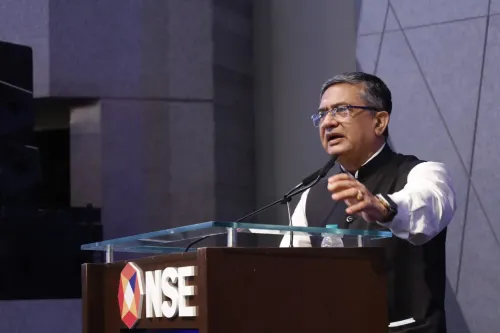
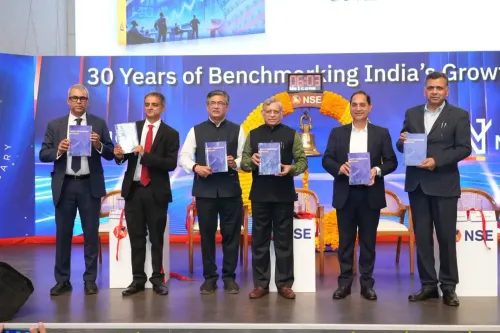
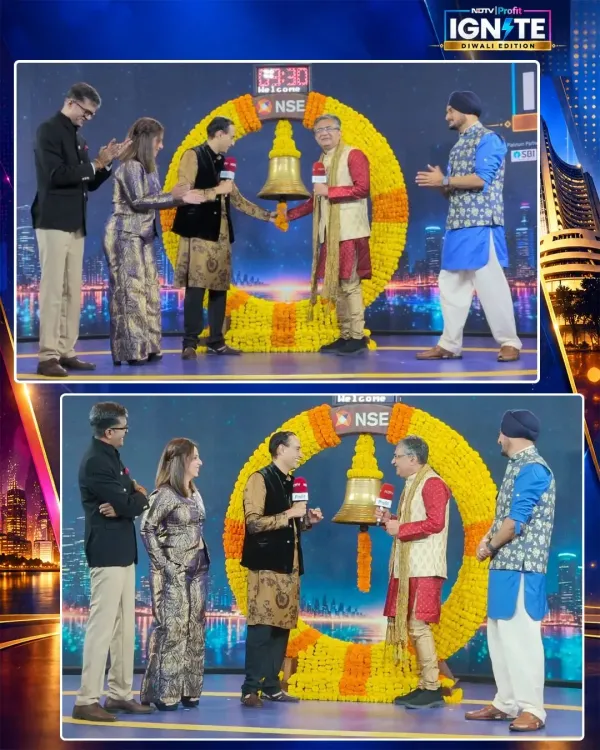
The proceedings opened with a ceremonial bell-ringing by Ashish Kumar Chauhan, MD and CEO of the National Stock Exchange (NSE), and actress and entrepreneur Tamannaah Bhatia. The gathering featured Securities and Exchange Board of India (SEBI) Chairman Tuhin Kanta Pandey; veteran investor Ramesh Damani; S. Naren of ICICI Prudential AMC; Motilal Oswal co-founder Raamdeo Agrawal; Sandeep Tandon, founder of Quant Mutual Fund; investor Vijay Kedia; and Harvard Business School Professor Ranjay Gulati.
Rahul Kanwal, CEO and Editor-in-Chief of NDTV, set out the event's purpose: 'As more Indians participate in the country's capital markets, the need for credible information and informed scrutiny becomes even greater. NDTV Profit Ignite brings our audience closer to the people shaping policy, building businesses and making investment decisions. Our purpose is to ask the questions that matter, examine the opportunities and risks, and help investors approach their financial future with greater clarity.'
SEBI's Vision for Deeper Markets
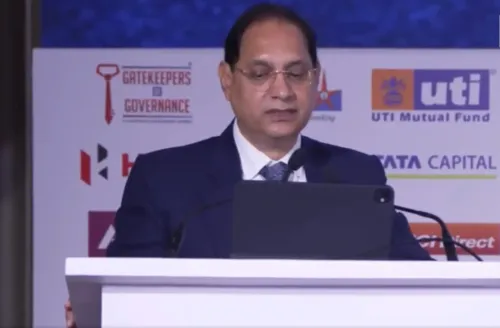
Delivering the keynote address, SEBI Chairman Tuhin Kanta Pandey outlined a vision for more accessible capital markets, highlighting the potential for approximately 2,000 companies to be readied for listing. He emphasised lowering compliance costs and simplifying the onboarding process for foreign investors. On the surge in retail participation, Pandey underscored the need for stronger investor protection, greater awareness of derivatives trading risks, and decisive action against misleading financial influencers — a theme that reflects SEBI's ongoing regulatory priorities.
AI, Global Flows and Contrarian Bets
Ashish Kumar Chauhan examined how the global artificial intelligence investment cycle is reshaping capital flows. He observed that while India currently lacks a dominant domestic AI investment narrative, its markets could benefit significantly if the global AI trade begins to unwind — a counterintuitive but strategically important perspective.
S. Naren of ICICI Prudential AMC took the contrarian argument further, suggesting that investors consider reducing exposure to the US AI theme and instead examine underperforming markets including India. He identified financial services, insurance, FMCG, and IT as sectors presenting distinct contrarian opportunities at current valuations.
Long-Term Conviction Amid Near-Term Volatility
Navigating the consolidation in Indian equities following a strong run from 2020 to 2024 emerged as a central theme. Veteran investor Ramesh Damani acknowledged near-term volatility from US midterm elections and geopolitical developments, but reinforced his long-term conviction in India. He pointed to the Indian market's historical tendency to rise approximately fivefold every decade, reminding investors that returns rarely follow a straight line and that periods of underperformance have historically preceded stronger gains.
Raamdeo Agrawal placed corporate earnings at the centre of the investment thesis, arguing that continued earnings growth must eventually be reflected in market performance. Sandeep Tandon suggested the worst of the correction could be behind investors, while both Tandon and Vijay Kedia cautioned that a recovering broader market does not make every stock an attractive buy — selectivity remains critical.
Entrepreneurship, Leadership and the Road Ahead
Tamannaah Bhatia shared her entrepreneurial journey with Tamannaah Fine Jewellery, describing her role as that of a creative director and speaking about the market gap she identified. Harvard Business School Professor Ranjay Gulati brought a leadership lens to the discussion, exploring how individuals and organisations can prepare to act courageously amid disruption — including the challenge of AI — by distinguishing between measurable risk and uncertainty.
Tamanna Inamdar, Managing Editor of NDTV Profit, summarised the event's overarching message: 'As we enter the new Samvat, the message was clear: it is time to double down on the India story, even when the global outlook looks bleak.' With SEBI signalling regulatory reforms, veterans reinforcing long-term conviction, and contrarian opportunities emerging across multiple sectors, India's capital markets head into the new Samvat with cautious optimism as the defining mood.
Point of View
000 listing-ready companies and derivatives risk in the same breath. That combination reveals a regulator aware that retail exuberance has outpaced financial literacy, and that the pipeline of new listings must be matched by guardrails. S. Naren's call to reduce the US AI trade and rotate into India is a bold contrarian call that will look either prescient or premature depending on how the Fed cycle resolves. The real story of the new Samvat may not be who was bullish on India, but whether the structural reforms Pandey outlined actually materialise — and whether retail investors are equipped to handle the volatility in the meantime.
NationPress
29 Oct 2026
Frequently Asked Questions
What was the NDTV Profit Ignite Diwali Edition?
It was a marquee capital markets event held in Mumbai on 29 October 2025, bringing together more than 150 industry leaders, investors and policymakers to discuss the investment outlook for the new Samvat. Speakers included SEBI Chairman Tuhin Kanta Pandey, NSE chief Ashish Kumar Chauhan, and veteran investors Ramesh Damani and Raamdeo Agrawal.
What did SEBI Chairman Tuhin Kanta Pandey say at the event?
Pandey outlined a vision for deeper and more accessible capital markets, noting that approximately 2,000 companies could be prepared for listing. He also called for lower compliance costs, simplified foreign investor onboarding, and stronger action against misleading financial influencers targeting retail investors.
What is the investment outlook for the new Samvat according to market experts?
Experts expressed cautious optimism about India's long-term wealth creation potential despite an 11.8% Nifty decline over the previous Samvat. Veteran investor Ramesh Damani pointed to the market's historical fivefold rise per decade, while S. Naren of ICICI Prudential identified financial services, insurance, FMCG and IT as contrarian opportunities.
Why did speakers flag the need for selectivity in the new Samvat?
Both Sandeep Tandon and Vijay Kedia cautioned that a recovery in the broader market outlook does not automatically make every stock an attractive investment. After a sharp correction, differentiation between strong and weak businesses becomes more critical than broad index positioning.
What was the significance of the AI theme at the event?
NSE chief Ashish Kumar Chauhan noted that India could benefit if the global AI investment trade begins to unwind, given that capital could rotate into underperforming markets. S. Naren separately suggested investors consider trimming US AI exposure and looking at India as a contrarian play, reflecting a broader debate about whether the AI-driven tech rally has peaked.