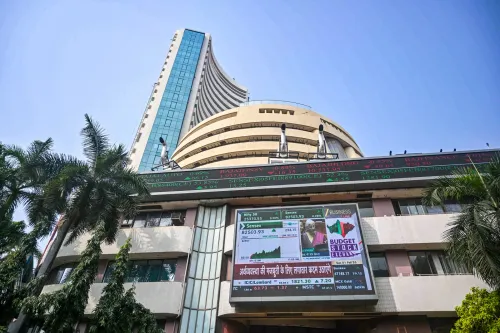
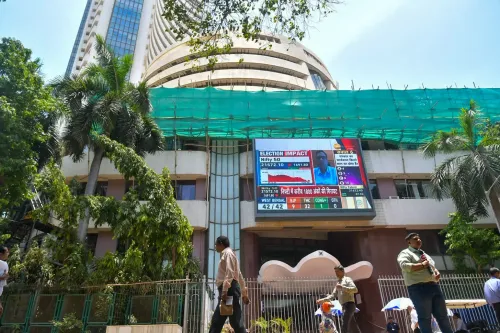
Indian markets gain for 2nd week as crude falls, Q1 FY27 earnings beat

Synopsis
Indian markets logged a second straight weekly gain as crude oil prices fell sharply and Q1 FY27 corporate earnings broadly beat expectations. Small-caps stole the show with a 2.73% weekly surge, while PSU banks and metals added to the rally — even as Friday's session pulled benchmarks slightly lower heading into key US data releases.
Key Takeaways
Nifty50 gained 0.77% for the week, closing at 24,570 on 8 August ; Sensex added 0.52% for the week, ending at 78,499 .
Nifty Smallcap100 surged 2.73% and Nifty Midcap100 rose 0.87% , outperforming benchmarks.
Sharp correction in crude oil prices and strong Q1 FY27 earnings were the primary drivers of weekly gains.
PSU banks , metals , and automobile stocks led sectoral gains during the week.
The RBI maintained its policy stance while upgrading its growth outlook and lowering inflation projections.
Markets now await US labour market data and domestic CPI/WPI inflation readings for the next directional cue.
Indian equity benchmarks closed higher for the second consecutive week ended 8 August, driven by a sharp correction in crude oil prices and broadly upbeat Q1 FY27 earnings that exceeded investor expectations across sectors. The dual tailwinds reinforced buying interest even as Friday's session ended on a softer note.
Weekly and Friday Close
The Nifty50 gained 0.77% over the week before slipping 0.27% on Friday to settle at 24,570. The BSE Sensex ended the day down 455 points, or 0.58%, at 78,499, though it still added 0.52% for the week. Broad market indices outpaced the benchmarks: the Nifty Midcap100 rose 0.87% and the Nifty Smallcap100 surged 2.73% during the week.
Sectoral Movers
Small-cap stocks continued to outperform, backed by strong earnings traction and stock-specific catalysts. PSU banks led sectoral gains on improving fundamentals, while metals benefited from a stronger growth outlook and resilient domestic demand. Automobile stocks gained momentum on expectations of healthy festive-season demand, according to market watchers.
What Drove Sentiment
The week opened on a volatile note, triggered by the rollout of the new F&O Closing Auction Session (CAS). Markets regained stability as participants adapted to the revised framework. 'Sentiment improved meaningfully with the sharp decline in crude oil prices, which helped strengthen the macroeconomic outlook and supported expectations of easing inflationary pressures,' an analyst noted.
Globally, softer US labour market indicators reduced the likelihood of a near-term Fed rate hike, leading to a moderation in US bond yields and a weaker dollar. Safe-haven demand ahead of key US economic data releases provided additional support to gold prices.
RBI and Domestic Cues
On the domestic front, the Reserve Bank of India (RBI) reinforced confidence by maintaining its policy stance while modestly upgrading its growth outlook and lowering inflation projections. The ongoing Q1 FY27 earnings season further strengthened investor confidence, with results broadly exceeding expectations and driving broad-based buying interest across market segments.
What to Watch Next
Investors are awaiting upcoming US labour market and inflation data for further clarity on the Fed's policy trajectory. On the domestic side, CPI and WPI inflation readings, alongside credit growth trends, will provide key insights into India's growth-inflation dynamics in the weeks ahead.
Point of View
But Friday's pullback is a reminder that the rally rests on fragile pillars — crude staying soft and US data not surprising to the upside. The small-cap surge of 2.73% in a single week warrants scrutiny: when broad-market momentum runs this far ahead of benchmark indices, it often signals retail-driven froth rather than fundamental re-rating. The RBI's modest growth upgrade is a positive signal, but the real test comes when CPI prints land — if inflation proves stickier than projected, the rate-cut narrative that has partly fuelled this rally could unravel quickly.
NationPress
22 Sept 2026
Frequently Asked Questions
Why did Indian stock markets gain for two consecutive weeks?
Indian equity markets posted gains for the second straight week ending 8 August, primarily driven by a sharp fall in crude oil prices and Q1 FY27 corporate earnings that broadly exceeded expectations. These factors improved the macroeconomic outlook and boosted investor sentiment across sectors.
What were the Nifty and Sensex levels at the end of the week?
The Nifty50 closed at 24,570, up 0.77% for the week, while the BSE Sensex ended at 78,499, gaining 0.52% over the same period. Both indices slipped slightly on Friday itself, with the Sensex falling 455 points on the day.
Which sectors performed best during the week?
PSU banks led sectoral gains on improving fundamentals, while metals benefited from a stronger growth outlook and resilient domestic demand. Small-cap and mid-cap stocks outperformed, with the Nifty Smallcap100 surging 2.73% and Nifty Midcap100 rising 0.87% for the week.
What role did the RBI play in market sentiment this week?
The Reserve Bank of India reinforced market confidence by maintaining its policy stance, modestly upgrading its growth outlook, and lowering its inflation projections. This gave investors added comfort on the domestic macroeconomic front amid global uncertainty.
What are the key triggers to watch for Indian markets next week?
Investors are watching upcoming US labour market and inflation data for signals on the Federal Reserve's rate trajectory. Domestically, CPI and WPI inflation readings and credit growth trends will be critical for gauging India's growth-inflation dynamics and the outlook for monetary policy.