Maruti Suzuki invests ₹150 crore in biogas projects on World Environment Day
Synopsis
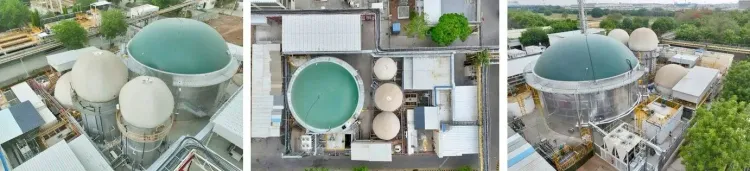
On World Environment Day, Maruti Suzuki committed ₹150 crore to two biogas projects — a new 10 TPD plant at Kharkhoda and an expanded unit at Manesar. Together they could cut over 10,000 tonnes of CO2 annually, making this one of the largest single-company biogas investments in Indian auto manufacturing.
Key Takeaways
Maruti Suzuki announced two biogas projects worth ₹150 crore on World Environment Day, 5 June 2025 .
A new 10 TPD biogas plant will be set up at Kharkhoda, Haryana , targeting 9,490 tonnes of annual CO2 mitigation.
The existing Manesar biogas plant has been expanded from 0.2 TPD to 0.7 TPD , projected to avoid 664 tonnes of CO2 per year.
The Manesar plant uses food waste, Napier grass, and paddy straw via anaerobic digestion technology.
MD & CEO Hisashi Takeuchi linked the initiative to India's national priority of reducing fossil fuel dependence.
The Kharkhoda plant is expected to meet nearly 20% of the facility's total gas requirement at full capacity.
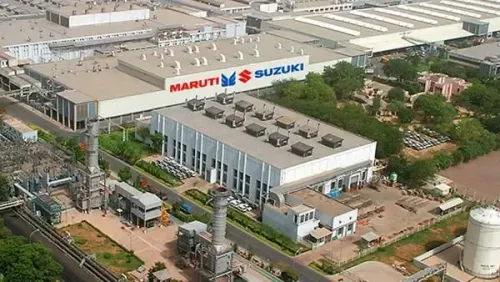
Maruti Suzuki India Limited on 5 June 2025 announced two biogas projects with a combined investment of ₹150 crore, marking one of the country's largest carmaker's most significant clean energy commitments to date. The announcement, made on World Environment Day, covers a new plant at its Kharkhoda facility in Haryana and an expanded unit at its existing Manesar plant.
Key Developments
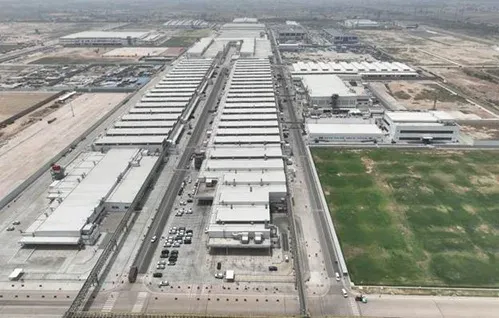
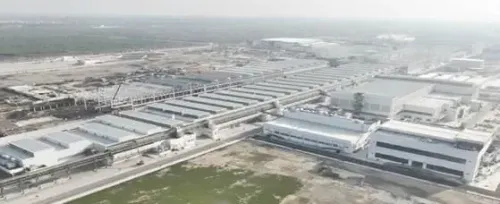
The new biogas plant at Kharkhoda will have a capacity of 10 tonnes per day (TPD) and is expected to be commissioned within the current financial year. At full capacity, the plant is projected to mitigate approximately 9,490 tonnes of CO2 emissions annually and meet nearly 20% of the facility's total gas requirement.
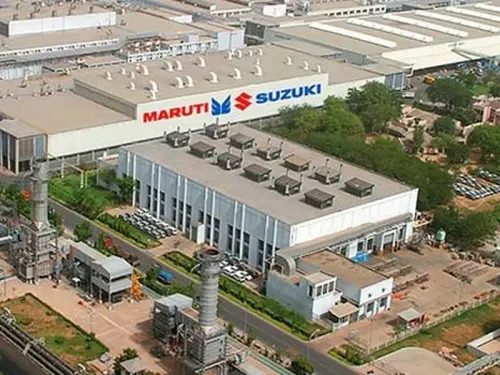
Simultaneously, Maruti Suzuki has expanded the capacity of its existing biogas plant at Manesar from 0.2 TPD to 0.7 TPD. The expanded unit is projected to generate around 3.6 lakh standard cubic metres of biogas per year, helping avoid approximately 664 tonnes of CO2 emissions annually.
How the Plants Work
The Manesar facility uses anaerobic digestion technology to convert organic feedstock — including food waste, Napier grass, and paddy straw — into usable biogas. The output is channelled into paint shop heating processes and canteen operations. Output can be further scaled through the use of cattle dung as additional feedstock.
This approach aligns with the government's 'Waste-to-Wealth' mission, which encourages the conversion of agricultural and organic waste into productive energy resources.
What the Company Said
Managing Director and CEO Hisashi Takeuchi said the company has been consistently pursuing measures to reduce fossil fuel consumption and reliance on imported oil. 'At a time when the world is navigating an increasingly uncertain energy landscape, such initiatives assume greater significance,' he said.
Takeuchi also linked the initiative to national priorities, stating: 'As the Prime Minister of India has called for reducing dependence on fossil fuels, the commissioning of our biogas project comes at an appropriate time. It enables us to contribute, in a modest but meaningful way, to the current national priority alongside several other ongoing efforts.'
Why This Matters
India's automotive sector is under growing pressure to decarbonise its manufacturing footprint, not just its vehicle fleet. Maruti Suzuki — which accounts for a significant share of domestic passenger vehicle sales — taking a visible step toward renewable energy in plant operations sends a signal to the broader industry. This is notably one of the larger disclosed single-company biogas investments in Indian manufacturing, and comes as the Centre pushes for wider adoption of compressed biogas under the SATAT scheme. The move also reduces the company's exposure to volatile imported gas prices.
What Comes Next
The Kharkhoda plant's commissioning timeline is tied to the current financial year, with full operational capacity expected to follow. Industry observers will watch whether other domestic automakers follow with comparable clean energy disclosures, particularly ahead of India's 2070 net-zero target commitments.
Point of View
Not just a compliance exercise. The Kharkhoda plant alone could offset over 9,400 tonnes of CO2 annually — modest against the company's overall footprint, but a credible first step. The harder question is whether this investment is part of a structured Scope 1 reduction roadmap or a well-timed announcement ahead of tightening ESG disclosure norms. With India's SATAT compressed biogas scheme still undersubscribed by industry, Maruti's move could provide a template — but only if it publishes verifiable emissions baselines against which progress can be measured.
NationPress
17 Sept 2026
Frequently Asked Questions
What are the two biogas projects announced by Maruti Suzuki?
Maruti Suzuki announced a new 10 TPD biogas plant at its Kharkhoda facility in Haryana and an expansion of its existing biogas plant at Manesar from 0.2 TPD to 0.7 TPD. Both projects together represent an investment of ₹150 crore and were announced on World Environment Day, 5 June 2025.
How much CO2 will the Kharkhoda biogas plant save?
The Kharkhoda plant is projected to mitigate approximately 9,490 tonnes of CO2 emissions annually at full capacity. It is also expected to meet nearly 20% of the facility's total gas requirement once commissioned.
What feedstock does the Manesar biogas plant use?
The Manesar plant uses food waste, Napier grass, and paddy straw as primary feedstock, processed through anaerobic digestion technology. Output can be further increased using cattle dung, and the biogas produced is used in paint shop heating and canteen operations.
When will the Kharkhoda biogas plant be commissioned?
The Kharkhoda plant is expected to be commissioned during the current financial year, according to Maruti Suzuki's announcement on 5 June 2025.
How does this initiative align with government policy?
Maruti Suzuki said the projects are aligned with the government's 'Waste-to-Wealth' mission and the national priority of reducing dependence on fossil fuels and imported oil. CEO Hisashi Takeuchi specifically referenced the Prime Minister's call to cut fossil fuel reliance.