Mobile retailers urge Finance Ministry to exempt UPI MDR charges
Synopsis
India's mobile retail body AIMRA has formally asked Finance Minister Nirmala Sitharaman to spare small and medium retailers from a proposed 0.4% UPI MDR charge — warning that on margins of just 0.75–1.5%, the levy could wipe out profitability and push smaller stores to the brink, especially as entry-level smartphone prices have nearly doubled since 2025.
Key Takeaways
AIMRA has written to Finance Minister Nirmala Sitharaman seeking exemption from any proposed UPI MDR charges for small and medium mobile retailers.
The proposed 0.4% MDR on UPI transactions could cost retailers processing ₹10 lakh–₹40 lakh per month an extra ₹4,000–₹16,000 monthly.
Mobile retailers currently operate on net margins of just 0.75%–1.5% , according to AIMRA.
Entry-level smartphone prices have reportedly risen from around ₹10,000 in 2025 to approximately ₹17,000 , with further increases to ₹20,000 projected by December 2026 .
AIMRA claims to represent more than 1.50 lakh small mobile phone and electronics retailers across India.
The association has also demanded consultation with trade bodies before any new fee structure is finalised.
The All India Mobile Retailers Association (AIMRA) has written to Finance Minister Nirmala Sitharaman, urging the government to exempt small and medium mobile phone retailers from any proposed Merchant Discount Rate (MDR) or transaction charges on UPI payments. The association, which claims to represent more than 1.50 lakh small mobile phone and electronics retailers across India, argues that the sector is already under severe margin pressure and cannot absorb additional payment costs.
What AIMRA Is Asking For
In its letter to the Finance Ministry, AIMRA has demanded a complete exemption from UPI MDR for small and medium retailers, continued access to low-cost digital payments, and formal consultation with trade bodies before any fee structure is finalised. The association has also called for broader policy support for the retail sector.
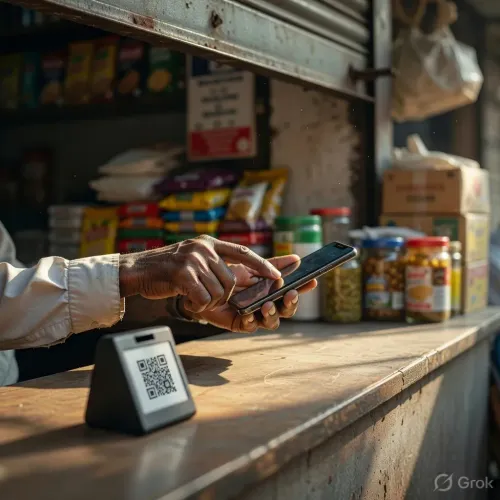
The demands come as policymakers reportedly weigh the introduction of a 0.4 per cent MDR on UPI transactions — a move that would reverse the zero-MDR regime that has been in place since January 2020, when the government scrapped charges to accelerate digital payment adoption.
The Margin Math
AIMRA's letter lays out a stark financial case. According to the association, mainline mobile retailers operate on net margins of just 0.75 per cent to 1.5 per cent. A 0.4 per cent MDR on UPI transactions — which it says account for a significant share of digital payments in this segment — would directly eat into those already-thin margins.
The letter estimates that a retailer processing between ₹10 lakh and ₹40 lakh in monthly UPI transactions would face an added monthly cost of ₹4,000 to ₹16,000 if the proposed charge takes effect. For smaller stores, that could represent a meaningful portion of net profit.
Rising Handset Prices Add to the Strain
The association also flagged a separate but compounding challenge: a sharp rise in smartphone prices driven by higher component and memory costs since November 2025. AIMRA claims that entry-level smartphones, which retailed at around ₹10,000 in 2025, are now selling for approximately ₹17,000 and could climb further to ₹20,000 by December 2026.
The price surge, the association argues, has already suppressed consumer demand and contributed to a significant decline in business volumes for smaller retailers. Layering MDR charges on top of that, it warns, could accelerate store closures in the unorganised segment.
Broader Context and What Comes Next
The debate over UPI charges is not new. The Reserve Bank of India (RBI) and industry stakeholders have periodically revisited the economics of zero-MDR, with payment aggregators and banks arguing that the current model is financially unsustainable. The government, however, has consistently prioritised digital payment adoption, particularly in smaller towns and rural markets.
This is the Nth time small-trade associations have formally petitioned against MDR reintroduction, reflecting persistent anxiety in the retail sector about the cost implications of policy shifts. AIMRA's intervention follows similar representations by sectors including kirana stores and petrol dealers in recent years.
No formal response from the Finance Ministry has been reported as yet. The outcome of consultations, if any are convened, will be closely watched by India's estimated 1.50 lakh-plus mobile retail outlets and the broader small-merchant ecosystem that has come to depend on UPI as a near-zero-cost payment rail.
Point of View
But the zero-MDR model has left payment infrastructure providers under-compensated and is now being reconsidered. The irony is that the retailers who most benefited from frictionless digital payments — small shops that once feared fintech disruption — are now the loudest voices against any charge reversal. What is missing from this debate is a tiered MDR framework: large merchants and high-volume platforms can absorb a small charge; a ₹10 lakh-a-month mobile kirana genuinely cannot. If the government moves ahead without such carve-outs, it risks undoing years of financial inclusion gains in the small-merchant segment precisely when smartphone unaffordability is already squeezing volumes.
NationPress
21 Sept 2026
Frequently Asked Questions
What is the proposed UPI MDR charge that AIMRA is opposing?
The proposed Merchant Discount Rate (MDR) is a fee of approximately 0.4% on UPI transactions that is reportedly under consideration by policymakers. Since January 2020, UPI transactions have attracted zero MDR; reintroducing the charge would mean merchants pay a small percentage of each transaction to payment processors.
Why are mobile retailers particularly worried about UPI charges?
Mobile retailers operate on extremely thin net margins of 0.75%–1.5%, according to AIMRA. A 0.4% UPI MDR would directly cut into those margins, with retailers processing ₹10 lakh–₹40 lakh a month facing an additional cost of ₹4,000–₹16,000 every month.
How have smartphone prices changed, and why does it matter here?
Entry-level smartphones that cost around ₹10,000 in 2025 are now reportedly priced at about ₹17,000, driven by higher component and memory costs since November 2025. AIMRA warns prices could reach ₹20,000 by December 2026, compounding the sales slump that small retailers are already experiencing.
What has AIMRA specifically asked the government to do?
AIMRA has sought a complete exemption from UPI MDR for small and medium retailers, continued access to low-cost digital payments, mandatory consultation with trade bodies before any fee structure is finalised, and broader policy support for the retail sector.
Has the Finance Ministry responded to AIMRA's letter?
No formal response from the Finance Ministry has been reported as of 21 September 2026. The outcome of any consultations will be closely watched by India's more than 1.50 lakh small mobile and electronics retailers.