More countries ditching US dollar for local currencies in cross-border trade: Report
Synopsis
The US dollar's grip on global trade is loosening — not with a bang, but with dozens of quiet bilateral deals. Indonesia's local currency transactions nearly doubled in the first eight months of 2026 alone, BRICS nations are pushing national-currency trade, and Africa's PAPSS is building an entirely dollar-free cross-border payments layer. The architecture of international finance is being redrawn, one bilateral swap at a time.
Key Takeaways
Bank Indonesia reported $49.4 billion in local currency transactions through August 2026 , up from $25.7 billion for all of 2025 .
Indonesia's LCT partners include Malaysia , Thailand , China , Japan , South Korea , and the UAE .
China is advancing renminbi internationalisation via bilateral trade deals and cross-border payment systems.
BRICS members are exploring national currency use for intra-bloc trade settlements.
Africa's Pan-African Payment and Settlement System ( PAPSS ) enables local-currency cross-border payments across the continent.
A gradual decline in dollar demand for trade transactions could, over the long term, affect demand for US Treasury securities and reduce US financial advantages.
Several countries are accelerating a shift toward local currency transactions (LCT) in cross-border trade, reducing their reliance on the US dollar as the default medium of international commerce. According to a new report, this trend — already well-advanced in Asia, Europe, Latin America, and Africa — could, over the long term, erode the dollar's dominant role in the global financial system.
Asia Leads the Local Currency Push
Asia has emerged as the most active region in developing LCT arrangements. Indonesia has established bilateral LCT frameworks with Malaysia, Thailand, China, Japan, South Korea, and the United Arab Emirates, with further partnerships reportedly in development.
Bank Indonesia reported that the value of transactions under its LCT framework reached the equivalent of $49.4 billion through August 2026 — a substantial increase from $25.7 billion for the whole of 2025. In other words, the first eight months of 2026 had already approached nearly twice the previous year's full-year total.
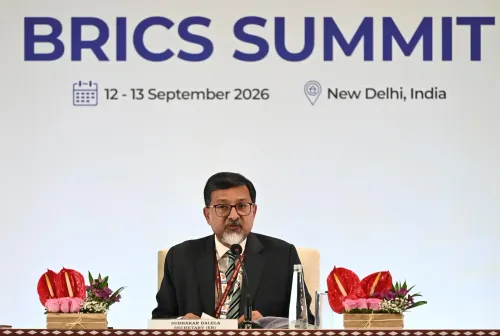
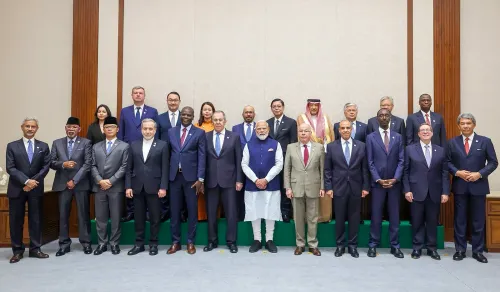
Meanwhile, China is actively promoting the internationalisation of the renminbi through bilateral trade cooperation and cross-border payment systems. BRICS members are also exploring the use of national currencies to facilitate intra-bloc trade, the report states.
The Global Footprint of De-Dollarisation
The shift is not confined to Asia. In Europe, the use of the euro in intra-European trade has become a defining feature of regional economic integration. Latin America has a long history of bilateral and regional payment mechanisms that bypass the dollar. In Africa, the Pan-African Payment and Settlement System (PAPSS) has been developed specifically to facilitate cross-border payments in local currencies, reducing the continent's dependency on dollar-intermediated transactions.
Why Countries Are Making the Switch
Several structural drivers are accelerating the LCT trend. First, local currency arrangements can reduce conversion costs by limiting the need to route transactions through the dollar. Second, they can help businesses manage certain foreign-exchange risks, though the actual benefit depends on market liquidity and prevailing exchange-rate movements.
Third — and arguably most significant — geopolitical considerations have become a central motivation. Trade tensions, financial sanctions, and uncertainty surrounding major economies' policy directions have prompted governments to diversify currency arrangements and seek greater flexibility in managing international financial relationships. This is the Nth such inflection point in dollar-scepticism since the 2008 global financial crisis, but the current wave is broader in geographic scope and institutional depth.
Strategic Implications for the US Dollar
The expansion of LCT carries strategic consequences that extend well beyond economics. If more countries settle bilateral trade in their own currencies, demand for dollars in international transactions could gradually decline in certain market segments, according to the report.
Over the longer term, such structural changes could influence global demand for US financial assets, including Treasury securities, and potentially narrow some of the advantages the United States derives from the dollar's dominant international role. Critics argue, however, that the dollar's network effects and the depth of US capital markets make a rapid displacement unlikely — the shift is expected to be gradual and uneven across sectors and regions.
With BRICS expansion, Asia's LCT momentum, and Africa's PAPSS all advancing simultaneously, the architecture of international payments is quietly but meaningfully being redrawn.
Point of View
Transaction by transaction. What makes the 2026 wave different from earlier de-dollarisation talk is institutional scaffolding: Indonesia has live bilateral frameworks with six partners, PAPSS is operational, and BRICS expansion has added weight to the national-currency push. The mainstream coverage underplays the compounding effect: each new LCT corridor reduces the marginal need for dollar reserves, and those marginal reductions aggregate. The real question is not whether the dollar loses its reserve status — that remains remote — but whether the US can sustain the 'exorbitant privilege' of cheap borrowing as demand for Treasuries softens at the edges. That is the slow-motion risk no Washington consensus is adequately pricing in.
NationPress
28 Oct 2026
Frequently Asked Questions
Why are countries moving away from the US dollar in trade?
Countries are shifting to local currency transactions to reduce conversion costs, manage foreign-exchange risks, and — increasingly — insulate themselves from geopolitical pressures such as financial sanctions and trade tensions linked to major economies. The trend is being driven by both economic efficiency and strategic resilience.
How much has Indonesia's local currency trade grown in 2026?
Bank Indonesia reported $49.4 billion in local currency transactions through August 2026, nearly double the $25.7 billion recorded for the entire year of 2025. Indonesia's LCT partners include Malaysia, Thailand, China, Japan, South Korea, and the UAE.
What role are BRICS nations playing in de-dollarisation?
BRICS members are actively exploring the use of national currencies to settle trade among participating countries, reducing dependence on the US dollar. China is also separately promoting renminbi internationalisation through bilateral agreements and cross-border payment infrastructure.
What is the Pan-African Payment and Settlement System (PAPSS)?
PAPSS is a continent-wide payment infrastructure developed to facilitate cross-border transactions in African local currencies, eliminating the need for dollar intermediation. It is part of a broader global trend toward regional and bilateral payment systems that bypass the dollar.
Could the US dollar lose its global reserve currency status?
Analysts consider a rapid displacement of the dollar unlikely given the depth of US capital markets and the dollar's entrenched network effects. However, a gradual decline in dollar demand for trade transactions could, over the long term, reduce demand for US Treasury securities and narrow some of the financial advantages the United States derives from the dollar's dominant role.