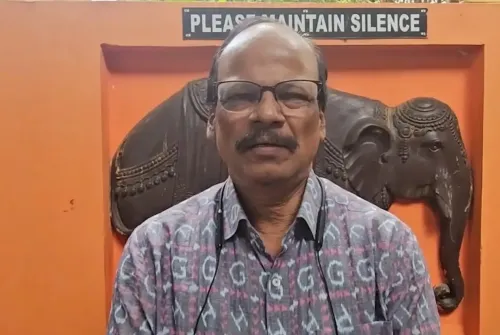
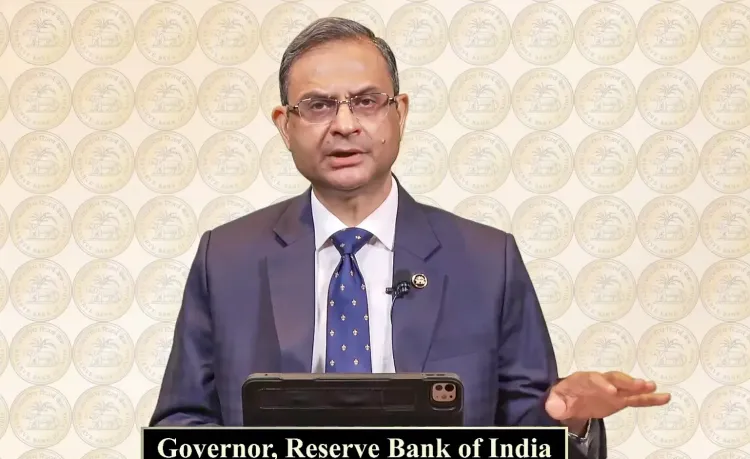
BRICS CBDC and fast payment linkage on table: RBI Governor Malhotra
Synopsis
RBI Governor Sanjay Malhotra has confirmed that BRICS nations are weighing direct linkages between their fast-payment systems and CBDCs — a move that could reshape cross-border retail payments for a bloc covering over 40% of the world's population. With New Delhi hosting the BRICS 2026 summit in September, India is positioning itself at the centre of a payments architecture that could challenge the dollar-dominated correspondent banking model.
Key Takeaways
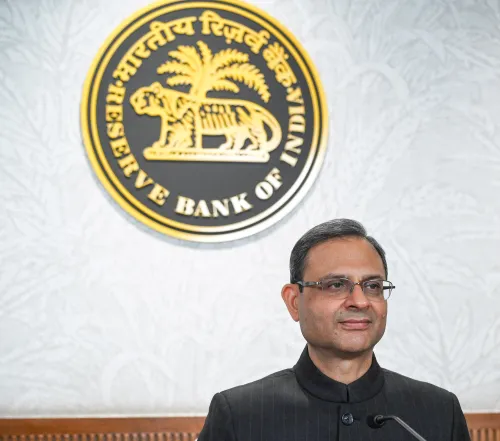
RBI Governor Sanjay Malhotra confirmed on 12 August that BRICS nations are exploring linkages between fast-payment systems and CBDCs .
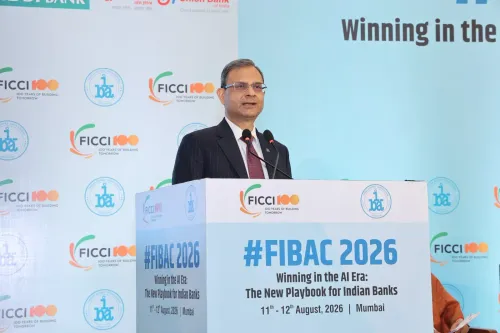
Discussions are at an early stage; 'various options are on the table,' Malhotra said at the FIBAC conference in Mumbai .
India holds local-currency settlement pacts with Indonesia , the Maldives , Mauritius , and the UAE ; Malhotra called for higher transaction volumes under these deals.
Malhotra urged Indian banks to establish board-approved AI governance policies and inventory all AI models in use.
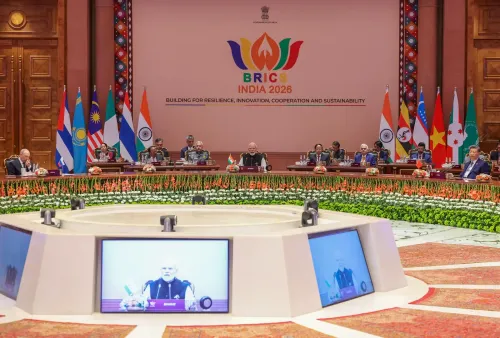
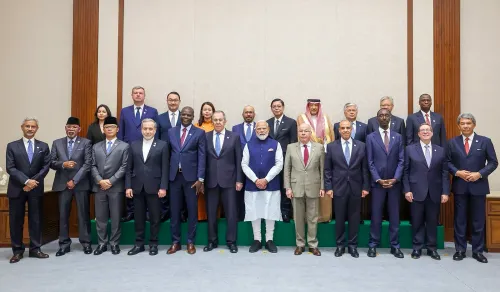
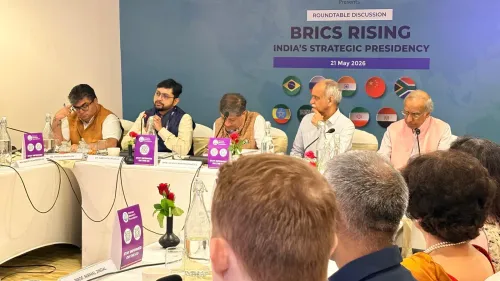
The BRICS 2026 summit in New Delhi in September is expected to be the next major milestone for the cross-border payments agenda.
Reserve Bank of India (RBI) Governor Sanjay Malhotra on 12 August said that BRICS nations are actively exploring linkages between their fast-payment systems and central bank digital currencies (CBDCs), as New Delhi prepares to host the BRICS 2026 summit in September. Malhotra made the remarks at the annual FIBAC conference in Mumbai, signalling that cross-border payment reform is emerging as a central financial agenda for the grouping.
What Is on the Table
The RBI Governor confirmed that 'various methods, various options are on the table, but it is still at the discussion stage, including CBDC and linkages of fast payment systems.' The emphasis is on reducing transaction costs and improving the speed of retail cross-border payments — areas where the current global infrastructure remains slow and expensive. BRICS, which includes Brazil, Russia, India, China, and South Africa among others, sees significant collective leverage in building an alternative payments corridor.
Rupee Internationalisation Push
Malhotra reaffirmed the RBI's broader drive to internationalise the Indian rupee and widen the use of local currencies in bilateral trade and settlements. India currently has local-currency settlement arrangements with Indonesia, the Maldives, Mauritius, and the UAE. The governor stressed that concrete steps to raise the volumes settled under these arrangements must now follow. This comes amid a wider global trend of de-dollarisation in trade finance, which BRICS nations have championed with varying degrees of commitment.
AI Governance Warning to Banks
Departing from payments policy, Malhotra urged Indian banks to treat artificial intelligence as a strategic capability rather than merely a compliance risk. 'Indian banks cannot afford to sit on the sidelines and watch,' he said, calling on lenders to take stock of all AI models currently deployed and to establish board-approved AI governance frameworks. The remarks reflect growing regulatory attention on how financial institutions manage algorithmic decision-making in credit, fraud detection, and customer service.
Geopolitical Risks and Banking Resilience
Malhotra acknowledged that geopolitical tensions — particularly the West Asia conflict — pose near-term risks to India's growth outlook through energy and commodity price volatility. However, he expressed confidence that policy measures such as energy supply diversification, ethanol blending, electric vehicle adoption, and new free trade agreements would strengthen the economy over the longer term. India's banking sector, he added, is well-positioned to absorb external shocks, backed by strong capital buffers, declining non-performing assets, and healthy profitability.
What Comes Next
The BRICS 2026 summit in New Delhi in September is expected to provide a higher-stakes platform for formalising the cross-border payments discussion. Whether the CBDC-linkage proposal moves from exploratory talks to a concrete pilot framework will likely depend on the degree of consensus among member nations — a grouping whose geopolitical alignments remain far from uniform. The RBI's parallel push on rupee internationalisation suggests India intends to use the summit to advance both multilateral and bilateral payment architecture.
Point of View
Collective intent to build payment rails that bypass the dollar-denominated correspondent banking system. India's bilateral local-currency deals with the UAE and others are the building blocks, but scaling them into a BRICS-wide fast-payment network requires political alignment that the grouping — now spanning democracies, autocracies, and geopolitical rivals — has historically struggled to sustain. Malhotra's framing of AI as a capability rather than a risk is also notable: it suggests the RBI is shifting from a purely cautionary posture to one that acknowledges competitive pressure on Indian banks from fintech and global digital lenders. The September summit will reveal whether the payments ambition is a genuine policy convergence or another declaration without a disbursement mechanism.
NationPress
26 Sept 2026
Frequently Asked Questions
What are BRICS nations discussing about CBDCs and fast-payment systems?
BRICS nations are exploring potential linkages between their respective fast-payment systems and central bank digital currencies (CBDCs) to reduce cross-border transaction costs and improve settlement speed. RBI Governor Sanjay Malhotra confirmed the discussions are ongoing but still at an exploratory stage.
Why does cross-border payment reform matter for BRICS?
Cross-border payments within BRICS are currently routed largely through dollar-denominated correspondent banking networks, which are slow and costly. A direct linkage of fast-payment systems or CBDCs could cut transaction fees and settlement times for trade and remittances among member nations.
What is India's current position on local-currency settlements?
India has bilateral local-currency settlement arrangements with Indonesia, the Maldives, Mauritius, and the UAE. RBI Governor Malhotra has called for concrete steps to increase the volume of transactions settled under these agreements.
When is the BRICS 2026 summit, and why is it relevant?
The BRICS 2026 summit is scheduled to be hosted by New Delhi in September 2026. It is expected to serve as a key platform for advancing the cross-border payments and CBDC-linkage agenda among member nations.
What did RBI Governor Malhotra say about AI and Indian banks?
Malhotra urged Indian banks to treat artificial intelligence as a strategic capability rather than only a risk, calling on them to inventory all AI models in use and establish board-approved AI governance policies. He warned that 'Indian banks cannot afford to sit on the sidelines and watch.'