GSDP base year: Most states adopt 2022-23, says MoSPI
Synopsis
Most states have adopted 2022-23 as the base year for GSDP estimates, MoSPI Secretary Saurabh Garg says. The ministry is working with the remaining states as it turns its focus to regional economic accounts.
Key Takeaways
MoSPI Secretary Saurabh Garg said most states have adopted 2022-23 as the base year for GSDP estimates.
The remaining states are expected to make the transition over the next few months, Garg said in Mumbai .
India's new national accounts series was released in February 2026 , changing the base year from 2011-12 to 2022-23 .
Garg said first-quarter GDP estimates for FY27 had been released and second-quarter data would follow by the end of the next month.
The revised series makes wider use of corporate filings, enterprise and labour surveys, and Goods and Services Tax data.
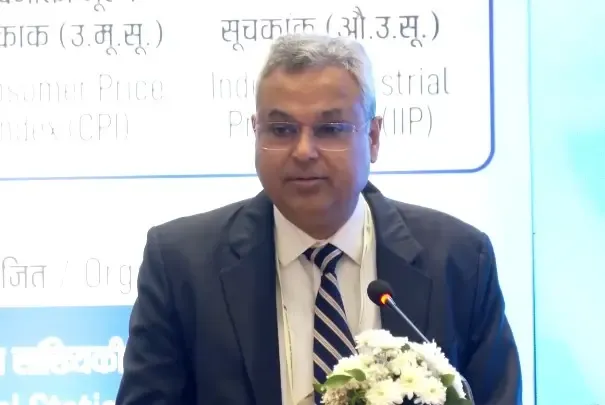
Most states have adopted 2022-23 as the base year for Gross State Domestic Product (GSDP) estimates, Ministry of Statistics and Programme Implementation (MoSPI) Secretary Saurabh Garg said at a data users conference in Mumbai on 23 November. The ministry is working with the remaining states to bring their economic estimates into line with the revised national accounts framework.
Garg said regional accounts would be a focus in the coming period and that the outstanding transitions were expected over the next few months. The change follows the release of the new national accounts series in February 2026, which shifted the national base year from 2011-12 to 2022-23.
State-level transition
GSDP estimates measure economic activity at the state level. Aligning their base year with the national series is intended to bring state-level data into the revised framework, although Garg did not identify the states that have completed the shift or those still to do so.
“Our focus in the coming period will be on regional accounts. We are working closely with state governments to shift the base year for GSDP to 2022-23. Many states have already implemented it, while the remaining states will adopt it over the next few months,” Garg said.
He made the remarks at the Data Users Conference on the New Series of Gross Domestic Product (GDP), Consumer Price Index (CPI) and Index of Industrial Production (IIP). The conference was organised to explain the revised indicators, their data sources and methodological changes to data users.
Changes to the national accounts series
Garg described the national base-year revision as a complex exercise that took nearly two years. It involved expert committees, MoSPI, other government departments and institutions including the Reserve Bank of India (RBI), State Bank of India and Securities and Exchange Board of India (SEBI).
The new series makes wider use of Ministry of Corporate Affairs filings, the Annual Survey of Unincorporated Sector Enterprises and the Periodic Labour Force Survey. These sources are intended to improve measurement of private corporate activity and the informal sector.
Other changes include double deflation for agriculture and manufacturing, the integration of supply-use tables into annual estimates and use of the proportional Denton method for benchmarking. Quarterly estimates also rely more heavily on Goods and Services Tax data.
Data releases and what comes next
Garg said the first-quarter GDP estimates for FY27 had already been released under the new series. Second-quarter figures would be published by the end of the following month, he said, while monthly CPI and IIP releases were continuing under the revised framework.
The national and state transitions affect how users work with economic estimates: the revised series draws on additional sources and methods, while states are moving to the same base year. The source did not provide a state-by-state implementation schedule or specify the effect of the changes on individual state growth estimates.
MoSPI's discussions with state governments will continue as the remaining states move towards adopting the 2022-23 base year.
Point of View
But alignment alone is not evidence that every state's estimates are equally robust. MoSPI should publish a state-by-state transition timetable and explain how revised methods affect comparisons with earlier estimates. Transparent documentation will matter as much as the change in the headline base year.
NationPress
23 Nov 2026
Frequently Asked Questions
What did MoSPI say about the GSDP base year?
MoSPI Secretary Saurabh Garg said most states have adopted 2022-23 as the base year for GSDP estimates. The ministry is working with the remaining states on the transition.
When will the remaining states adopt the new GSDP base year?
Garg said the remaining states would adopt the 2022-23 base year over the next few months. He did not provide a state-by-state timetable.
Why does the GSDP base-year change matter?
The change aligns state-level economic estimates with the revised national accounts framework. GSDP measures economic activity at the state level.
What changed in the national accounts series?
The national accounts base year changed from 2011-12 to 2022-23 in the series released in February 2026. The revised series also uses additional data sources and methods, including wider use of corporate filings and surveys.
When will the next quarterly GDP data be published?
Garg said second-quarter GDP data for FY27 would be published by the end of the month following his remarks. He said first-quarter estimates under the new series had already been released.