MSME Ministry, DPIIT sign MoU to commercialise India's GI products
Synopsis
India's MSME Ministry and DPIIT have formalised a partnership to turn the country's vast registry of GI-tagged products into scalable, export-ready enterprises — integrating them with ONDC, GeM, and international trade pavilions under a unified 'Bharat GI' brand. The move acknowledges a persistent gap: legal GI protection has rarely translated into commercial gains for the artisans it was meant to protect.
Key Takeaways
The MSME Ministry and DPIIT signed an MoU on 11 August to commercialise India's Geographical Indication (GI) -tagged products.
GI collectives will be onboarded onto ONDC and Government e-Marketplace (GeM) under a dedicated 'Bharat GI' banner.
Both ministries will co-sponsor GI Pavilions at national and international trade fairs and buyer-seller meets.
The One District One Product (ODOP) framework will be integrated into joint programme design.
The initiative targets artisans, weavers, and producer collectives , improving their access to premium domestic and export markets.
The collaboration is aligned with the Aatmanirbhar Bharat and Vocal for Local policy frameworks.
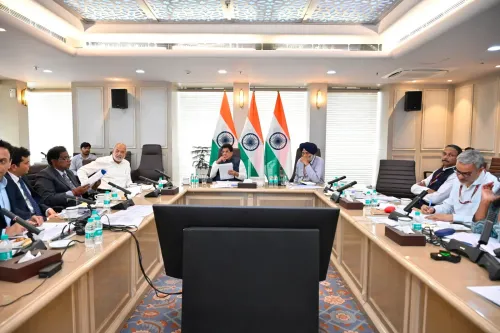
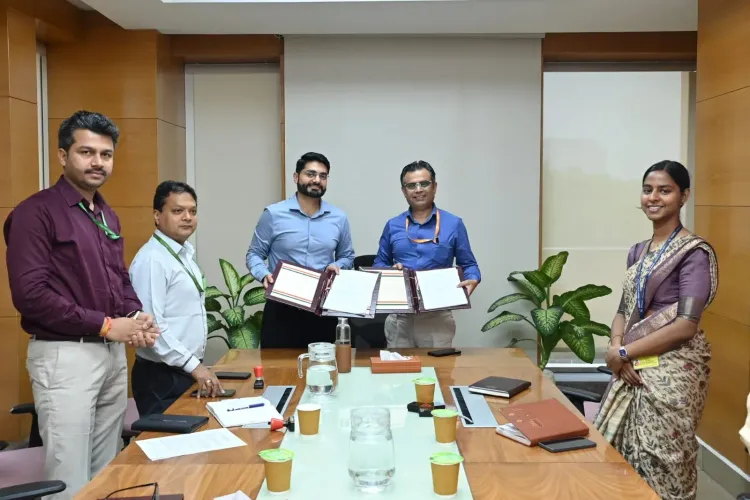
The Ministry of Micro, Small and Medium Enterprises (MSME) and the Department for Promotion of Industry and Internal Trade (DPIIT) signed a Memorandum of Understanding (MoU) on Tuesday, 11 August to accelerate the commercialisation, digital integration, and market expansion of India's Geographical Indication (GI)-tagged products. The agreement marks a structural push to convert legally protected traditional crafts into export-ready enterprises with access to premium domestic and global markets.
What the MoU Covers
Under the partnership, both ministries will work to bridge the longstanding gap between the legal protection of GI products and their economic utilisation. Key focus areas include quality standardisation, branding, market expansion, and enterprise development for artisans, weavers, and producer collectives across the country.
A central pillar of the collaboration is the integration of the One District One Product (ODOP) framework into joint programme design. Both organisations will also work to onboard GI collectives and authorised users onto the Open Network for Digital Commerce (ONDC) and the Government e-Marketplace (GeM) under a dedicated 'Bharat GI' banner.
Trade Promotion and Market Access
The two ministries have committed to co-sponsoring dedicated GI Pavilions at national and international trade fairs, exhibitions, and buyer-seller meets. This is aimed at giving Indian GI products structured visibility in both domestic retail channels and global export markets — an arena where GI-tagged goods have historically struggled to scale beyond regional recognition.
'The collaboration is expected to strengthen India's Geographical Indications (GI) ecosystem by facilitating capacity building, digital enablement and enhanced market access for artisans, weavers and producer collectives,' the MSME Ministry stated.
Institutional Roles
DPIIT is the nodal authority for the registration and protection of Geographical Indications under the Geographical Indications of Goods (Registration and Protection) Act, 1999. The MSME Ministry oversees the development of micro, small, and medium enterprises as well as traditional industries and artisan clusters. The MoU formalises a joint implementation structure that leverages both mandates.
Broader Policy Context
The initiative is framed within the government's Aatmanirbhar Bharat and Vocal for Local missions, positioning GI products as instruments of both cultural preservation and economic self-reliance. Notably, India has one of the largest registries of GI-tagged products in Asia, yet the commercial realisation for grassroots producers has remained limited — a gap this MoU directly targets.
The agreement is expected to create new business opportunities for artisans and producer groups while improving their access to premium consumers and export channels. How quickly the digital onboarding and pavilion co-sponsorship translates into measurable income gains for GI communities will be the real test of this partnership.
Point of View
Yet the economic dividend for the artisans behind those tags has been modest at best. This MoU is an acknowledgement of that failure — legal protection without market infrastructure is largely symbolic. The 'Bharat GI' branding on ONDC and GeM is a meaningful structural step, but digital onboarding alone will not move the needle unless accompanied by demand-side investment and quality enforcement. The real accountability test is whether income metrics for GI producer collectives are tracked and published — without that, this risks becoming another well-intentioned framework that produces pavilions rather than prosperity.
NationPress
25 Sept 2026
Frequently Asked Questions
What is the MSME-DPIIT MoU on GI products about?
The MoU signed on 11 August formalises a partnership between the MSME Ministry and DPIIT to commercialise India's Geographical Indication (GI)-tagged products by improving market access, digital integration, and export readiness. It covers quality standardisation, branding, and enterprise development for artisans and producer collectives.
What is the 'Bharat GI' initiative under this MoU?
'Bharat GI' is a dedicated banner under which GI collectives and authorised users will be onboarded onto the Open Network for Digital Commerce (ONDC) and the Government e-Marketplace (GeM). It is designed to give GI-tagged products a unified, recognisable identity in digital commerce channels.
Which products and communities will benefit from this partnership?
Artisans, weavers, and producer collectives associated with GI-tagged traditional crafts and goods across India stand to benefit. The initiative specifically targets communities that have legal GI protection but limited access to premium consumers and export markets.
How does DPIIT's role differ from MSME Ministry's in this collaboration?
DPIIT is the nodal authority for registering and protecting GIs under the Geographical Indications of Goods (Registration and Protection) Act, 1999, while the MSME Ministry oversees enterprise development for traditional industries and artisans. The MoU combines both mandates into a joint implementation framework.
How does this MoU connect to Aatmanirbhar Bharat?
The initiative is explicitly framed within the Aatmanirbhar Bharat and Vocal for Local missions, positioning GI products as tools for economic self-reliance and cultural preservation. Co-sponsored GI Pavilions at international trade expos are intended to extend this vision to global markets.