Did Elon Musk Deny Claims of SpaceX Raising $800 Billion?
Synopsis
In a recent statement, Elon Musk addressed the rumors surrounding SpaceX's alleged $800 billion fundraising efforts and NASA's financial relationship with the company. Musk emphasized SpaceX's independence and growth, shedding light on its revenue sources and operational successes. This article unpacks Musk's insights into the company's trajectory and its significance in the aerospace sector.
Key Takeaways
Elon Musk denies claims of SpaceX raising $800 billion.
SpaceX maintains positive cash flow and conducts stock buybacks.
NASA will constitute less than 5% of SpaceX 's revenue next year.
Starlink is SpaceX 's largest revenue source.
The recent launch was the 156th Falcon 9 mission this year.
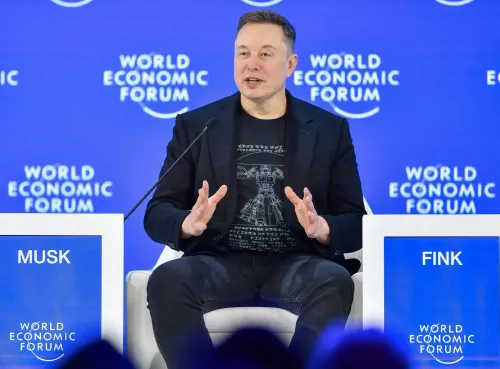
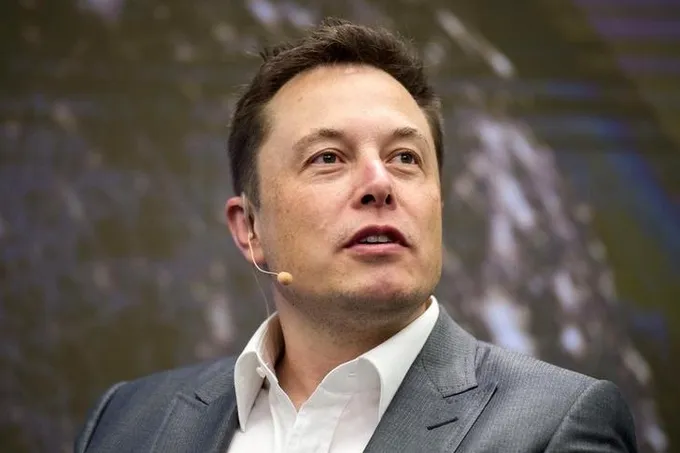
New Delhi, Dec 7 (NationPress) CEO of Tesla and SpaceX, Elon Musk, on Sunday dismissed the claims that SpaceX is seeking to raise $800 billion or that NASA provides subsidies to his aerospace firm.
The Wall Street Journal reported that SpaceX is initiating a secondary share sale which would set the valuation of the rocket company at $800 billion, surpassing OpenAI to become the most valuable private entity in the U.S.
“Numerous reports have asserted that @SpaceX is raising funds at an $800B valuation, which is incorrect. SpaceX has maintained positive cash flow for several years and conducts stock buybacks bi-annually to ensure liquidity for our employees and investors,” Musk shared in a series of posts on X.
He elaborated that the increase in valuation is tied to advancements with Starship and Starlink, along with acquiring global direct-to-cell spectrum that significantly expands our market reach.
“Moreover, there’s one other aspect that is arguably the most significant,” he added.
Musk mentioned that despite his appreciation for NASA, “they will account for less than 5 percent of our revenue next year.”
“The commercial Starlink service is, by a considerable margin, our largest revenue source. Some individuals have suggested that SpaceX is ‘subsidized’ by NASA, which is entirely untrue,” Musk stated.
“The SpaceX team secured the NASA contracts because we provided the best product at the lowest price — both the best quality and the lowest cost. Regarding astronaut transportation, SpaceX currently stands as the sole option that meets NASA's safety criteria,” he added.
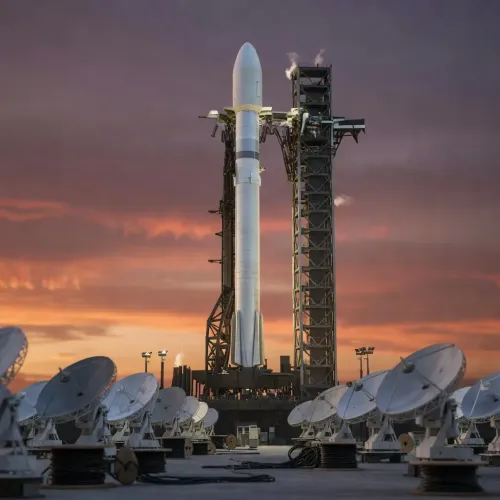
Last week, SpaceX successfully launched 28 Starlink satellites into orbit from Vandenberg Space Force Base in California. The reusable first stage returned 8.5 minutes post-liftoff, showcasing the booster's reusability.
This marked the 156th Falcon 9 mission this year for the company, contributing to the thousands of Starlink satellites in orbit.
Point of View
It's crucial to recognize that Elon Musk’s statements reflect a significant moment for SpaceX amidst rising speculation. The emphasis on transparency in financial dealings and the distinction from NASA's support showcases a commitment to innovation and independence in the aerospace industry, aligning with national interests as SpaceX continues to redefine possibilities in space exploration.
NationPress
22 Oct 2026
Frequently Asked Questions
Is SpaceX really raising $800 billion?
No, Elon Musk clarified that reports suggesting SpaceX is raising $800 billion are inaccurate and misleading.
Does NASA subsidize SpaceX?
According to Musk, SpaceX does not receive subsidies from NASA; instead, they won contracts by providing the best products at competitive prices.
What is SpaceX's major source of revenue?
Musk indicated that the commercial Starlink service is SpaceX's largest revenue contributor.
How many missions has SpaceX completed this year?
SpaceX completed its 156th Falcon 9 mission this year, demonstrating its operational capabilities.
What is the significance of Starship and Starlink for SpaceX?
Advancements in Starship and Starlink are crucial for increasing SpaceX's valuation and expanding its market reach.