Is Homegrown NavIC Revolutionizing Real-Time Tracking for Trains and Fishing Vessels?
Synopsis
The Indian government has made strides in real-time tracking technology with NavIC, enhancing safety for both trains and fishing vessels. This initiative highlights the growing importance of satellite communication in modern transportation and disaster management.
Key Takeaways
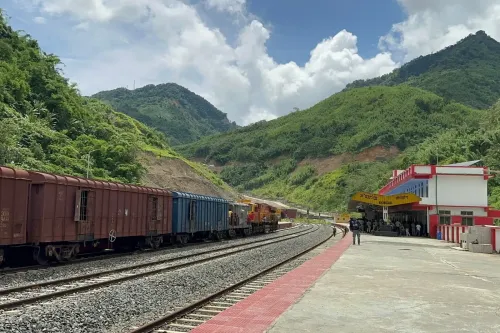
Real-time tracking is operational on over 10,400 trains.
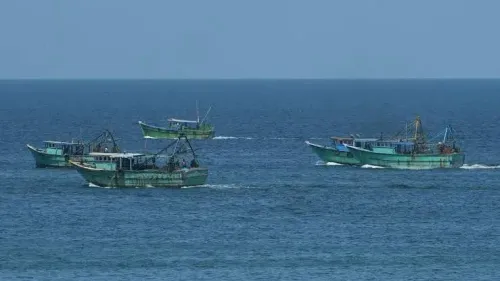
More than 40,000 fishing vessels are equipped with NavIC receivers.
The NVS series of satellites is being launched to strengthen the system.
NavIC provides disaster alerts and vital communication links.
Satellite internet services are bridging India's digital divide .
New Delhi, Feb 12 (NationPress) The real-time tracking system is now functional on more than 10,400 locomotives, while over 40,000 fishing vessels have been outfitted with NavIC (Navigation with Indian Constellation) receivers for tracking and emergency notifications, as disclosed by the Parliament on Thursday.
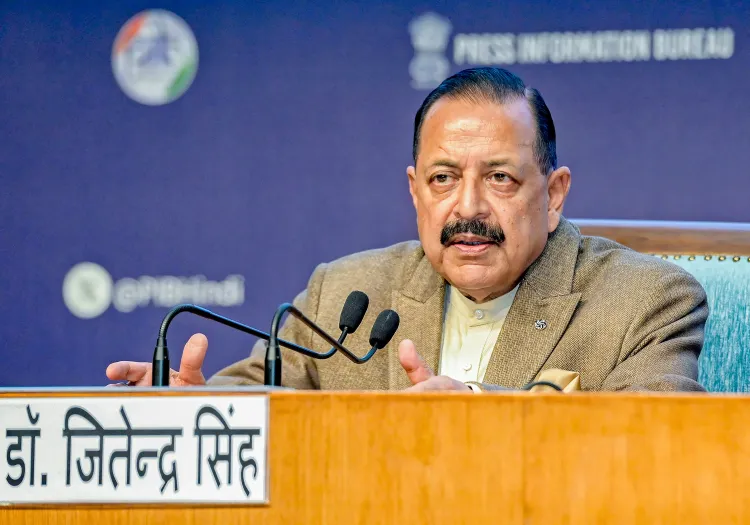
Union Minister Dr. Jitendra Singh noted in a written response to the Rajya Sabha that the use of NavIC for both commercial and public purposes has experienced remarkable growth in recent years.
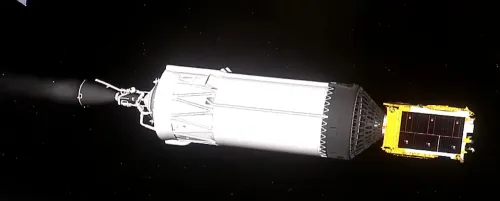
“More than 60 mobile phone models from leading global brands now support positioning via NavIC. To enhance this constellation, ISRO is currently launching the NVS series (NVS-03, NVS-04, and NVS-05) of second-generation satellites,” the minister revealed.
He added that disaster alerts and personal distress communications are facilitated through GSAT and NavIC/GAGAN systems within the Vessel Communication and Support Systems (VCSS) of the Department of Fisheries.
Moreover, search-and-rescue operations utilizing three satellites under the COSPAS-SARSAT program have been instrumental in saving lives during numerous distress situations within the Indian service area.
Additionally, NavIC offers a one-way messaging service that transmits emergency alerts regarding cyclones, tsunamis, and high wave threats directly to receivers on boats, coordinated with the Indian National Centre for Ocean Information Services (INCOIS).
Singh mentioned that this system delivers potential fishing zone (PFZ) advisories to assist fishermen in locating fish aggregations, conserving fuel and time, while also providing alerts about the International Maritime Boundary to avoid unintentional incursions into foreign waters.
An official statement indicated that satellite internet services are becoming a crucial solution to tackle India’s digital divide. Initiatives such as BharatNet and Digital India already make use of satellite connectivity in broadband to widen accessibility.
The advantages of communication satellites are reflected in applications like television broadcasting, DTH television, telecommunications, Very Small Aperture Terminal (VSAT) services, radio networking, Headend In The Sky (HITS), Digital Satellite News Gathering (DSNG), In-Flight and Maritime Connectivity (IFMC), and various societal applications.
Point of View
I view the advancements in NavIC technology as a significant step towards enhancing safety and communication in India. This initiative supports our fishermen and the transportation sector, showcasing India's commitment to harnessing indigenous technology for public benefit.
NationPress
20 Sept 2026
Frequently Asked Questions
How many trains are currently using NavIC?
More than 10,400 locomotives are operational with real-time tracking using NavIC.
What benefits does NavIC provide for fishermen?
NavIC offers potential fishing zone advisories, emergency alerts, and helps in avoiding foreign maritime boundaries.
What is the role of GSAT in NavIC?
GSAT provides disaster alerts and personal distress connectivity in conjunction with NavIC for enhanced safety.
How does NavIC enhance communication services?
NavIC supports various applications, including television broadcasting, telecommunications, and satellite internet services.