NHAI releases high-speed National Highway guidelines for 4-6 lane corridors
Synopsis
India's highway regulator has finally filled a critical design gap: NHAI's new guidelines set uniform technical and safety standards for all high-speed, access-controlled National Highways outside the expressway category — a framework that will shape every new 4-6 lane corridor built toward the 50,000 km Viksit Bharat 2047 target.
Key Takeaways
NHAI released comprehensive planning and design guidelines for high-speed, access-controlled National Highways on 21 September 2026 .
Guidelines apply to all upcoming 4-lane and 6-lane Greenfield and Brownfield high-speed National Highway projects.
Road widths standardised at 60 metres (up to 15,000 vehicles) and 70 metres (15,000–40,000 vehicles) based on traffic flow.
Special safety provisions include advance notification of exits and entry points for high-speed corridors.
Aligned with the government's plan to develop 50,000 km of high-speed corridors under Viksit Bharat 2047 .
Previously, no separate standards existed for access-controlled National Highways outside the expressway category.
The National Highways Authority of India (NHAI) on Monday, 21 September 2026, released comprehensive guidelines for the planning and designing of high-speed, access-controlled National Highways — covering all corridors other than expressways. The move aims to bring uniform technical standards to Detailed Project Reports (DPRs) for such corridors and plug a long-standing regulatory gap in India's highway development framework.
Why These Guidelines Were Needed
Until now, no separate standards governed the planning and design of access-controlled high-speed National Highways outside the expressway category. According to the NHAI statement, significant variations had been observed in DPR standards adopted across different corridors, leading to inconsistencies in safety provisions and operational design. The new guidelines address this by providing a unified technical and safety framework for all upcoming projects.
Scope and Applicability
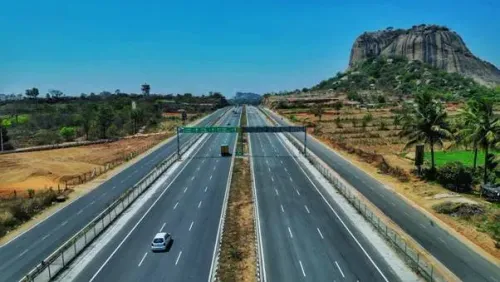
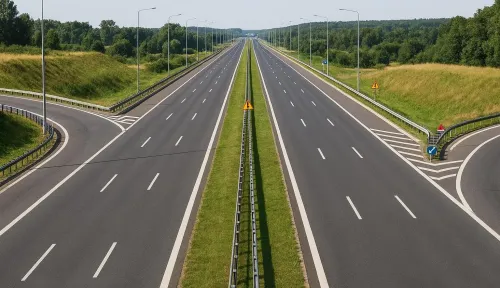
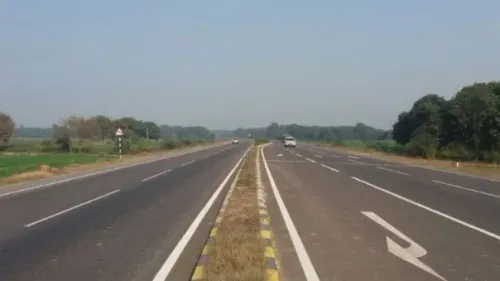
The guidelines will apply to all forthcoming 4-lane and 6-lane Greenfield and Brownfield high-speed, access-controlled National Highway projects. Lane configuration will be standardised based on detailed traffic assessments. Corridors with traffic flow up to 15,000 vehicles will feature a 4-lane highway and 4-lane structures with a road width of 60 metres. Traffic flow between 15,000 and 25,000 vehicles will correspond to a 4-lane highway with 6-lane structures at a width of 70 metres. Corridors handling between 25,000 and 40,000 vehicles will be designed as 6-lane highways with 6-lane structures, also at 70 metres width.
Key Safety Provisions
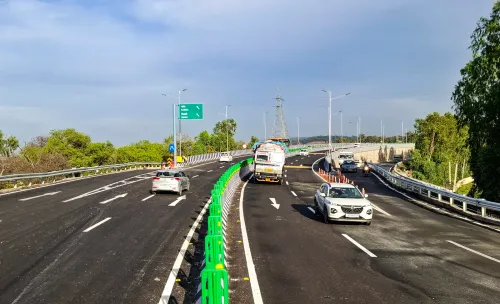
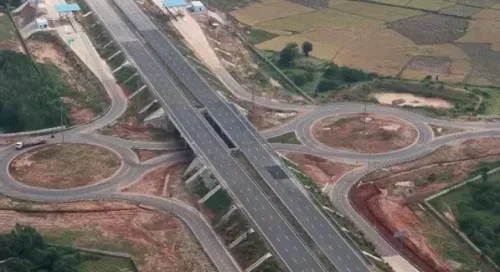
A central thrust of the guidelines is enhanced road safety calibrated to high-speed traffic conditions. Special provisions have been prescribed for advance notification of exits and entry points, enabling highway users to anticipate and safely navigate upcoming access and egress zones. Interchanges with ramps will be provided at crossings with expressways, other National Highways, State Highways, and major arterial roads. Connectivity to key traffic-generating destinations — including ports, airports, Multi-Modal Logistics Parks (MMLPs), industrial zones, and major tourist sites — will also be factored into interchange planning.
Alignment With Viksit Bharat 2047 Roadmap
The guidelines are aligned with the central government's long-term infrastructure vision, which envisages the development of 50,000 km of access-controlled high-speed corridors under the Viksit Bharat 2047 programme. The framework is intended to boost national connectivity and reduce logistics costs — a persistent drag on India's manufacturing competitiveness. Notably, this standardisation push comes at a time when the government is accelerating highway construction to support economic corridors linking ports to industrial hubs.
What Comes Next
With the guidelines now in place, all new DPRs for qualifying National Highway corridors are expected to conform to these specifications from the outset. The standardisation is likely to reduce project-to-project design discrepancies and potentially streamline approvals. Industry bodies and highway developers will be closely watching how quickly NHAI operationalises the framework across its active project pipeline.
Point of View
000 km Viksit Bharat target is ambitious; without standardised DPRs, the risk was that each corridor would be a bespoke engineering exercise, multiplying both costs and timelines. This framework is a necessary correction — but its impact will be measured in how quickly it filters into active tenders.
NationPress
21 Sept 2026
Frequently Asked Questions
What are the new NHAI guidelines for high-speed National Highways?
NHAI released comprehensive guidelines on 21 September 2026 for the planning and design of high-speed, access-controlled National Highways other than expressways. They set uniform technical and safety standards for all upcoming 4-lane and 6-lane Greenfield and Brownfield highway projects, covering lane widths, traffic thresholds, interchange design, and safety provisions.
Why did NHAI release these guidelines now?
No separate standards previously governed access-controlled high-speed National Highways outside the expressway category, leading to variations in DPR standards across corridors. The guidelines address this gap by providing a consistent framework to improve safety, operational efficiency, and project quality.
What are the road width standards under the new guidelines?
Corridors with traffic up to 15,000 vehicles will have a width of 60 metres with 4-lane highway and 4-lane structures. Corridors with 15,000–25,000 vehicles will be 70 metres wide with 4-lane highway and 6-lane structures, and those with 25,000–40,000 vehicles will also be 70 metres with a 6-lane highway and 6-lane structures configuration.
How do these guidelines connect to Viksit Bharat 2047?
The guidelines are aligned with the government's long-term roadmap to develop 50,000 km of access-controlled high-speed corridors under the Viksit Bharat 2047 programme. Standardised planning is intended to accelerate execution and reduce logistics costs across the national highway network.
Who is affected by the new NHAI highway guidelines?
The guidelines affect highway planners, DPR consultants, contractors, and state agencies involved in designing and building new 4-6 lane National Highway corridors. End users — including freight operators, logistics companies, and commuters — stand to benefit from improved safety standards and consistent highway design across India.