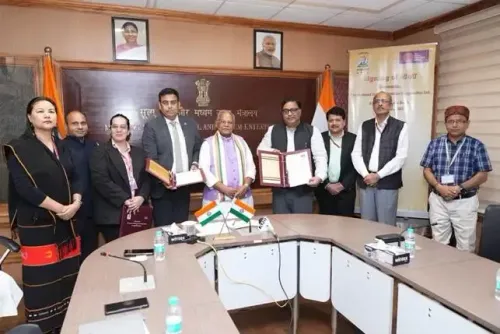
NIFTEM-K signs 5-year MoU with Massey University New Zealand for food tech research
Synopsis
India's premier food technology institute NIFTEM-K has inked a five-year MoU with New Zealand's Massey University, unlocking joint research, student mobility, and co-funding opportunities. The tie-up arrives as NIFTEM-K rolls out innovations from biodegradable packaging to nanosensor-based pesticide detection — signalling a serious push to internationalise India's food processing research agenda.
Key Takeaways
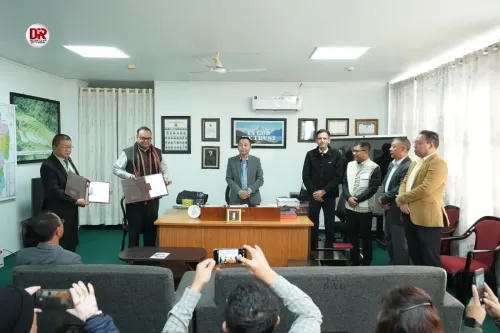
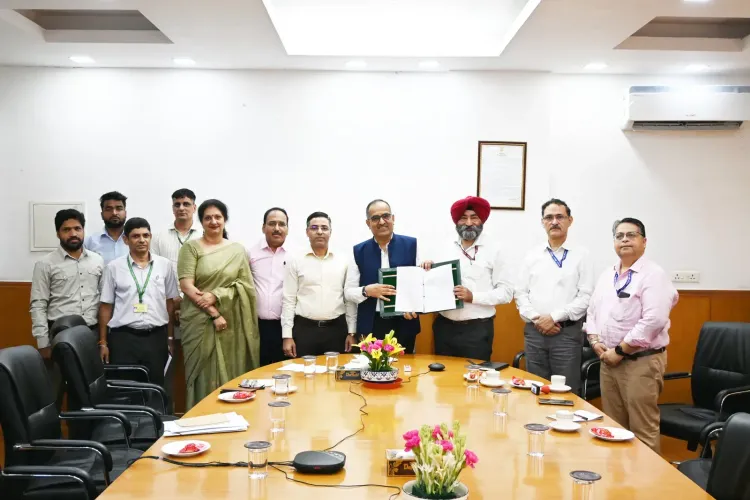
NIFTEM-K and Massey University, New Zealand signed a five-year MoU on 3 July to collaborate on food technology and higher education.
Cooperation covers joint research , third-party funding applications, faculty and student exchanges, and seminar participation.
The MoU safeguards intellectual property rights of both institutions and is renewable for another five-year term by mutual consent.
NIFTEM-K's recent innovations include SARTHI Technology , a 100% biodegradable film without plasticizers, and nanosensor-based rapid detection kits for pesticides and aflatoxins.
The institute also runs a village adoption programme to extend food technology benefits to rural communities.
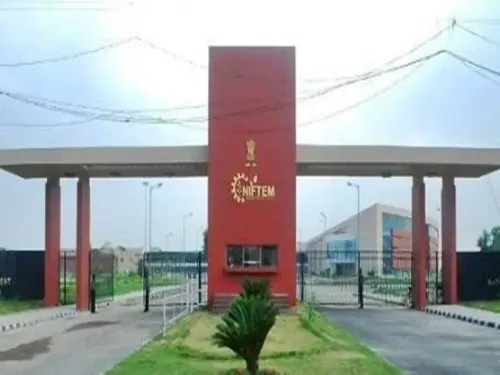
The National Institute of Food Technology Entrepreneurship and Management, Kundli (NIFTEM-K), operating under the Ministry of Food Processing Industries, has signed a five-year Memorandum of Understanding (MoU) with Massey University, New Zealand to deepen bilateral cooperation in food technology, processing, innovation, and higher education. The agreement was announced through an official ministry statement on Friday, 3 July.
Key Areas of Cooperation
The MoU outlines a broad framework for collaboration, covering joint research projects, co-applications for third-party funding, participation in international seminars and academic conferences, and the exchange of faculty and researchers. Student mobility programmes are also included, opening pathways for learners from both institutions to gain cross-border academic experience.
Dedicated coordinators appointed by each institution will oversee the implementation of collaborative initiatives, ensuring structured follow-through on the partnership's objectives.
Terms and Intellectual Property Safeguards
The agreement is structured as a non-binding framework designed to foster future academic and research partnerships. It explicitly safeguards the intellectual property rights of both parties. The MoU may be renewed for a further five-year term by mutual consent upon expiry.
According to the ministry, 'This collaboration is expected to enhance international academic cooperation, promote innovation in food technology and processing, facilitate knowledge exchange, and provide greater opportunities for students, researchers and faculty members of both institutions.'
NIFTEM-K's Recent Innovations
The partnership announcement builds on NIFTEM-K's growing profile in food processing research. The institute has developed several notable technologies, including SARTHI Technology — an integration of advanced digital systems with sensors — and a hybrid drying and biodegradable film concept that produces 100 per cent biodegradable film without plasticizers.
The institute has also developed rapid detection kits for identifying pesticides in tea and harmful compounds such as acrylamides and aflatoxins, using nanosensors and enzyme inhibition principles. These innovations underscore NIFTEM-K's commitment to sustainable and safe food processing practices.
Community Impact and Broader Significance
Beyond laboratory research, NIFTEM-K has extended its work to rural India through a village adoption programme, aimed at empowering local communities with food processing knowledge and technology. The Massey University tie-up is expected to bring global best practices into this ecosystem.
This collaboration positions NIFTEM-K as a key node in India's ambition to elevate its food processing sector through international academic linkages, with the next steps hinging on the activation of joint research proposals and student exchange cycles under the new framework.
Point of View
And institutional MoUs with overseas universities have historically produced more press releases than patents. The NIFTEM-K–Massey University agreement is structurally sound — with IP safeguards, dedicated coordinators, and a renewal clause — but the real test will be whether joint research proposals clear funding hurdles and whether student mobility targets are actually met. With NIFTEM-K already demonstrating credible lab-to-field innovation, this partnership has more substance than the average academic handshake. What's missing is a public commitment to measurable outcomes: number of joint papers, patents filed, or students exchanged within the five-year window.
NationPress
3 Jul 2026
Frequently Asked Questions
What is the NIFTEM-K and Massey University MoU about?
The MoU is a five-year agreement between NIFTEM-K, Kundli and Massey University, New Zealand to collaborate on food technology research, processing innovation, and higher education. It covers joint research projects, faculty and student exchanges, and co-applications for third-party research funding.
Which ministry oversees NIFTEM-K?
NIFTEM-K operates under the Ministry of Food Processing Industries, Government of India. The MoU was announced through an official statement from the ministry on 3 July.
What innovations has NIFTEM-K developed recently?
NIFTEM-K has developed SARTHI Technology integrating digital systems with sensors, a 100 per cent biodegradable film without plasticizers, and rapid detection kits for pesticides in tea and harmful compounds like acrylamides and aflatoxins using nanosensors.
Can the MoU be extended beyond five years?
Yes. The agreement includes a provision for renewal for a further five-year term by mutual consent of both institutions upon expiry of the initial term.
Who will implement the collaboration between NIFTEM-K and Massey University?
Dedicated coordinators appointed by each institution will be responsible for facilitating and implementing the collaborative initiatives outlined in the MoU.