NITI Aayog charts $30-40 trillion economy roadmap for Viksit Bharat 2047
Synopsis
NITI Aayog has put a number on India's centenary ambition: a $30–40 trillion economy by 2047. Vice Chairman Ashok Lahiri's roadmap, unveiled at the body's first-ever National Leadership Workshop, couples that target with an institutional push to build a homegrown public-leadership framework — signalling that governance reform, not just GDP growth, is now central to the Viksit Bharat agenda.
Key Takeaways
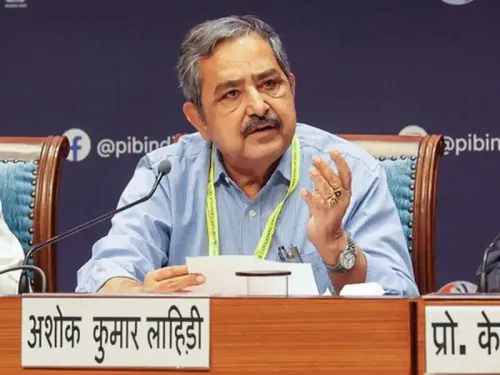
NITI Aayog Vice Chairman Ashok Lahiri outlined a $30–40 trillion economy target under the Viksit Bharat 2047 vision on 17 November 2026 .
PM Narendra Modi first articulated the Viksit Bharat vision on Independence Day 2022 and later launched the 'Voice of Youth' initiative.
Principal Secretary P.K.
Mishra cited the 2001 Gujarat earthquake , COVID-19 response, and Lakhpati Didi as examples of mission-driven governance.
NITI Aayog Member R.
Balasubramaniam called for a homegrown Indian body of knowledge on public leadership, rooted in domestic experience.
Uday Kotak of Kotak Mahindra Bank highlighted entrepreneurship and India's startup ecosystem as key pillars of the growth story.
The workshop follows a five-stage framework: learn, analyse, reflect, apply, and commit .
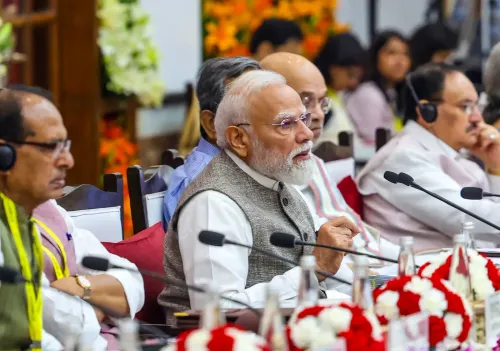
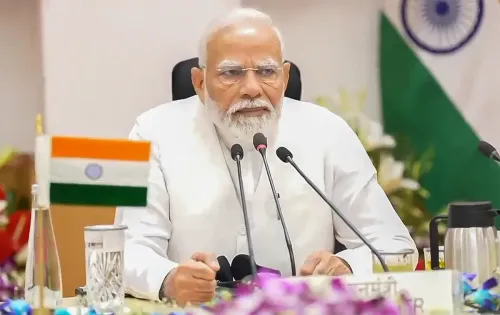
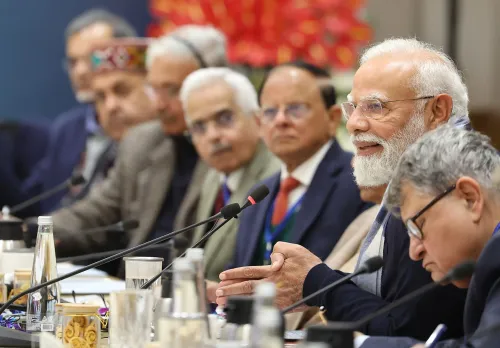
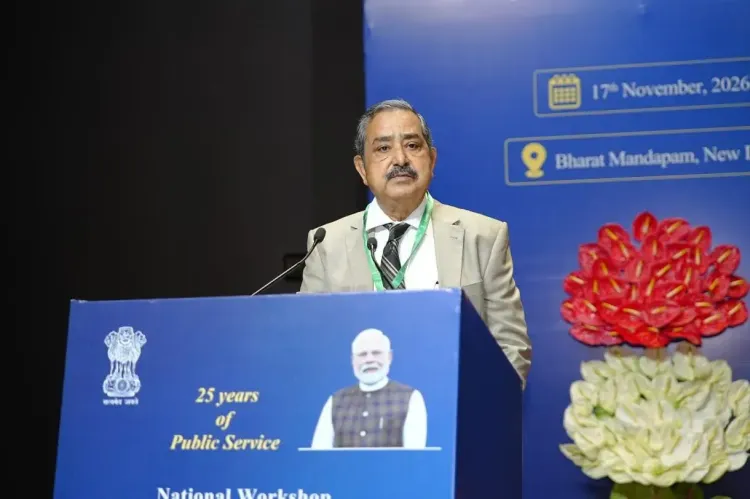
NITI Aayog Vice Chairman Ashok Lahiri on Tuesday, 17 November 2026, laid out a comprehensive roadmap for realising India's Viksit Bharat 2047 vision, projecting the country's economy growing to between $30 trillion and $40 trillion through a mission-driven, integrated approach to governance and leadership. The outline was delivered at NITI Aayog's inaugural National Workshop on 'Leadership as a Mission' in New Delhi, drawing students, civil servants, policymakers, and community leaders from across the country.
The Viksit Bharat Vision
Lahiri observed that India's conception of leadership has undergone a fundamental transformation since Independence — shifting from the narrow goal of poverty alleviation toward the far broader ambition of becoming a fully developed nation by 2047. He noted that Prime Minister Narendra Modi first articulated the Viksit Bharat vision during his Independence Day address in 2022, subsequently launching the 'Viksit Bharat 2047: Voice of Youth' initiative to channell greater youth participation in shaping the country's long-term future.
Key Voices at the Workshop
NITI Aayog Chief Executive Officer Anurag Jain welcomed participants and stressed the importance of collaborative effort in meeting India's long-term development targets. Principal Secretary to the Prime Minister P.K. Mishra drew on examples spanning the 2001 Gujarat earthquake response, the COVID-19 pandemic management, India's expanding role in the space economy, and welfare programmes such as the Lakhpati Didi scheme. Mishra argued that decisive, responsive leadership is essential for converting national ambitions into tangible outcomes for citizens.
NITI Aayog Member R. Balasubramaniam outlined the workshop's five-stage methodology — learn, analyse, reflect, apply, and commit — and made a pointed case for India developing its own body of knowledge on public leadership, grounded in domestic governance experiences and institutional successes rather than imported international frameworks.
Entrepreneurship as a Pillar of Growth
Uday Kotak, founder of Kotak Mahindra Bank, underscored the indispensable role of entrepreneurship in nation-building. He pointed to policy support for enterprise creation and the emergence of India's startup ecosystem as increasingly critical pillars of the country's growth narrative. This comes amid India now ranking among the top three global startup ecosystems by number of unicorns.
What the Workshop Signals
The National Workshop is part of NITI Aayog's sustained effort to strengthen leadership capabilities among public servants and future decision-makers as India advances through the final two decades of its centenary countdown. Notably, the focus on building a homegrown leadership framework reflects a broader institutional push to reduce dependence on Western governance models. With the 2047 deadline now just over two decades away, the pressure to accelerate structural reforms — in governance, infrastructure, and human capital — is mounting across policy circles.
Point of View
But the more consequential signal from this workshop is NITI Aayog's pivot toward building indigenous governance frameworks — an implicit acknowledgement that India's public institutions have long borrowed leadership models ill-fitted to its scale and complexity. The five-stage methodology and the call to codify domestic successes suggest a seriousness about execution architecture, not just vision-setting. Yet the gap between aspiration and outcome remains wide: India's per-capita income still needs to multiply several times over for the economy to clear even the lower $30 trillion band by 2047. The real test will be whether this workshop produces measurable reforms in civil service capability — or becomes another well-attended conference that leaves no institutional trace.
NationPress
17 Nov 2026
Frequently Asked Questions
What is the Viksit Bharat 2047 vision?
Viksit Bharat 2047 is India's national goal of becoming a fully developed nation by the centenary of its Independence. Prime Minister Narendra Modi first articulated it during his Independence Day address in 2022, targeting a $30–40 trillion economy and improved human development outcomes.
What did NITI Aayog's National Workshop on 'Leadership as a Mission' focus on?
The workshop brought together students, civil servants, policymakers, and community leaders to discuss governance, leadership, and nation-building in the context of India's 2047 development goals. It follows a five-stage framework — learn, analyse, reflect, apply, and commit — and aims to strengthen leadership capabilities across public institutions.
Who spoke at the NITI Aayog leadership workshop?
Key speakers included NITI Aayog Vice Chairman Ashok Lahiri, CEO Anurag Jain, Member R. Balasubramaniam, Principal Secretary to the Prime Minister P.K. Mishra, and Kotak Mahindra Bank founder Uday Kotak.
Why is NITI Aayog pushing for a homegrown leadership framework?
NITI Aayog Member R. Balasubramaniam argued that India should develop its own body of knowledge on public leadership based on domestic governance successes, rather than relying solely on international frameworks that may not suit India's unique institutional context and scale.
What role does entrepreneurship play in the Viksit Bharat roadmap?
Uday Kotak of Kotak Mahindra Bank highlighted that policy support for enterprise creation and the growth of India's startup ecosystem have become important pillars of the country's growth story, complementing public-sector governance reforms in the push toward 2047 development goals.