Only 3.1% of fruit and vegetable samples exceed FSSAI pesticide limits: Parliament
Synopsis
Out of over 70,000 fruit and vegetable samples tested across 23 states over three years, only 3.1 per cent breached FSSAI's pesticide residue limits — a figure the government presented in Parliament as evidence that national monitoring and farmer training programmes are working, even as informal market coverage remains a blind spot.
Key Takeaways
Only 3.1 per cent of 70,652 fruit and vegetable samples across 23 states and UTs exceeded FSSAI pesticide MRL limits over the last three years.
The MPRNL project, running since 2005-06 , uses 40 laboratories to monitor pesticide residues in agricultural commodities.
The National Pest Surveillance System (NPSS) provides real-time pest identification and recommends only Registration Committee -approved pesticides at prescribed doses.
Between 2021-22 and 2025-26 , government centres trained over 2.4 lakh farmers through field schools, HRD programmes, and safe-use campaigns.
21 states have set up dedicated committees to monitor pesticide residues and enforce Good Agricultural Practices.
Just 3.1 per cent of 70,652 fruit and vegetable samples tested across 23 states and Union Territories over the last three years were found to contain pesticide residues above the Maximum Residue Limit (MRL) set by the Food Safety and Standards Authority of India (FSSAI), the government disclosed in Parliament on Tuesday, 11 August. The data, shared in response to a starred question, offers a rare national-scale snapshot of pesticide compliance in Indian produce.
Key Findings from the National Monitoring Project
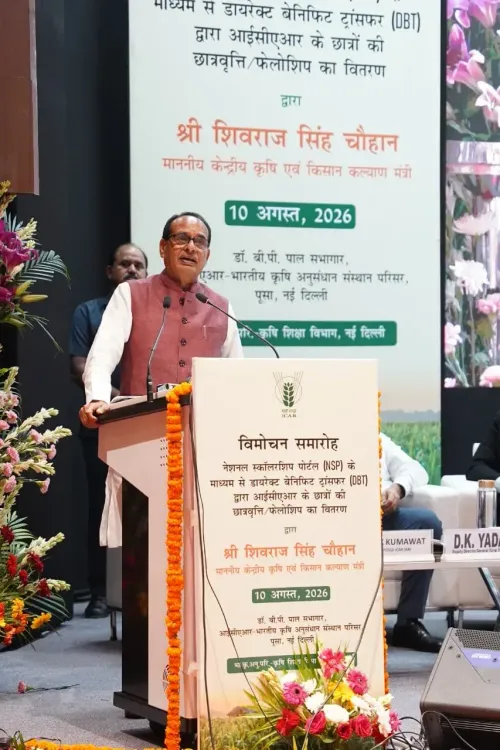
Agriculture and Farmers Welfare Minister Shivraj Singh Chouhan told Parliament that the Department of Agriculture and Farmers Welfare (DA&FW) has been running the Monitoring of Pesticide Residues at National Level (MPRNL) project since 2005-06 to track pesticide residue levels in agricultural commodities. Samples are collected and analysed through 40 participating laboratories, and test reports are shared with state and Union Territory agricultural departments to support farmer awareness and training on the safe use of pesticides.
Digital Surveillance and Expert Advisories
The government has introduced the National Pest Surveillance System (NPSS), a digital platform comprising a mobile application and web portal that enables real-time pest identification, surveillance, and access to expert advisories. According to Chouhan, the system recommends pesticides approved by the Registration Committee only when necessary and strictly at prescribed doses — a step aimed at curbing overuse at the farm level.
Farmer Training at Scale
The Agriculture Ministry is running awareness and capacity-building programmes through its 48 Central Integrated Pest Management Centres (CIPMCs) and Locust-cum-Central Integrated Pest Management Centres (LCIPMCs). Between 2021-22 and 2025-26, these centres conducted 1,353 Farmer Field School programmes benefiting 46,969 farmers. An additional 680 two-day human resource development programmes reached 37,664 farmers, while 2,384 safe-use campaigns covered 76,702 farmers. The ministry also ran 2,548 seed treatment campaigns during the same period, benefiting 81,048 farmers.
State-Level Oversight and Horticulture Push
21 states have constituted dedicated committees to monitor pesticide residues and strengthen the implementation of Good Agricultural Practices (GAP) and Integrated Pest Management (IPM). The Centre is also implementing the Mission for Integrated Development of Horticulture (MIDH) for holistic development of the horticulture sector, covering fruit and vegetable production. These parallel tracks — regulatory monitoring, digital tools, and farmer education — reflect a multi-layered strategy to bring residue levels down further.
What Comes Next
With only 3.1 per cent of samples breaching MRL thresholds, India's aggregate compliance picture appears broadly positive, though experts note that the figure does not capture produce sold through informal or unmonitored channels. The continued expansion of the MPRNL network and the NPSS platform will be key to whether this compliance rate holds as testing coverage widens.
Point of View
But the MPRNL's reach — 70,652 samples across 23 states over three years — is a fraction of India's vast, fragmented produce supply chain. The monitoring network's 40 laboratories are concentrated in formal channels; street markets, mandis, and direct farm-to-vendor trade remain largely unsampled. The more telling question is not what percentage exceeded MRL, but what percentage of actual consumption was ever tested. Until the surveillance net expands to informal retail, the headline figure should be read as a compliance floor, not a ceiling.
NationPress
26 Sept 2026
Frequently Asked Questions
What percentage of fruit and vegetable samples failed FSSAI pesticide limits?
Only 3.1 per cent of 70,652 samples tested across 23 states and Union Territories over the last three years were found above the Maximum Residue Limit set by FSSAI. Agriculture Minister Shivraj Singh Chouhan disclosed this data in Parliament on 11 August.
What is the MPRNL project?
The Monitoring of Pesticide Residues at National Level (MPRNL) is a government project running since 2005-06 that assesses pesticide residue levels in agricultural commodities through 40 participating laboratories. Test results are shared with state agricultural departments to support farmer training and awareness.
What is the National Pest Surveillance System (NPSS)?
The NPSS is a digital platform — comprising a mobile app and web portal — that enables real-time pest identification and provides expert advisories to farmers. It recommends only Registration Committee-approved pesticides and only when necessary, aiming to reduce indiscriminate pesticide use.
How many farmers have been trained on safe pesticide use?
Between 2021-22 and 2025-26, government programmes trained over 2.4 lakh farmers through 1,353 Farmer Field Schools, 680 HRD programmes, 2,384 safe-use campaigns, and 2,548 seed treatment campaigns run through 48 CIPMCs and LCIPMCs.
Which states are monitoring pesticide residues independently?
21 states have constituted dedicated committees to monitor pesticide residues and strengthen the implementation of Good Agricultural Practices and Integrated Pest Management, with the goal of reducing residue levels in agricultural commodities.