Per Drop More Crop: 115 lakh hectares under micro-irrigation, 12.30 lakh farmers benefit
Synopsis
India's Per Drop More Crop scheme has quietly crossed a landmark — 115 lakh hectares under micro-irrigation and ₹8,123.24 crore disbursed in three years. With over 80% of India's water going to agriculture and half the farmland still unirrigated, this scheme is less a welfare measure and more a structural fix to one of the country's most urgent resource crises.
Key Takeaways
The Per Drop More Crop (PDMC) scheme has covered over 115 lakh hectares under micro-irrigation as of July 2026 .
12.30 lakh farmers have benefitted, with nearly 20 per cent being women.
Central assistance of ₹8,123.24 crore has been released over the last three years ; ₹3,226.36 crore allocated specifically to PDMC in 2025-26 .
Small and marginal farmers receive 55 per cent subsidy; other farmers receive 45 per cent on installation costs.
Top states by coverage: Maharashtra , Karnataka , Andhra Pradesh , Tamil Nadu , Gujarat , and Rajasthan .
More than 80 per cent of India's water resources are used in agriculture, yet only 50 per cent of net sown area has irrigation access.
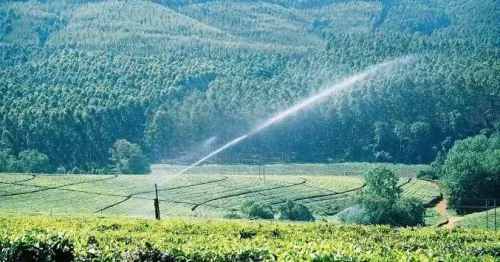
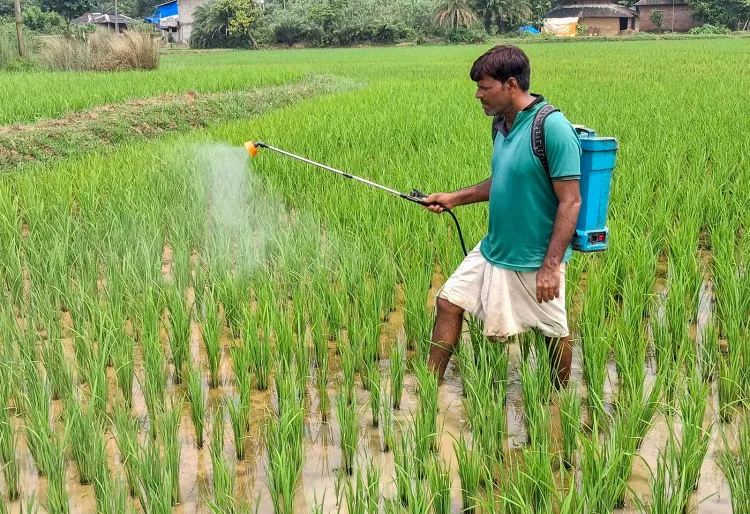
The Centre's Per Drop More Crop (PDMC) scheme has brought over 115 lakh hectares under micro-irrigation as of July 2026, benefitting 12.30 lakh farmers — nearly 20 per cent of them women — according to an official factsheet released on Saturday, 29 August 2026. The scheme, which funds drip and sprinkler systems across the country, has emerged as one of the Centre's flagship instruments for water-efficient farming.
Scheme Coverage and Key States
Implemented under the Pradhan Mantri Rashtriya Krishi Vikas Yojana (PM-RKVY) since 2022-23, PDMC provides financial assistance for micro-irrigation installations covering up to five hectares per beneficiary. The states recording the highest coverage under the scheme are Maharashtra, Karnataka, Andhra Pradesh, Tamil Nadu, Gujarat, and Rajasthan — predominantly rain-shadow and semi-arid regions where water scarcity is most acute.
Small and marginal farmers receive a subsidy of 55 per cent on installation costs, while other farmers are eligible for 45 per cent financial assistance. Several state governments supplement these with additional subsidies from their own budgets. Farmers are also eligible to reapply for assistance on the same land after seven years.
Financial Outlay and Disbursements
Central assistance of ₹8,123.24 crore has been released over the last three years under PDMC. In 2025-26 alone, ₹8,957.72 crore was released or sanctioned under PM-RKVY, of which ₹3,226.36 crore was specifically allocated to the PDMC component. The scale of disbursements signals a sustained federal commitment to expanding micro-irrigation infrastructure.
Impact on Farmers and Water Use
'Independent studies report higher yields, significant water savings, lower cultivation costs, and increased farmers' incomes. PDMC is strengthening resource-efficient, sustainable agriculture by using every drop of water efficiently,' the official statement noted.
The scheme also promotes fertigation — the practice of delivering fertilisers directly through irrigation water to the root zone — to improve nutrient application efficiency. Priority is given to water-scarce and groundwater-stressed regions, where conventional flood irrigation has historically led to rapid depletion of aquifers.
Why Water Efficiency Is a National Priority
More than 80 per cent of India's available water resources are consumed by agricultural irrigation, yet only around 50 per cent of the net sown area currently has access to irrigation facilities. This structural gap makes improving water-use efficiency a pressing national challenge. Micro-irrigation addresses this by delivering water directly to crops with minimal losses, contrasting sharply with flood irrigation methods that dominate much of rural India.
Notably, this is the third consecutive year in which PDMC coverage has expanded significantly, suggesting that on-ground adoption is accelerating — even as groundwater tables in key agricultural states continue to fall. The government is expected to release updated state-wise coverage data in the coming months, which will offer a clearer picture of regional uptake and gaps.
Point of View
But the harder question is whether micro-irrigation adoption is reaching the farmers who need it most — smallholders in Bihar, Uttar Pradesh, and Odisha, states conspicuously absent from the top-coverage list dominated by southern and western states. The subsidy structure favours states with stronger agricultural extension networks, which risks deepening the irrigation divide rather than closing it. With groundwater tables falling in Punjab and Haryana and over 80 per cent of India's water already committed to agriculture, the PDMC's pace of expansion needs to double — not just sustain. The seven-year reapplication window also deserves scrutiny: equipment replacement cycles in practice are often shorter, leaving farmers without support in the interim.
NationPress
13 Oct 2026
Frequently Asked Questions
What is the Per Drop More Crop (PDMC) scheme?
The Per Drop More Crop scheme is a centrally sponsored programme implemented under the Pradhan Mantri Rashtriya Krishi Vikas Yojana since 2022-23. It provides financial assistance for drip and sprinkler irrigation systems, covering up to five hectares per beneficiary, with the goal of improving water-use efficiency in Indian agriculture.
How many farmers have benefitted from PDMC so far?
As of July 2026, the scheme has benefitted 12.30 lakh farmers, with nearly 20 per cent of them being women. Over 115 lakh hectares have been brought under micro-irrigation under the programme.
How much subsidy do farmers get under PDMC?
Small and marginal farmers receive 55 per cent financial assistance on micro-irrigation installation costs, while other farmers receive 45 per cent. Some state governments also provide additional subsidies from their own budgets, and farmers can reapply for the same land after seven years.
Which states have the highest micro-irrigation coverage under PDMC?
Maharashtra, Karnataka, Andhra Pradesh, Tamil Nadu, Gujarat, and Rajasthan have recorded the highest areas covered under the scheme. These are predominantly semi-arid or water-stressed regions where the need for efficient irrigation is most critical.
How much has the Centre spent on PDMC?
Central assistance of ₹8,123.24 crore has been released over the last three years under PDMC. In 2025-26, ₹3,226.36 crore was specifically allocated to the scheme as part of a broader ₹8,957.72 crore PM-RKVY outlay.