Assam CM Plans ₹4,000 Cr Pressurised Irrigation Network
Synopsis
The Chief Minister's Office of Assam has announced a ₹4,000 crore pressurised piped irrigation network to be built over five years, targeting water efficiency and farmer support under the central Per Drop More Crop scheme.
Key Takeaways
Assam will invest ₹4,000 crore in a pressurised piped irrigation network over a five-year period.
The project is anchored to the Per Drop More Crop approach under the central Pradhan Mantri Krishi Sinchayee Yojana .
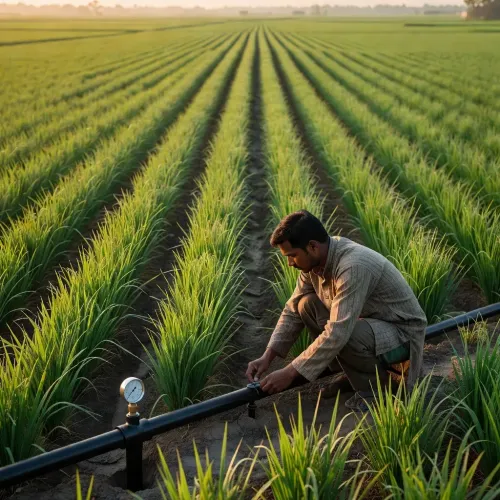
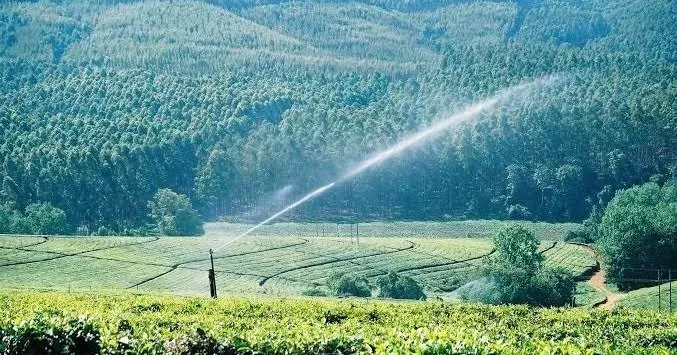
The initiative aims to reduce conveyance losses and deliver water-efficient irrigation directly to farmers' fields.
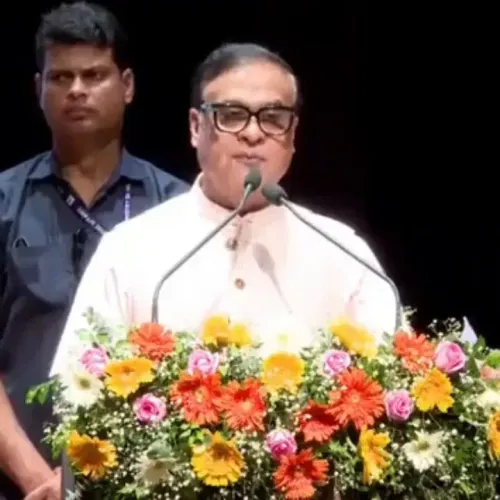
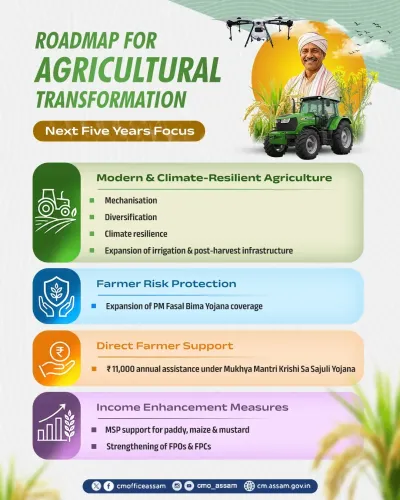
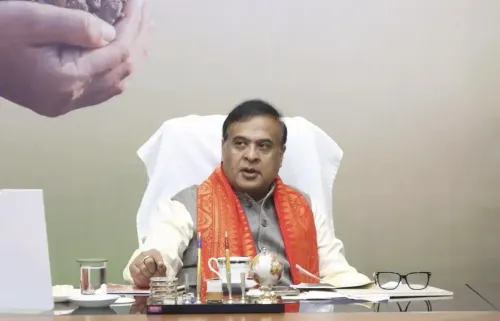
Chief Minister Himanta Biswa Sarma has positioned agricultural modernisation as a state development priority since taking office in May 2021 .
Assam follows a national trend of pressurised irrigation adoption seen earlier in states like Maharashtra and Gujarat .
District-level coverage, implementation partners, and central co-funding details are yet to be formally announced.
The Chief Minister's Office of Assam announced on Sunday, 19 July 2026 that the state will invest ₹4,000 crore over five years to build a pressurised piped irrigation network, aiming to modernise agricultural water delivery and improve efficiency for farmers across the state.
Context
The announcement frames the investment under the Per Drop More Crop approach, a central scheme launched in 2015 under the Pradhan Mantri Krishi Sinchayee Yojana (PMKSY) to promote micro-irrigation and raise water-use efficiency. Assam's agriculture has historically depended on monsoon rainfall and its extensive river systems, leaving farmers vulnerable to erratic precipitation patterns. A pressurised piped network addresses conveyance losses that plague open-channel irrigation by delivering water directly to fields under controlled pressure.
Chief Minister Himanta Biswa Sarma, who has led the state since May 2021, has positioned agricultural modernisation as a core development priority. The CMO's post states the project will ensure 'greater water efficiency and enhanced support for farmers.'
Policy Backdrop
PMKSY, launched by the central government in 2015, integrates multiple irrigation programmes and mandates state-level action plans to expand irrigated area. Assam has included micro-irrigation and lift irrigation allocations in successive state budgets since 2016, aligning with central guidelines. The new ₹4,000 crore commitment represents a significant scaling of those earlier, smaller efforts into a unified pressurised network.
Across India, states such as Maharashtra and Gujarat have invested in pressurised piped systems since the mid-2010s, demonstrating measurable reductions in water use and improvements in crop yield. Assam's announcement follows this national pattern of moving away from flood irrigation toward precision water delivery.
Stakeholders and Impact
The primary beneficiaries are farmers and rural households in Assam who currently rely on rain-fed or gravity-flow irrigation. Pressurised networks can support drip and sprinkler systems, enabling cultivation of higher-value crops and reducing dependence on seasonal rainfall. Water conservation gains also benefit downstream communities and ecosystems reliant on the state's river networks.
The five-year rollout timeline, if met, would mean sustained annual capital expenditure of approximately ₹800 crore per year on irrigation infrastructure alone. District-level coverage and any central matching funds under PMKSY will determine how equitably benefits are distributed across Assam's diverse agrarian zones.
What's Next
Key indicators to watch include the release of a formal project document detailing district-wise coverage, identification of implementation agencies, and confirmation of central government co-funding under PMKSY. Water-use metrics and crop yield data from early pilot areas will serve as benchmarks for the programme's effectiveness. The announcement sets a policy direction; the credibility of the initiative will rest on procurement timelines and on-ground execution in the coming budget cycles.
Point of View
000 crore irrigation pledge is one of the larger single-state commitments to agricultural water infrastructure in the Northeast, and its alignment with PMKSY signals an attempt to leverage central co-funding rather than rely solely on state resources. For CM Himanta Biswa Sarma, the announcement serves a dual purpose: it addresses a structural vulnerability in Assam's rain-dependent farm economy while reinforcing his administration's development credentials ahead of future electoral cycles. The five-year horizon, however, means the project's political and economic payoff is contingent on consistent budgetary follow-through — a challenge for capital-intensive infrastructure in states with competing fiscal demands. If executed as announced, this could reposition Assam as a model for climate-adaptive irrigation in the Northeast.
NationPress
18 Oct 2026
Frequently Asked Questions
What is Assam's ₹4,000 crore irrigation project?
Assam plans to build a pressurised piped irrigation network at a cost of ₹4,000 crore over five years, aimed at improving water efficiency for farmers under the Per Drop More Crop approach linked to the Pradhan Mantri Krishi Sinchayee Yojana.
What is the Per Drop More Crop scheme?
Per Drop More Crop is a component of the Pradhan Mantri Krishi Sinchayee Yojana, launched by the central government in 2015, that promotes micro-irrigation technologies such as drip and sprinkler systems to maximise crop output per unit of water used.
How will Assam farmers benefit from the pressurised irrigation network?
Farmers will gain more reliable and efficient water supply through piped networks that reduce losses common in open-channel systems, enabling cultivation of higher-value crops and reducing dependence on unpredictable monsoon rainfall.
Who announced the Assam irrigation investment?
The Chief Minister's Office of Assam made the announcement on 19 July 2026, with the project associated with Chief Minister Himanta Biswa Sarma's agricultural modernisation agenda.
Which states have already built pressurised irrigation networks in India?
States like Maharashtra and Gujarat have invested in pressurised piped irrigation systems since the mid-2010s, demonstrating reductions in water use and improvements in crop productivity that Assam's project aims to replicate.