Viksit Bharat 2047: Strong statistical system key to evidence-based governance, says PM's Principal Secretary
Synopsis
India's top civil servant at the PMO has put statistics at the heart of the Viksit Bharat 2047 project — warning that without granular, trustworthy data down to the district level, the country's development ambitions risk being managed on guesswork. The call for AI-assisted yet accountability-anchored data governance signals a sharp pivot in how the Centre wants states to approach planning.
Key Takeaways
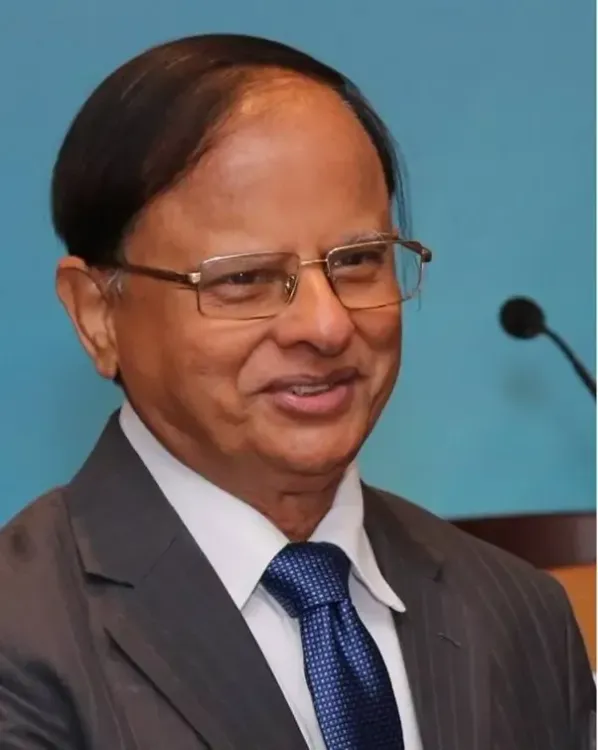
Dr PK Mishra , Principal Secretary to the PM, addressed the Conference of State Planning, Finance and IT Secretaries in New Delhi on 13 October 2026 .
He described a strong statistical system as essential for realising the Viksit Bharat 2047 vision and evidence-based governance.
The new National Accounts Series with 2022-23 as the base year, along with updated CPI and IIP series, was cited as a step toward modern economic measurement.
Dr Mishra urged adoption of AI, machine learning and geospatial tools in official statistics, but cautioned that speed must never compromise accuracy or confidentiality.
He called for stronger Centre–state coordination and institutional capacity in state statistical offices to improve data quality at district and local levels.
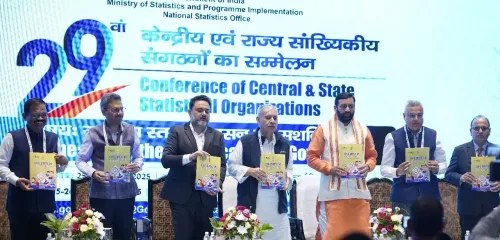
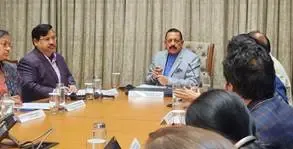
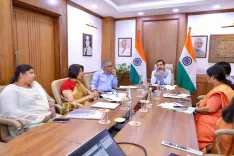
Principal Secretary to the Prime Minister, Dr PK Mishra, on Tuesday, 13 October 2026, underlined that a robust statistical infrastructure is indispensable for evidence-based policymaking and realising the Viksit Bharat 2047 vision. He was delivering the inaugural address at the Conference of State Planning, Finance and IT Secretaries, organised by the Ministry of Statistics and Programme Implementation (MoSPI) in New Delhi.
Core Message: Measure to Manage
Dr Mishra drew a direct line between data quality and development outcomes, arguing that statistics, data, technology, planning and governance are increasingly inseparable pillars of India's development journey. A reliable statistical system, he said, must enable governments to measure progress across states and districts, assess policy impact, locate gaps and ensure that public spending delivers intended results.
He encapsulated the stakes in a pointed formulation: 'What cannot be measured cannot be managed effectively. And what cannot be managed effectively cannot be transformed sustainably.'
Modernising Economic Measurement
The senior bureaucrat called for India's statistical architecture to keep pace with an economy that is increasingly digital, formalised and interconnected. He cited the introduction of the new National Accounts Series — with 2022-23 as the base year — along with updated Consumer Price Index (CPI) and Index of Industrial Production (IIP) series as meaningful steps towards aligning methodologies with contemporary economic realities. Such updates, he suggested, are not optional housekeeping but a prerequisite for credible policymaking at scale.
Technology and Its Limits
Dr Mishra acknowledged the transformative potential of artificial intelligence, machine learning, geospatial systems, satellite imagery and advanced analytics in improving the timeliness and accuracy of official statistics. However, he issued an explicit caution: technological adoption must remain anchored in statistical quality, transparency, privacy, security and accountability.
'Speed cannot come at the cost of accuracy. Greater use of data cannot come at the cost of confidentiality,' he said, flagging the tension between data velocity and data integrity that policymakers globally are grappling with.
Centre–State Coordination and Cooperative Federalism
Describing statistics as an instrument of cooperative federalism, Dr Mishra stressed that national averages increasingly fall short as a governance tool. Granular data at the state, district and local levels is essential to identify development gaps and guide targeted interventions — a point with direct relevance as India's states diverge sharply in economic and social outcomes. He urged stronger institutional capacity within state statistical offices and tighter coordination between the Centre and states.
A Collective National Architecture
Dr Mishra called for a whole-of-government effort, bringing together MoSPI, State Statistical Offices, Finance, Planning and IT Departments, NITI Aayog, academic institutions and other stakeholders. The goal, he said, is a statistical framework that is trusted, transparent, technology-enabled, interoperable and policy-relevant — one capable of underpinning India's ambition to become a developed nation by 2047. The conference marks a step toward that alignment, with state-level officials now directly engaged in shaping the national data agenda.
Point of View
Finance and IT secretaries together signals that the Centre is treating statistical harmonisation as a genuine federal priority, not just a technocratic aspiration. The frank acknowledgement that national averages are insufficient for governance is an implicit admission that India's aggregate growth story has masked deep subnational divergence. The harder question — whether states have the institutional capacity and political will to build the granular data infrastructure being asked of them — was left unanswered.
NationPress
13 Oct 2026
Frequently Asked Questions
What is the Viksit Bharat 2047 vision and why does statistics matter for it?
Viksit Bharat 2047 is India's goal of becoming a developed nation by the centenary of its independence. Dr PK Mishra argued that achieving this requires a trusted statistical system capable of measuring development progress at state, district and local levels so that policy gaps can be identified and public resources deployed effectively.
What changes to India's statistical framework were highlighted at the conference?
Dr Mishra pointed to the new National Accounts Series with 2022-23 as the base year, along with updated Consumer Price Index (CPI) and Index of Industrial Production (IIP) series, as important steps in modernising economic measurement. These revisions are designed to better reflect India's increasingly digital and formalised economy.
How does AI fit into India's official statistics plans?
Dr Mishra said artificial intelligence, machine learning, geospatial systems, satellite imagery and advanced analytics offer significant opportunities to improve the timeliness and accuracy of official data. However, he cautioned that technological adoption must be guided by statistical quality, transparency, privacy and accountability — and that speed cannot come at the cost of accuracy.
Why is Centre-state coordination important for India's statistical system?
Dr Mishra described statistics as an instrument of cooperative federalism, enabling the Centre and states to compare outcomes, identify best practices and learn from regional differences. He stressed that granular data at the state, district and local level is increasingly necessary as national averages alone cannot capture development gaps across a diverse country.
Who organised the conference and who participated?
The Conference of State Planning, Finance and IT Secretaries was organised by the Ministry of Statistics and Programme Implementation (MoSPI) in New Delhi on 13 October 2026. Participants included state-level planning, finance and IT secretaries, with Dr PK Mishra, Principal Secretary to the Prime Minister, delivering the inaugural address.