PSA Ajay Kumar Sood reviews LCA framework for city waste management
Synopsis
India's Principal Scientific Adviser has reviewed a first-of-its-kind Life Cycle Assessment framework built by IISc and two IITs to help cities cut waste-sector greenhouse gas emissions. The GHG calculator app it produced lets Urban Local Bodies compare technologies — from anaerobic digestion to landfilling — and pick the lowest-carbon option, backed by data from six Indian cities.
Key Takeaways
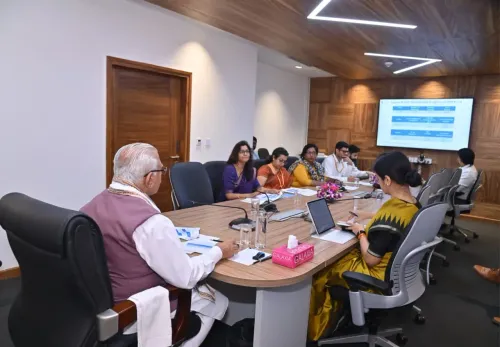
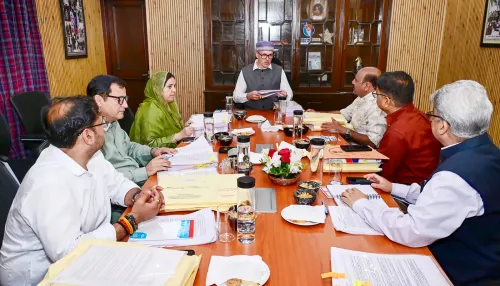
Prof Ajay Kumar Sood , Principal Scientific Adviser, chaired a review meeting on 17 September 2026 in New Delhi .
Project jointly developed by IISc Bengaluru , IIT Madras , and IIT (BHU) Varanasi with PSA office support.
A web-based GHG calculator app for Urban Local Bodies covers processes including anaerobic digestion, composting, incineration, recycling, and landfilling.
Case studies drawn from Bengaluru , Mysuru , Tumakuru , Chennai , Delhi , and Varanasi .
Project aligned with Swachh Bharat Mission-Urban ; a national roadmap for low-emission waste management was proposed.
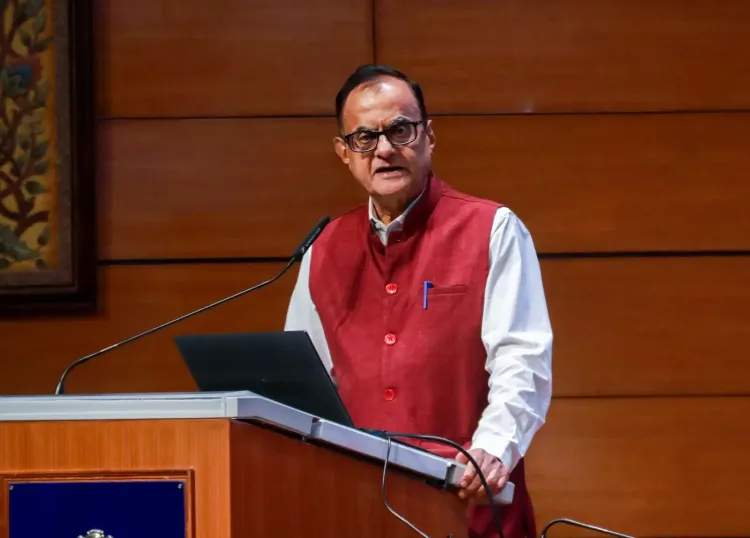
Principal Scientific Adviser (PSA) to the government, Professor Ajay Kumar Sood, on 17 September 2026 chaired a high-level review meeting in New Delhi to assess outcomes and recommendations of the project titled 'Development of LCA Framework for Solid Waste Management (SWM) Technologies in India', according to an official statement. The initiative, backed by the Office of the PSA, represents a significant step toward equipping India's Urban Local Bodies (ULBs) with science-driven tools to cut the carbon footprint of city waste systems.
Project Background and Collaborators
The project was jointly undertaken by three premier research institutions — IISc Bengaluru, IIT Madras, and IIT (BHU) Varanasi. Its primary objective was to develop a contextual Life Cycle Assessment (LCA) framework and a web-based greenhouse gas (GHG) calculator to help ULBs plan, compare, and optimise waste management systems with lower carbon footprints. The multi-institution collaboration reflects a growing push to anchor urban infrastructure decisions in rigorous environmental data.
Key Findings and GHG Calculator Features
The project team presented LCA study findings spanning a wide range of solid waste management technologies, supported by case studies from Bengaluru, Mysuru, Tumakuru, Chennai, Delhi, and Varanasi. A demonstration of the GHG calculator app — developed specifically for ULBs — showcased its ability to quantify emissions across different SWM technologies and operating scenarios.
The app covers common waste management processes including anaerobic digestion, incineration (waste-to-energy), composting, recycling, and landfilling. It provides data on net emissions, avoided emissions, logistic emissions, carbon footprint, and individual greenhouse gases such as methane, carbon dioxide, NOx, and black carbon. Scenario comparison modules allow ULBs to identify low-carbon pathways and best-practice waste management configurations.
Policy Alignment and Institutional Recommendations
Dr Parvinder Maini, Scientific Secretary, highlighted the project's alignment with the Swachh Bharat Mission-Urban and stressed the need for institutional mechanisms to support wider implementation across the country. The project also proposed a national roadmap for India's transition toward climate-resilient, low-emission waste management — a recommendation that goes beyond research outputs to address governance and scale-up challenges.
Why This Matters for Indian Cities
India's urban waste management sector is among the largest contributors to municipal greenhouse gas emissions, with landfilling still the dominant disposal method in most cities. Technologies such as biomining and waste-to-energy have been deployed unevenly, often without standardised emission benchmarking. This LCA framework, if adopted at scale, could give city planners a credible, comparable basis for investment decisions — filling a gap that has long hampered evidence-based urban climate policy. Notably, the project's focus on local data from six Indian cities makes its recommendations more contextually grounded than generic global models.
The next phase will depend on how quickly institutional mechanisms can be established to roll out the framework to ULBs beyond the cities already studied.
Point of View
But its real value will be determined by adoption — and that is where India's urban governance history gives cause for caution. ULBs are chronically under-resourced, and past technology-neutral tools have gathered dust without a funding or compliance trigger. The alignment with Swachh Bharat Mission-Urban is promising, but the call for 'institutional mechanisms' is still vague. Without a clear mandate — or at minimum, a financial incentive tied to GHG benchmarking — the risk is that this rigorous, six-city, three-institution effort stays confined to research circles rather than reshaping the waste tenders that actually decide what gets built.
NationPress
17 Sept 2026
Frequently Asked Questions
What is the LCA framework for solid waste management in India?
It is a Life Cycle Assessment framework developed jointly by IISc Bengaluru, IIT Madras, and IIT (BHU) Varanasi to help Urban Local Bodies evaluate and compare different waste management technologies on the basis of greenhouse gas emissions and carbon footprint. The project also produced a web-based GHG calculator app specifically designed for ULBs across Indian cities.
What does the GHG calculator app do for Urban Local Bodies?
The app allows ULBs to quantify emissions from existing solid waste management practices across processes such as anaerobic digestion, composting, incineration, recycling, and landfilling. It provides data on net emissions, avoided emissions, carbon footprint, and individual gases including methane, carbon dioxide, NOx, and black carbon, enabling cities to identify the lowest-carbon waste management scenario.
Which cities were studied in the LCA project?
The LCA case studies covered six Indian cities: Bengaluru, Mysuru, Tumakuru, Chennai, Delhi, and Varanasi. The use of local data is intended to make the framework more relevant to Indian urban conditions than globally standardised models.
How does this project connect to the Swachh Bharat Mission-Urban?
Scientific Secretary Dr Parvinder Maini highlighted that the LCA framework directly aligns with the Swachh Bharat Mission-Urban's goals of improving urban sanitation and waste management. She also stressed the need for institutional mechanisms to ensure the framework is adopted widely across the country, not just in the six pilot cities.
What is the national roadmap proposed under this project?
The project proposed a national roadmap for India's transition toward climate-resilient, low-emission solid waste management. It includes strategic recommendations for improving the efficiency of existing and future SWM systems, with technologies such as biomining, anaerobic digestion, waste-to-energy, and landfilling analysed in detail.