Delhi govt to file FIR over CAG report on Yamuna, Delhi Jal Board spending
Synopsis
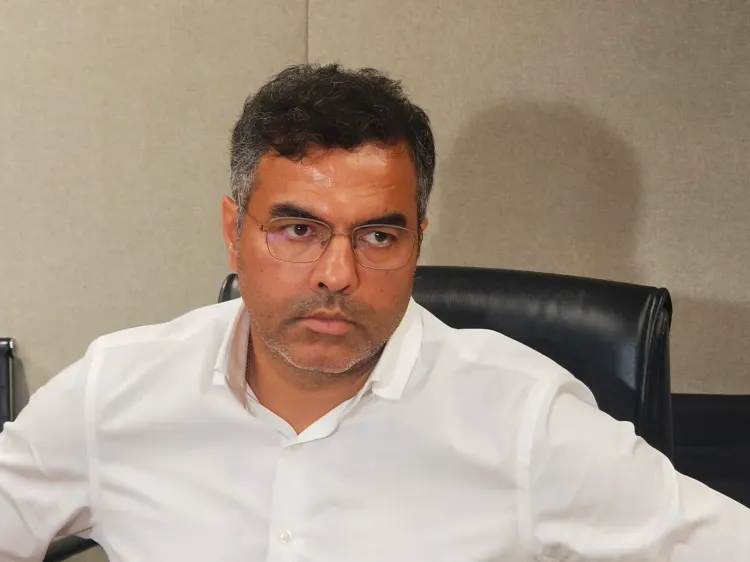
Delhi Cabinet Minister Parvesh Sahib Singh has announced an FIR will follow a committee review of a CAG audit that found 212.59 MGD of sewage from 1,080 unauthorised colonies being dumped untreated, and 25 STPs releasing substandard effluent into the Yamuna — all while public funds were spent on plants that reportedly never worked at intended capacity.
Key Takeaways
Delhi Cabinet Minister Parvesh Sahib Singh announced on 17 August that an FIR will be registered once a committee reviews the CAG report on Delhi Jal Board spending.
The CAG audit (covering 2017-18 to 2021-22 ) found that 212.59 MGD of sewage from 1,080 unauthorised colonies was discharged untreated into stormwater drains.
Treated effluent from 25 STPs failed to meet Delhi Pollution Control Committee standards; 14 STPs remained non-compliant as of July 2025 .
Delhi's sewage generation stands at 3,596 MLD against installed capacity of 3,474 MLD ; approximately 641 MLD enters the river untreated.
The government aims to close the capacity gap within two years and extend sewer connections to lakhs of households within 18 months .
A Yamuna Riverfront modelled on Sabarmati is planned, with the government promising visible change before the next state election.
The Delhi government will register an FIR once a designated committee submits its findings on a Comptroller and Auditor General (CAG) report that raised serious questions about sewage treatment expenditure and the functioning of the Delhi Jal Board under previous governments, Cabinet Minister Parvesh Sahib Singh announced on Monday, 17 August. Singh made the disclosure during a visit to Ahmedabad's Sabarmati Riverfront, where he and senior officials studied the riverfront's development model and its sewage-control mechanisms.
What the CAG Report Found
The CAG's Performance Audit on the functioning of the Delhi Jal Board, covering the period 2017-18 to 2021-22, documented a range of systemic failures. The audit found shortcomings in sewerage management, delays in project execution, and financial and human-resource management lapses.
Critically, the report recorded that 212.59 MGD of sewage generated by 1,080 unauthorised colonies was being discharged untreated into stormwater drains. Treated effluent released by 25 sewage treatment plants (STPs) into the Yamuna also failed to meet standards set by the Delhi Pollution Control Committee.
'The CAG had raised very serious questions, saying that the money was spent on sewage treatment plants, but those plants never operated properly and did not function at their intended capacity,' Singh said. 'Once the committee's report comes, an FIR will be registered based on it.'
Scale of the Yamuna Pollution Challenge
Official data underscores the enormity of the task. In a July 2025 reply, the Union government stated that Delhi's estimated sewage generation stood at 3,596 million litres per day (MLD), against an installed treatment capacity of 3,474 MLD across 37 operational STPs. At that point, approximately 641 MLD of sewage remained untreated and entered the river or drainage network, while 14 STPs were non-compliant with pollution control norms.
This comes amid sustained Central oversight: a review meeting chaired by Home Minister Amit Shah in June called for detailed action plans, firm execution timelines for Yamuna rejuvenation projects, long-term maintenance arrangements, and progress reviews every 20 days.
Government's Parallel Cleanup and Riverfront Plan
Singh said the Delhi government was pursuing sewage treatment and riverfront development simultaneously, rather than waiting for the river to be fully cleaned before starting beautification. The Delhi Jal Board has begun constructing and upgrading STPs, with the government targeting closure of the existing sewage-treatment capacity gap within two years.
The government also plans to provide sewer connections to lakhs of households currently outside the sewer network within 18 months. Work on processing dairy waste has begun, and the Jal Board is preparing a scheme to collect septic waste from household tanks and route it to STPs for treatment.
The proposed Yamuna Riverfront is envisaged to include large parks, cycle tracks, ghats, recreational facilities, and sports grounds — with different departments working on each element simultaneously.
Sabarmati as a Blueprint — With Caveats
Singh said the Sabarmati Riverfront offered applicable lessons, noting that roughly 90 per cent of the challenges faced there were comparable to those on the Yamuna. However, he acknowledged that Delhi's larger population meant the required infrastructure would be on a significantly greater scale.
'The volume of sewage entering the Yamuna is higher, so we have to build more plants,' he said. He also pointed to the relocation of the Dhobi Ghat at Sabarmati as a model for reorganising pollution-generating activities along the Yamuna, including washermen who currently discharge waste directly into the river.
Singh noted that the Sabarmati project took 10-12 years to complete, but said the Delhi government expected residents to see a substantial difference in the Yamuna before the next state election. On Chhath Puja, he said designated ghats would continue to be provided along the Yamuna, citing that at least 10 lakh people celebrated the festival along the river last year.
Point of View
Under the present dispensation. The Sabarmati comparison is aspirational but imprecise — Ahmedabad's population and sewage load are not comparable to Delhi's, and the Sabarmati project itself took over a decade. Promising visible Yamuna change before the next election sets a high-stakes, short-horizon benchmark that the government will be held to.
NationPress
2 Oct 2026
Frequently Asked Questions
Why is the Delhi government filing an FIR related to the Yamuna?
The Delhi government plans to file an FIR based on a CAG audit that found serious irregularities in how previous governments spent public funds on sewage treatment plants under the Delhi Jal Board. The audit, covering 2017-18 to 2021-22, found that plants did not operate at intended capacity despite receiving funds. The FIR will be registered once a committee reviews the CAG report and submits its findings.
What did the CAG report on the Delhi Jal Board find?
The CAG's Performance Audit found that 212.59 MGD of sewage from 1,080 unauthorised colonies was being discharged untreated into stormwater drains, and that treated effluent from 25 STPs released into the Yamuna did not meet Delhi Pollution Control Committee standards. It also flagged project delays, and financial and human-resource management lapses within the Delhi Jal Board during 2017-18 to 2021-22.
How much of Delhi's sewage currently goes untreated into the Yamuna?
According to a July 2025 Union government reply, approximately 641 MLD of sewage enters the river or drainage network untreated. Delhi generates an estimated 3,596 MLD of sewage against an installed treatment capacity of 3,474 MLD across 37 operational STPs, with 14 STPs non-compliant with pollution control norms.
What is the Delhi government's plan to clean the Yamuna?
The Delhi government is pursuing sewage treatment and riverfront development simultaneously. It aims to close the sewage-treatment capacity gap within two years and extend sewer connections to lakhs of households within 18 months. A Yamuna Riverfront — modelled on Ahmedabad's Sabarmati Riverfront — featuring parks, cycle tracks, ghats, and sports grounds is also planned.
How does the Sabarmati Riverfront relate to the Yamuna project?
Delhi Cabinet Minister Parvesh Sahib Singh visited the Sabarmati Riverfront in Ahmedabad to study its development and sewage-control systems as a potential model for the Yamuna. He noted that about 90 per cent of the challenges were comparable, but acknowledged that Delhi's larger population means the required infrastructure will be on a significantly greater scale. The Sabarmati project took 10-12 years to complete.