India's private space investments cross $618 million, up 6x in five years
Synopsis
India's private space sector has gone from a single active startup in 2014 to over 400 today, and from $100.5 million in cumulative investment in 2021-22 to $618.5 million by March 2026 — a near six-fold jump. With 30+ satellites placed in orbit and 45 payloads flown, the sector is no longer just a policy story; it is becoming a commercial reality.
Key Takeaways
Cumulative private space investment in India reached $618.5 million by 31 March 2026 , up nearly six-fold from $100.5 million in 2021-22 . $187 million in private investment was recorded in 2026 alone.
IN-SPACe has granted 105 authorisations to Non-Government Entities as of 14 July 2026 .
Active space startups have grown from one in 2014 to over 400 today; 17 have formal IN-SPACe authorisation.
Indian private companies have placed more than 30 satellites in orbit and flown nearly 45 payloads via PSLV-POEM .
IN-SPACe is preparing dedicated Safety and Security Guidelines in consultation with industry stakeholders.
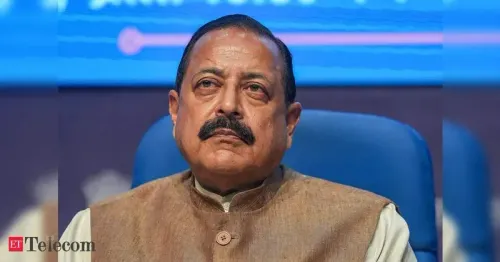
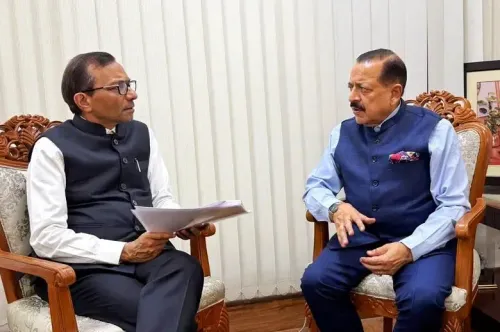
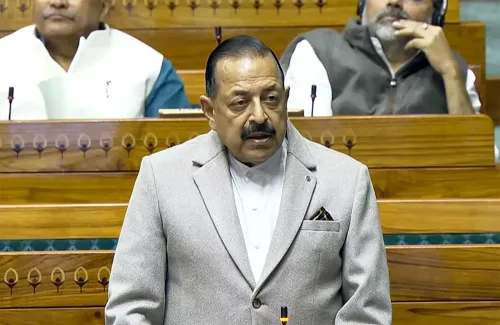
India's private space sector has crossed a cumulative investment milestone of $618.5 million, reflecting a nearly six-fold surge over five years, the Centre informed the Rajya Sabha on Thursday, 23 July 2026. Union Minister of State (Independent Charge) Dr Jitendra Singh disclosed that $187 million in fresh private investment was recorded during 2026 alone, and 105 authorisations have been granted to Non-Government Entities (NGEs) as of 14 July.
The Investment Trajectory
Cumulative private funding in the sector stood at just $100.5 million in 2021-22, climbed to $348.5 million by 2023-24, and reached $618.5 million by 31 March 2026. The near-six-fold expansion in roughly five years underscores how structural reforms have unlocked capital that was previously locked out of a sector dominated by state agencies.
Regulatory Architecture and IN-SPACe's Role
Every application for private space activity is evaluated by IN-SPACe — the Indian National Space Promotion and Authorisation Centre — under its established norms, with due consideration given to strategic, security, and national interests before any authorisation is issued. Dr Singh told the House that IN-SPACe is now preparing dedicated Safety and Security Guidelines for space activities in India, developed in consultation with industry stakeholders, to further strengthen the country's regulatory framework as private participation continues to scale.
Startup Ecosystem: From One to 400+
The transformation of India's private space landscape since reforms began is stark. Active space startups have grown from just one in 2014 to over 400 today. Of these, 17 space startups have received formal authorisation from IN-SPACe to undertake space activities — a signal of the sector's growing commercial maturity. Indian private companies have collectively placed more than 30 satellites into orbit and flown nearly 45 payloads through platforms such as the PSLV Orbital Experimental Module (POEM).
Policy and Financial Ecosystem
The government has built a comprehensive policy, regulatory, and financial ecosystem designed to accelerate India's private space industry. These reforms span licensing simplification, foreign direct investment norms, and the creation of IN-SPACe as a dedicated single-window facilitation body. This comes amid intensifying global competition in commercial space, with India positioning itself as a cost-competitive launch and satellite services hub.
What Comes Next
The rollout of IN-SPACe's Safety and Security Guidelines is expected to further clarify operational boundaries for private players, potentially unlocking a new wave of investment and partnerships. With over 400 active startups and demonstrated orbital capabilities, India's private space sector appears poised to move from a capital-formation phase to a revenue-generation and export-oriented phase in the near term.
Point of View
But the more telling number is the startup count: from one in 2014 to over 400 today. That base is wide enough to produce genuine commercial leaders, not just demonstration missions. The real test now is whether IN-SPACe's pending Safety and Security Guidelines accelerate or constrain that momentum — overly prescriptive rules at this stage could chill the very risk appetite that has driven six-fold investment growth. India's window to establish itself as a cost-competitive global launch and satellite services hub is open, but it will not stay open indefinitely as competitors in the Gulf and Southeast Asia move fast on their own space policies.
NationPress
23 Jul 2026
Frequently Asked Questions
How much has private investment in India's space sector grown?
Cumulative private investment in India's space sector reached $618.5 million by 31 March 2026, up nearly six-fold from $100.5 million in 2021-22. In 2026 alone, $187 million in fresh private investment was reported.
What is IN-SPACe and what role does it play?
IN-SPACe, or the Indian National Space Promotion and Authorisation Centre, is the government body responsible for evaluating and authorising private space activities in India. It has issued 105 authorisations to Non-Government Entities as of 14 July 2026 and is currently preparing dedicated Safety and Security Guidelines for the sector.
How many space startups are active in India today?
Over 400 space startups are currently active in India, compared to just one in 2014. Of these, 17 have received formal authorisation from IN-SPACe to undertake space activities.
What capabilities have Indian private space companies demonstrated?
Indian private space companies have placed more than 30 satellites into orbit and flown nearly 45 payloads through platforms such as the PSLV Orbital Experimental Module (POEM), demonstrating growing technological depth and commercial maturity.
What regulatory changes are coming for India's private space sector?
IN-SPACe is preparing dedicated Safety and Security Guidelines for space activities in India, developed in consultation with industry stakeholders. These guidelines are intended to strengthen the regulatory framework as private participation in the sector continues to expand.