CM Bhajan Lal Reviews Heritage Site Development in Rajasthan
Synopsis
Rajasthan CM Bhajan Lal Sharma reviewed infrastructure development at Brahma Temple, Khatu Shyam Ji, Beneshwar Dham, Ramdevra and other pilgrimage sites on 23 July 2026, directing officials to complete pilgrim amenities in a time-bound, quality-assured manner under PM Modi's 'Vikas bhi, Virasat bhi' vision.
Key Takeaways
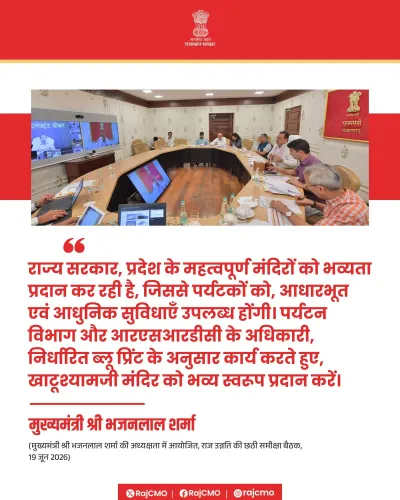
CM Bhajan Lal Sharma held a review meeting with Rajasthan Dharohar Sanrakshan Evam Pronnati Pradhikaran officials on 23 July 2026 at the Chief Minister's Office.
Development works at six sites were reviewed: Brahma Temple and Sarovar, Punchari Ka Lotha, Khatu Shyam Ji Temple, Beneshwar Dham, Ramdevra, and various panoramas.
The CM directed that basic amenities for pilgrims be completed in a time-bound and quality-oriented manner.
The initiative is framed under PM Narendra Modi 's 'Vikas bhi, Virasat bhi' (Development as well as Heritage) vision.
The state's heritage authority coordinates with central schemes such as PRASAD , launched in 2014-15 , for integrated pilgrimage site development.
Key beneficiary sites serve lakhs of pilgrims annually, including tribal communities at Beneshwar Dham and devotees from across Rajasthan and Gujarat at Ramdevra .
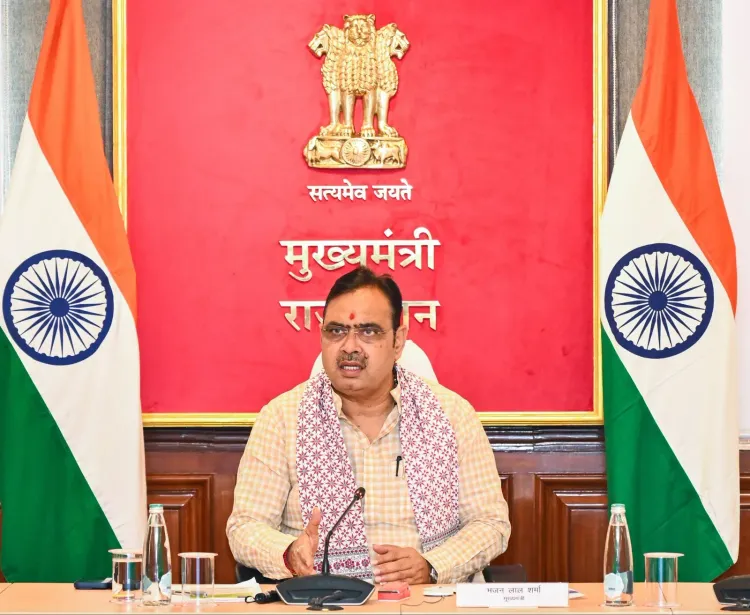
Rajasthan Chief Minister Bhajan Lal Sharma chaired a review meeting with officials of the Rajasthan Dharohar Sanrakshan Evam Pronnati Pradhikaran (Rajasthan Heritage Conservation and Promotion Authority) at the Chief Minister's Office on Thursday, 23 July 2026, to assess infrastructure development at key religious and heritage sites across the state.
The Chief Minister reviewed development works at six prominent sites — Brahma Temple and Sarovar (Pushkar), Punchari Ka Lotha, Khatu Shyam Ji Temple, Beneshwar Dham, Ramdevra, and various panoramas — and directed officials to complete basic amenities for pilgrims in a time-bound and quality-assured manner.
Context
Sharma posted on X in Hindi, stating that the meeting reviewed development works at the listed sites and that instructions were issued to complete pilgrim facilities 'in a time-bound and quality-oriented manner' (समयबद्ध व गुणवत्तापूर्ण तरीके से). He anchored the initiative in Prime Minister Narendra Modi's guiding vision of 'Vikas bhi, Virasat bhi' — 'Development as well as Heritage' — a framework that seeks to pair modern infrastructure upgrades with the preservation of India's cultural legacy.
The Rajasthan Dharohar Sanrakshan Evam Pronnati Pradhikaran is the state body mandated to conserve, promote, and upgrade infrastructure at Rajasthan's heritage and religious destinations. The authority coordinates between state departments to ensure that pilgrimage sites receive both structural upkeep and visitor amenities.
Policy Backdrop
The review aligns with the central government's PRASAD scheme (Pilgrimage Rejuvenation and Spiritual, Heritage Augmentation Drive), launched in 2014-15, which funds integrated development of pilgrimage destinations across India. State-level authorities such as the Pradhikaran work in tandem with such central schemes to channel resources toward site-specific infrastructure.
BJP-led state governments have consistently prioritised the twin goals of heritage conservation and tourism infrastructure, framing religious sites as economic as well as cultural assets. Rajasthan, with one of the densest concentrations of heritage and pilgrimage destinations in India, has been a focal point for this approach since the party returned to power in December 2023.
Stakeholders and Impact
Khatu Shyam Ji Temple in Sikar district draws lakhs of devotees annually and is among the most visited pilgrimage centres in north India. Beneshwar Dham in Dungarpur district, situated at the confluence of three rivers, holds special significance for tribal communities and hosts the large annual Beneshwar fair. Ramdevra in Jaisalmer district is the samadhi site of folk deity Ramdev Pir and draws pilgrims from Rajasthan and Gujarat.
Improved basic amenities — sanitation, drinking water, approach roads, and rest facilities — at these sites would directly benefit the large volumes of pilgrims who visit each year, as well as support the state's heritage tourism sector, which is a significant contributor to Rajasthan's economy.
What's Next
The Chief Minister's directive for time-bound completion signals that the state government will track progress against specific deadlines, though no public timeline has been announced for individual sites. Stakeholders and pilgrims will watch for supplementary state budget allocations or formal linkages with central schemes that could accelerate the works at the listed destinations.
With Rajasthan's religious tourism calendar featuring major fairs and festivals throughout the year, the pressure to deliver visible improvements ahead of peak pilgrimage seasons is likely to shape the pace of execution at each site.
Point of View
Virasat bhi' slogan, Sharma signals ideological alignment with the central leadership while claiming ownership of on-ground delivery in Rajasthan. The focus on six geographically and demographically diverse sites — spanning tribal, folk, and mainstream Hindu traditions — suggests a deliberate effort to project inclusive heritage stewardship. How quickly the state translates these directives into visible amenities will determine whether the initiative becomes a durable policy achievement or remains a rhetorical commitment ahead of future electoral cycles.
NationPress
23 Jul 2026
Frequently Asked Questions
Which heritage sites did CM Bhajan Lal Sharma review on 23 July 2026?
CM Sharma reviewed development works at Brahma Temple and Sarovar (Pushkar), Punchari Ka Lotha, Khatu Shyam Ji Temple (Sikar), Beneshwar Dham (Dungarpur), Ramdevra (Jaisalmer), and various panoramas across Rajasthan.
What is the Rajasthan Dharohar Sanrakshan Evam Pronnati Pradhikaran?
It is the Rajasthan state authority responsible for the conservation, promotion, and infrastructure development of the state's heritage and religious sites, coordinating between departments to improve pilgrim facilities.
What is PM Modi's 'Vikas bhi, Virasat bhi' vision?
'Vikas bhi, Virasat bhi' — meaning 'Development as well as Heritage' — is Prime Minister Narendra Modi's policy framework that seeks to combine modern infrastructure development with the preservation and promotion of India's cultural and historical legacy.
What is the PRASAD scheme and how does it relate to Rajasthan's heritage sites?
PRASAD (Pilgrimage Rejuvenation and Spiritual, Heritage Augmentation Drive) is a central government scheme launched in 2014-15 for integrated development of pilgrimage destinations. State authorities like Rajasthan's Pradhikaran work alongside such schemes to fund and execute site-specific upgrades.
Why is Beneshwar Dham significant in Rajasthan?
Beneshwar Dham in Dungarpur district is a major tribal pilgrimage site located at the confluence of three rivers. It is especially significant for tribal communities and hosts the large annual Beneshwar fair, making it one of Rajasthan's most culturally important religious destinations.