CM Sukhu: Kishau Dam deal secured on HP's terms, state to get ₹1,000 cr/year
Synopsis
Himachal Pradesh CM Sukhvinder Singh Sukhu revealed he threatened to walk out of a Union Home Minister-chaired meeting over the Kishau Dam Project, ultimately securing an agreement on the state's terms that will yield ₹1,000 crore annually once the project is operational.
Key Takeaways
CM Sukhu attended a meeting in New Delhi chaired by the Union Home Minister on the Kishau Dam Project on 23 July 2026 .
He threatened to walk out if the agreement was not on terms favourable to Himachal Pradesh , citing the state's Congress government's independence from the Centre.
The final agreement was reached on Himachal Pradesh's terms , according to Sukhu.
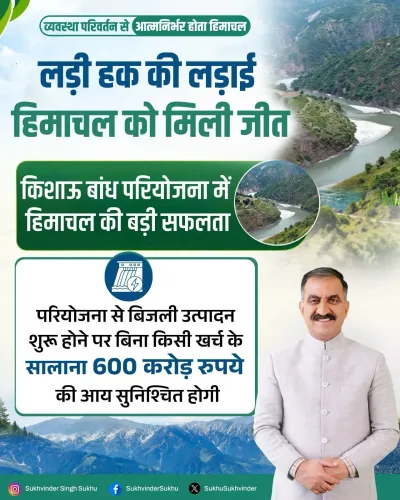
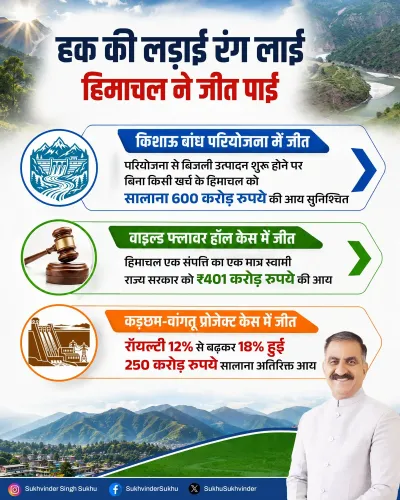
Himachal Pradesh will receive ₹1,000 crore per year at current rates, starting five years after the project begins.
Sukhu warned that without the deal, half of Delhi and all of Gurugram would have faced a severe water crisis.
The Kishau Dam is a long-pending multi-purpose project on the Yamuna river involving both Himachal Pradesh and Uttarakhand .
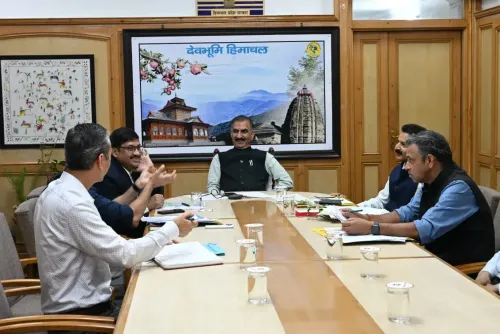
Himachal Pradesh Chief Minister Sukhvinder Singh Sukhu on Thursday, 23 July 2026, disclosed that he walked into a high-stakes meeting chaired by the Union Home Minister in New Delhi over the Kishau Dam Project and threatened to walk out unless the agreement was finalised on terms favourable to Himachal Pradesh — and that the state ultimately prevailed.
Context
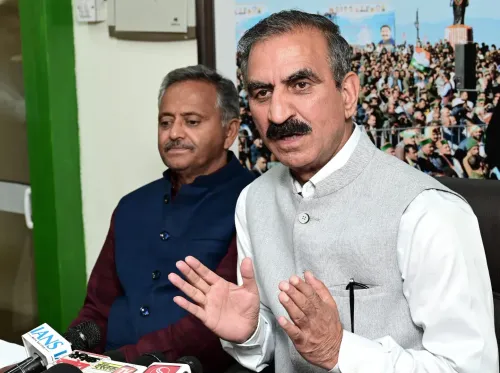
Posting in Hindi on X, CM Sukhu described a tense exchange at the New Delhi meeting. When it was pointed out that Uttarakhand was ready to proceed with the project but Himachal Pradesh was not, Sukhu said he responded directly: 'उत्तराखंड में आपकी सरकार है, वहाँ के मुख्यमंत्री कैसे मना कर सकते हैं' ('Uttarakhand has your government — how can that chief minister refuse?'). He added that since Himachal Pradesh is governed by the Indian National Congress, his administration would not move forward on any agreement that did not serve the state's interests, and was prepared to leave the meeting if necessary.
The standoff, as Sukhu narrated it, ended with an agreement reached on Himachal's terms. He stated that once the project commences, Himachal Pradesh will receive ₹1,000 crore annually — calculated at current rates — beginning five years after construction starts.
Policy Backdrop
The Kishau Dam Project is a proposed multi-purpose dam on the Yamuna river, long in the pipeline as part of Yamuna basin development plans coordinated by the central government. Negotiations have stretched across decades, with Himachal Pradesh and Uttarakhand — the two upstream Himalayan states — required to reach consensus on project terms before construction can begin.
Inter-state water infrastructure projects in India routinely require central mediation when upstream states differ on revenue sharing, land acquisition, and environmental safeguards. Political asymmetry — where one state is governed by the ruling party at the Centre and another by the opposition — has historically shaped the pace and terms of such negotiations.
Stakeholders and Impact
CM Sukhu underscored the downstream stakes, saying that without an agreement on the Kishau Dam Project, 'आधी दिल्ली और पूरा गुरुग्राम गंभीर जल संकट का सामना करते' — 'half of Delhi and all of Gurugram would have faced a severe water crisis.' The Delhi-NCR region, home to tens of millions of residents, is heavily dependent on upstream Himalayan river projects for its water security.
For Himachal Pradesh, the projected ₹1,000 crore per year in revenue represents a significant fiscal inflow for a hill state with a limited tax base. The state has historically leveraged its hydropower geography to negotiate royalty and water-use revenues from large infrastructure projects.
What's Next
The formal signing of the revised inter-state agreement and the commencement of construction remain the immediate milestones to watch. Revenue flows to Himachal Pradesh are projected to begin five years after project commencement, making the construction timeline critical to when the state actually realises the financial benefit. Monitoring of agreement clauses — particularly those governing revenue sharing and environmental compliance — will be closely watched by both state governments and civil society groups in the Yamuna basin.
Sukhu's public account of the negotiation also signals that the Congress-governed Himachal Pradesh administration intends to position itself as an assertive negotiator with the BJP-led Centre on resource-sharing disputes — a posture likely to resonate ahead of future electoral cycles in the state.
Point of View
He draws a sharp partisan line on inter-state infrastructure deals. The ₹1,000 crore annual revenue figure, if realised, would be a material fiscal win for a state that has long relied on hydropower geography to bolster its budget. More broadly, this episode reflects a recurring pattern in Indian federalism where political alignment — or misalignment — between state and central governments directly shapes the pace and terms of large infrastructure agreements.
NationPress
23 Jul 2026
Frequently Asked Questions
What is the Kishau Dam Project?
The Kishau Dam Project is a proposed multi-purpose dam on the Yamuna river involving Himachal Pradesh and Uttarakhand, designed to generate hydropower and supply water to downstream regions including Delhi and Gurugram. Negotiations between the two states and the central government have been ongoing for decades.
How much money will Himachal Pradesh get from the Kishau Dam deal?
According to CM Sukhu, Himachal Pradesh will receive ₹1,000 crore per year at current rates, beginning five years after the Kishau Dam Project commences construction.
Why did CM Sukhu threaten to walk out of the Kishau Dam meeting?
Sukhu said he was challenged over why Himachal Pradesh was not ready to proceed while Uttarakhand was. He responded that Himachal is governed by the Congress and would not accept an agreement that was not in the state's interest, threatening to leave the meeting if his terms were not met.
How does the Kishau Dam affect Delhi and Gurugram?
CM Sukhu stated that without an agreement on the Kishau Dam Project, half of Delhi and all of Gurugram would have faced a severe water crisis, highlighting the project's critical role in water security for the Delhi-NCR region.
What is the political significance of Sukhu's statement on the Kishau Dam?
Sukhu's statement underscores the tension between the Congress-governed Himachal Pradesh and the BJP-led central government, positioning his administration as an assertive negotiator that secured a favourable deal independently rather than deferring to the Centre.