No US pressure on Russia oil imports, says Petroleum Minister Hardeep Puri
Synopsis
India's Petroleum Minister Hardeep Puri has flatly denied any US pressure to cut Russian crude imports, saying India's oil buys are governed purely by price and discount logic — not politics. With Middle Eastern oil surging back to pre-war import levels and Russian volumes retreating on competitive pricing, India's energy pivot is market-driven, even as Trump's sanctions waiver quietly kept the door open.
Key Takeaways
Petroleum Minister Hardeep Singh Puri said on 27 October that India has faced no US pressure to reduce Russian crude oil imports.
Before the Russia-Ukraine war , India sourced just 0.2 per cent of its oil from Russia; imports surged post-war due to steep discounts.
India's Middle Eastern crude imports surged in September , returning to pre-war levels, as refiners shifted away from Russian oil on competitive Gulf pricing.
US President Donald Trump earlier in October waived fresh sanctions on Russian energy exports, shielding India from potential tariffs of up to 100 per cent .
Puri stressed that every procurement decision is anchored in national self-interest and driven by discount and pricing comparisons.
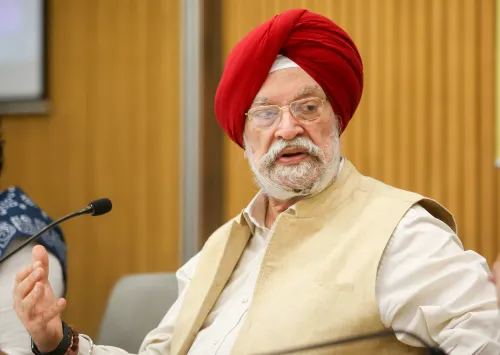
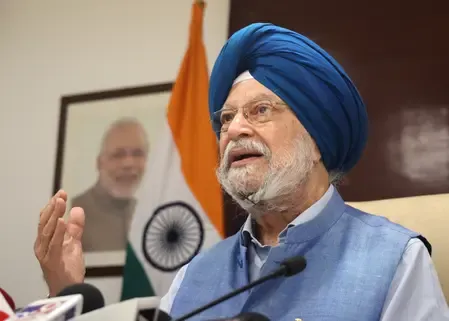
Union Petroleum Minister Hardeep Singh Puri on Tuesday, 27 October said that India has faced no pressure from the United States to cut its purchases of Russian crude oil, asserting that every energy procurement decision India makes is anchored in national self-interest. The minister's remarks come as India's crude import mix shifts — with Middle Eastern oil returning to prominence and Russian volumes tapering amid stiff competition from China.
What the Minister Said
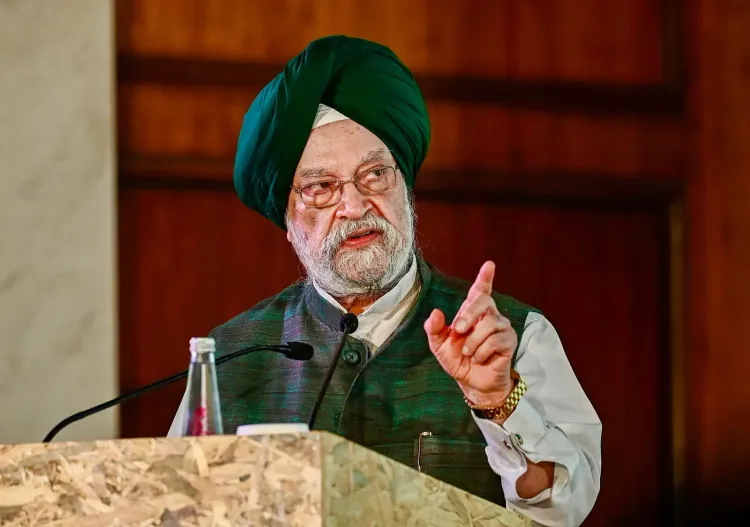
Speaking at an industry event in New Delhi, Puri was unequivocal on the question of American diplomatic pressure. 'I never felt anything,' he said, dismissing suggestions that Washington has leaned on New Delhi to walk back its post-Ukraine war reliance on discounted Russian barrels.
The minister offered crucial context: before the Russia-Ukraine war, India sourced a mere 0.2 per cent of its total oil imports from Russia. That share surged dramatically once the war began, driven entirely by steep discounts Moscow offered to find alternative buyers after Western sanctions curtailed European demand.
Why Russian Imports Are Now Falling
India's refiners have recently been dialling back Russian crude purchases — not because of geopolitical pressure, Puri stressed, but because of economics. Gulf oil is once again being offered at competitive discounts, making it an attractive alternative. Ship-tracking data corroborates this: India's Middle Eastern crude imports surged in September, returning to pre-war levels, as refiners rotated away from Russian grades amid competition with Chinese buyers for the same discounted barrels.
'Purchase of Russian oil is linked to discounts and pricing when compared with other grades,' Puri noted, adding that as Gulf suppliers sharpened their pricing, the calculus shifted naturally.
The US Sanctions Backdrop
The minister's comments carry added weight given a recent development in Washington. Earlier in October, US President Donald Trump invoked national interest provisions to waive fresh sanctions, restrictions, and duties on Russian energy exports under legislation enacted last month — providing India relief from potential tariffs of up to 100 per cent on purchases of Russian oil. The waiver underscored that the US-India energy relationship remains nuanced, with Washington choosing accommodation over confrontation on this particular front.
India's Broader Energy Strategy
Puri has consistently framed India's oil procurement as a function of energy security rather than geopolitical alignment. In September, he said India had successfully navigated recent supply-chain disruptions amid global geopolitical crises, maintaining steady energy imports — crediting what he called the country's energy diplomacy under Prime Minister Narendra Modi.
'Energy security today is not simply about securing supplies; it is also about navigating conflicts, chokepoints, volatile prices and sudden disruptions while keeping the country and its economy on the move,' the minister had said. He has also noted that India is on track to account for nearly one-fourth of global energy demand growth over the next two decades, positioning it as a consequential player in shaping the international energy landscape.
Notably, India's ability to pivot between suppliers — from Russian discounts during the war's early phase to Gulf oil as competitive pricing returns — illustrates the pragmatic, market-driven approach that New Delhi has publicly championed. Whether that flexibility continues to shield India from future geopolitical friction with either Washington or Moscow will depend heavily on how the Ukraine conflict and global oil markets evolve in the months ahead.
Point of View
Not because it was asked to, but because Gulf discounts have narrowed the arbitrage. The Trump sanctions waiver was convenient cover, but the real story is that India's energy pragmatism is self-correcting without needing external nudges. The risk ahead is if Russian oil prices fall sharply again — New Delhi's stated principle of 'self-interest' would logically pull it back toward Moscow, and Washington's patience with that logic has limits it has so far chosen not to test.
NationPress
27 Oct 2026
Frequently Asked Questions
Has the US pressured India to stop buying Russian oil?
No, according to Petroleum Minister Hardeep Singh Puri, who said on 27 October that India has faced no such pressure from the United States. He stated plainly, 'I never felt anything,' adding that every procurement decision is driven by national self-interest and pricing considerations.
Why has India been reducing Russian oil imports recently?
India's refiners have been cutting back on Russian crude because Gulf oil is now being sold at competitive discounts, making it an economically attractive alternative. Ship-tracking data shows Middle Eastern crude imports surged in September, returning to pre-war levels, as competition from Chinese buyers also made Russian grades less cost-effective for Indian refiners.
How much oil did India buy from Russia before the Ukraine war?
Before the Russia-Ukraine war, India sourced only 0.2 per cent of its total oil imports from Russia. That share rose sharply after the war began in 2022, as Moscow offered steep discounts to redirect exports away from sanctioning Western markets.
What did Trump's sanctions waiver mean for India?
Earlier in October, US President Donald Trump invoked national interest provisions to waive fresh sanctions, restrictions, and duties on Russian energy exports under recently enacted legislation. This shielded India from potential tariffs of up to 100 per cent on Russian oil purchases, reducing the economic risk of continued — if now declining — Russian crude imports.
What is India's long-term energy outlook according to Puri?
Minister Puri has said India is emerging as a major force in the global energy landscape, with the country expected to account for nearly one-fourth of global energy demand growth over the next two decades. He has emphasised that energy security involves navigating geopolitical disruptions, price volatility, and supply-chain risks while keeping the economy running.