Government Allocates Over Rs 1,536 Crore for Rural Development in Eight States
Synopsis
In a significant move to enhance rural infrastructure, the Centre has allocated over Rs 1,536 crore for local bodies in eight states for FY 2025–26. This funding is crucial for local development and public services.
Key Takeaways
Centre allocates over Rs 1,536 crore for rural local bodies.
Funding covers eight states for FY 2025–26.
Tied and untied grants are part of the 15th Finance Commission's initiative.
Grants can address sanitation, drinking water, and local needs.
Releases occur in two instalments throughout the financial year.
New Delhi, April 1 (NationPress) The government has revealed a significant allocation of over Rs 1,536.14 crore aimed at enhancing the capabilities of rural local bodies across eight states: Arunachal Pradesh, Goa, Gujarat, Jharkhand, Odisha, Rajasthan, Telangana, and Uttarakhand for the Financial Year (FY) 2025–26. This funding is part of the 15th Finance Commission's tied and untied grants.
The disbursement includes both regular instalments and amounts that were previously withheld from various fiscal years.
Among the released funds, Rs 466.79 crore was allocated to Rajasthan as tied grants, while Jharkhand received Rs 405.23 crore and Telangana was given Rs 371.91 crore.
The hill state of Uttarakhand received Rs 136.58 crore, and Odisha was allocated Rs 53.13 crore. Additionally, Goa and Gujarat received Rs 18.27 crore and Rs 2.98 crore, respectively.
On March 25, the Centre had allocated over Rs 1,142 crore to support rural local bodies in Madhya Pradesh, Jharkhand, Punjab, and Mizoram for the same financial year as part of the 15th Finance Commission's untied grants.
Specifically for Madhya Pradesh, Rs 631.91 crore was disbursed as the second instalment of untied grants for FY 2025-26.
In Jharkhand, the first instalment of untied grants for FY 2025-26 was Rs 269.03 crore.
Punjab received Rs 222 crore as the second instalment of untied grants for FY 2025-26, while Mizoram was allocated Rs 14.80 crore as the second instalment of untied grants.
The Union government, through the Ministries of Panchayati Raj and Jal Shakti (Department of Drinking Water and Sanitation), recommends the disbursement of the 15th Finance Commission grants to the states for their Panchayati Raj institutions, with the final release conducted by the Ministry of Finance.
The allocated funds are usually recommended and distributed in two instalments throughout the financial year.
The Untied Grants can be utilized by Panchayati Raj institutions and rural local bodies to address specific local needs across the 29 subjects outlined in the Eleventh Schedule, excluding expenditures on salaries and establishment costs.
Tied grants are designated for essential services such as sanitation and maintaining ODF (open defecation-free) status, which encompasses waste management, treatment of household waste, and human excreta and faecal sludge management.
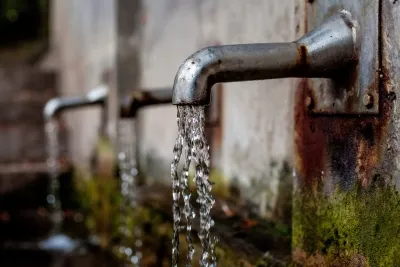
These grants are also applicable for drinking water provision, rainwater harvesting, and water recycling.
Point of View
The allocation of over Rs 1,536 crore to enhance rural local bodies demonstrates a proactive approach by the government to strengthen local governance and infrastructure across multiple states. This funding is essential for the development of rural areas and reflects a commitment to improving public services.
NationPress
22 Oct 2026
Frequently Asked Questions
What is the total funding allocated for rural local bodies?
The Centre has allocated over Rs 1,536.14 crore for rural local bodies across eight states for FY 2025–26.
Which states are receiving this funding?
The funding is allocated to Arunachal Pradesh, Goa, Gujarat, Jharkhand, Odisha, Rajasthan, Telangana, and Uttarakhand.
What are tied and untied grants?
Tied grants can only be used for specific services, while untied grants provide more flexibility for local bodies to address specific needs.
How will these grants be utilized?
The grants can be used for sanitation, waste management, drinking water supply, and other local needs as specified in the Eleventh Schedule.
Who recommends and releases these grants?
The Ministry of Panchayati Raj and the Ministry of Jal Shakti recommend the grants, which are released by the Ministry of Finance.