South Korea exports hit record $120.9 billion in Sep, chip sales top $60 billion
Synopsis
South Korea's September export data shattered records on almost every metric — $120.9 billion in total shipments, $60.3 billion in semiconductors alone, and a $49.85 billion trade surplus, all firsts. With nine-month cumulative exports already past $800 billion — topping last year's full-year record — a $1 trillion annual figure is now the government's stated target, even as protectionism and Middle East tensions cloud the outlook.
Key Takeaways
South Korea's total exports hit a record $120.9 billion in September 2026 , up 83.5% year-on-year.
Semiconductor exports crossed $60 billion for the first time, surging 263% to $60.3 billion .
The monthly trade surplus reached an unprecedented $49.85 billion ; imports rose 26% to $71.09 billion .
Exports to China jumped 123% to $26 billion ; shipments to the US surged 137% to $24.33 billion .
January–September cumulative exports exceeded $800 billion , already surpassing the previous record annual total of $709.3 billion .
Industry Minister Kim Jung-kwan said South Korea is on track for $1 trillion in annual exports, but flagged protectionism and Middle East tensions as key risks.
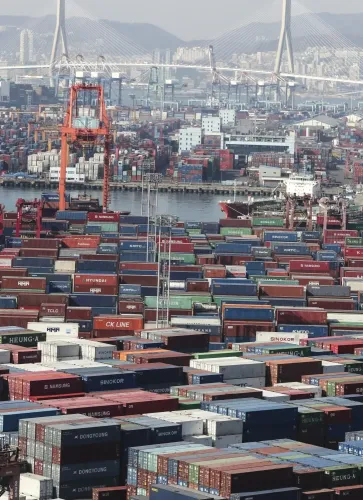
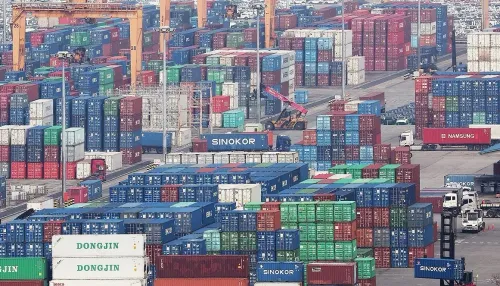
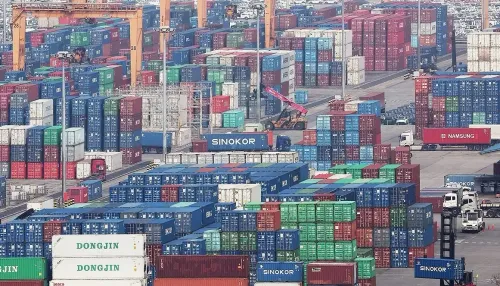
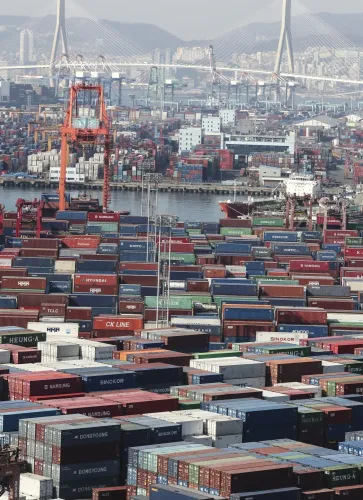
South Korea's exports surged 83.5% year-on-year to a record $120.9 billion in September 2026, driven by an unprecedented boom in semiconductor shipments, according to official data released on Thursday, 1 October. The milestone marks the single largest monthly export figure in the country's history, underlining the outsized role semiconductors now play in Asia's fourth-largest economy.
Semiconductor Exports Cross $60 Billion for the First Time
Chip shipments — the engine of South Korea's export machine — skyrocketed 263% year-on-year to $60.3 billion in September, exceeding the $60 billion mark for the very first time, the Ministry of Trade, Industry and Resources said in an official press release. The surge was powered by increased shipment volumes and higher product prices, reflecting strong global demand for memory chips, particularly from artificial intelligence and data-centre customers.
The stellar semiconductor performance pushed overall imports up 26% to $71.09 billion, yielding an unprecedented trade surplus of $49.85 billion for the month — a record in its own right.
Sectoral Breakdown: Cosmetics Gain, Automobiles Slip
Beyond chips, petroleum product exports jumped 72% to $7.22 billion, while petrochemical exports edged up 5.1% to $3.95 billion. Cosmetics exports rose a notable 31.4% to $1.51 billion, buoyed by rising demand across China, the United States, and the European Union.
Automobile exports, however, bucked the trend, declining 5.5% to $6.05 billion. Officials attributed the dip to fewer working days caused by the Chuseok holiday and a softening in used-car shipments — a category that had inflated figures in prior months.
China, US Lead Destination Markets
Exports to China surged 123% to $26 billion, powered by strong semiconductor and wireless communications equipment shipments. Notably, exports to China have now exceeded $20 billion for four consecutive months, signalling a sustained recovery in bilateral trade after a prolonged slump. Shipments to the United States climbed 137% to $24.33 billion, driven by robust chip demand alongside petrochemicals and general machinery.
Exports to Southeast Asian countries rose 92.6% to $21.29 billion, while those to the European Union increased 20.9% to $8.65 billion, with both corridors benefiting from strong chip and automobile flows.
$1 Trillion Annual Export Target Within Reach
Industry Minister Kim Jung-kwan highlighted that exports in the January–September period had already surpassed $800 billion for the first time — exceeding the country's previous record annual total of $709.3 billion with three months still remaining in the year. 'Exports in the January–September period exceeded $800 billion for the first time, already surpassing the country's record annual exports of $709.3 billion,' Minister Kim said.
He added that South Korea is on track to achieve $1 trillion in annual exports in 2026, but cautioned that the spread of global protectionism and heightened tensions in the Middle East remain significant uncertainties for outbound shipments. The government, he said, would closely monitor the global trade environment and take 'preemptive measures' to shield Korean exporters from unexpected external shocks. This comes amid growing concerns over US tariff policy and a fragile geopolitical landscape that could disrupt chip supply chains.
Point of View
But the real story is structural dependency: more than half of South Korea's record monthly exports came from a single product category — semiconductors. That concentration is a double-edged sword. The AI and data-centre demand wave has turbocharged chip prices and volumes, but any reversal — a US slowdown, an inventory correction, or a supply shock from geopolitical disruption — would hit Seoul disproportionately hard. Minister Kim's $1 trillion target is credible on current trajectory, yet the caveat about global protectionism is not boilerplate: South Korea's chip export corridors run directly through the US–China rivalry, and any escalation there rewrites the arithmetic fast.
NationPress
1 Oct 2026
Frequently Asked Questions
What record did South Korea's exports set in September 2026?
South Korea's exports reached $120.9 billion in September 2026 — the highest monthly total in the country's history — up 83.5% from the same month a year earlier. The surge was led by semiconductor shipments, which crossed $60 billion for the first time.
Why did South Korea's semiconductor exports spike so sharply?
Semiconductor exports surged 263% year-on-year to $60.3 billion in September, driven by a combination of higher shipment volumes and elevated memory chip prices amid strong global demand, particularly from AI and data-centre customers.
Is South Korea on track to hit $1 trillion in annual exports?
Yes, according to Industry Minister Kim Jung-kwan. Cumulative exports in January–September 2026 already exceeded $800 billion, surpassing South Korea's previous record full-year total of $709.3 billion, with three months still remaining.
Which countries are South Korea's biggest export destinations?
China was the top destination in September, with exports jumping 123% to $26 billion, followed by the United States at $24.33 billion (up 137%) and Southeast Asia at $21.29 billion (up 92.6%). All three corridors were driven primarily by semiconductor shipments.
What risks could threaten South Korea's export momentum?
Minister Kim flagged the spread of global protectionism and heightened Middle East tensions as the two primary uncertainties. Given that semiconductors — a category exposed to US–China trade friction — now account for over half of monthly exports, any escalation in that rivalry poses a direct risk to the headline numbers.