SAIL supplies 5,700 tonnes of defence steel for 3 new Indian Navy ships
Synopsis
Three Indian Navy warships — INS Dunagiri, INS Agray, and INS Sanshodhak — were commissioned in Kolkata with every tonne of their specialised hull steel sourced domestically from SAIL. The 5,700-tonne DMR 249A supply is the latest proof point that India's defence-industrial supply chain is quietly but meaningfully cutting its import dependence.
Key Takeaways
SAIL supplied 5,700 tonnes of DMR 249A grade special steel for three newly commissioned Indian Navy vessels on 24 June 2025 .
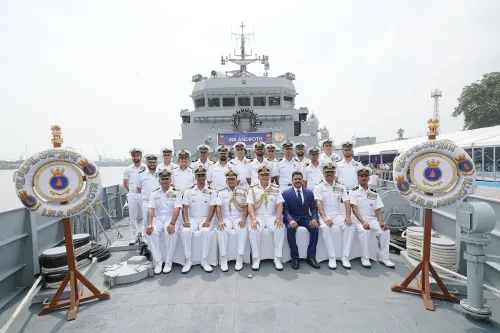
The three ships — stealth frigate INS Dunagiri , anti-submarine craft INS Agray , and survey vessel INS Sanshodhak — were commissioned by PM Narendra Modi at Syama Prasad Mookerjee Port, Kolkata .
Steel was manufactured at SAIL's Bokaro , Bhilai , and Rourkela plants, with expanded DMR-grade capacity at Rourkela's Special Plate Plant .
SAIL has previously supplied defence steel for INS Vikrant and Project 17A frigates including INS Nilgiri , INS Himgiri , and INS Udaygiri .
The supply aligns with the Centre's Atmanirbhar Bharat and Make in India goals to reduce strategic import dependence.
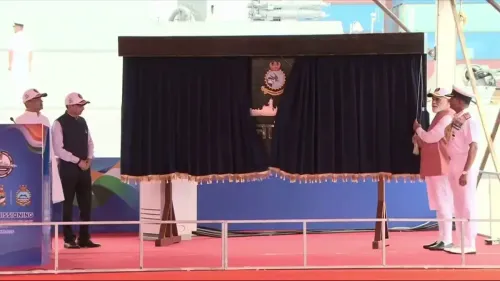
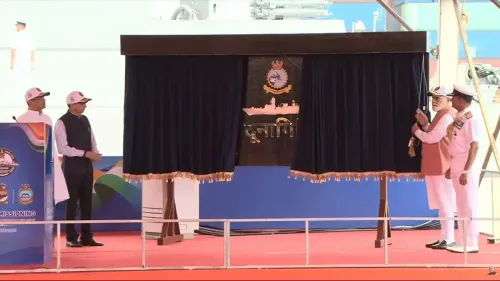
Steel Authority of India Limited (SAIL) on Wednesday, 24 June confirmed it supplied 5,700 tonnes of special defence-grade steel for three newly commissioned Indian Navy vessels, underlining the state-run Maharatna company's expanding role in India's indigenous warship-building programme. The three platforms were formally inducted into service by Prime Minister Narendra Modi during a commissioning ceremony held at Syama Prasad Mookerjee Port in Kolkata.
The Three Naval Platforms
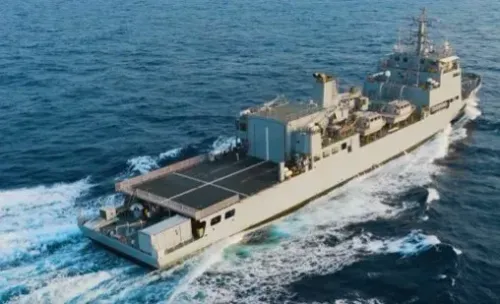
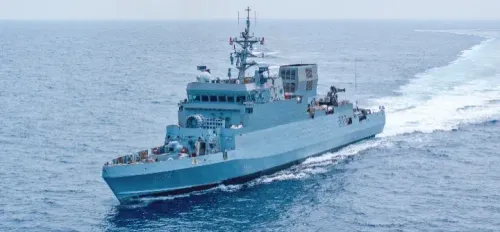
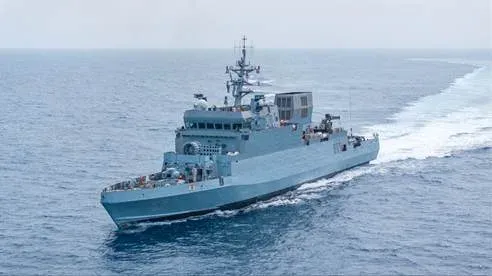
The newly commissioned vessels are the stealth frigate INS Dunagiri, the anti-submarine warfare shallow water craft INS Agray, and the survey vessel (large) INS Sanshodhak. Each represents a distinct operational capability — from blue-water stealth combat to coastal anti-submarine operations and hydrographic surveying — reflecting the breadth of India's current naval modernisation drive.
The Steel Behind the Ships
According to SAIL, the steel supplied comprised DMR 249A grade hot-rolled sheets and plates — a specialised, high-strength alloy engineered specifically for critical maritime defence applications. The material was manufactured across three of SAIL's flagship facilities: the Bokaro Steel Plant, the Bhilai Steel Plant, and the Rourkela Steel Plant. SAIL noted it has been scaling up production of DMR-grade plates, particularly at the Special Plate Plant of the Rourkela facility, to meet rising defence sector demand.
A Growing Defence Steel Portfolio
This is not SAIL's first contribution to India's naval build-up. The company has previously supplied specialised steel for the indigenously built aircraft carrier INS Vikrant and for the Project 17A stealth frigates — INS Nilgiri, INS Himgiri, and INS Udaygiri. Its defence-grade steel has also been used in vessels including INS Ajay, INS Nistar, and INS Anjadeep, among others. The latest supply adds to what is becoming a substantial indigenous defence steel track record.
Atmanirbhar Bharat Alignment
SAIL stated that its defence steel efforts are directly aligned with the Centre's Atmanirbhar Bharat and Make in India initiatives, aimed at reducing dependence on imported strategic materials. SAIL Chairman and Managing Director Ashok Kumar Panda underscored the company's commitment: 'As a key partner in India's defence sector, SAIL remains deeply committed to national self-reliance. Delivering high-strength DMR 249A steel plates helps safeguard India's strategic independence while showcasing the company's technological capabilities.'
What This Signals for Indian Shipbuilding
The commissioning of three vessels in a single ceremony — and the domestic sourcing of all specialised steel — points to a maturing indigenous defence-industrial ecosystem. India has historically depended on imported defence steel, making SAIL's expanding DMR-grade capacity a strategically significant shift. With the Navy's fleet expansion plans continuing, demand for domestic defence-grade steel is expected to grow further in the years ahead.
Point of View
700-tonne figure is notable not just as a supply milestone but as a signal of structural change: India is no longer importing the specialised steel that goes into its warships' hulls. SAIL's DMR 249A capacity build-up at Rourkela is the kind of quiet, unglamorous infrastructure that determines whether 'Make in India' in defence is rhetoric or reality. The real measure will come when the Navy's larger, more complex platforms — submarines, destroyers — are tested against the same domestic supply chain. That stress test is still ahead.
NationPress
22 Sept 2026
Frequently Asked Questions
What steel did SAIL supply for the three Indian Navy ships?
SAIL supplied 5,700 tonnes of DMR 249A grade hot-rolled sheets and plates — a specialised high-strength steel designed for critical maritime defence platforms. The material was produced at SAIL's Bokaro, Bhilai, and Rourkela steel plants.
Which Indian Navy ships were commissioned on 24 June 2025?
The three vessels commissioned are stealth frigate INS Dunagiri , anti-submarine warfare shallow water craft INS Agray , and survey vessel (large) INS Sanshodhak . Prime Minister Narendra Modi commissioned all three at Syama Prasad Mookerjee Port in Kolkata.
Has SAIL supplied defence steel for other naval vessels before?
Yes. SAIL has previously supplied specialised steel for aircraft carrier INS Vikrant and Project 17A stealth frigates INS Nilgiri, INS Himgiri, and INS Udaygiri, as well as vessels including INS Ajay, INS Nistar, and INS Anjadeep.
How does this relate to India's Atmanirbhar Bharat initiative?
SAIL's domestic supply of defence-grade DMR steel directly supports the Centre's Atmanirbhar Bharat and Make in India goals by reducing India's dependence on imported strategic materials for warship construction. SAIL CMD Ashok Kumar Panda described the company as 'a key partner in India's defence sector' committed to national self-reliance.
Why is DMR 249A steel significant for naval shipbuilding?
DMR 249A is a high-strength, specialised alloy engineered to meet the structural and safety demands of military maritime platforms. Its domestic production by SAIL means India no longer needs to import this critical input for warship hulls, strengthening the country's strategic supply chain.