Samsung strike may cut South Korea's GDP by 0.5 pc, BOK warns
Synopsis
The Bank of Korea has put a number on what a Samsung Electronics strike would cost South Korea: 0.5 percentage points of GDP and up to 30 trillion won in losses. With 50,000 workers poised to walk out for 18 days starting Thursday — and mediation talks on their final day — the fate of the world's largest memory chipmaker hangs on a bonus dispute that has exposed a deep fault line between AI-era profits and worker pay.
Key Takeaways
The Bank of Korea (BOK) estimates a Samsung Electronics strike could cut 0.5 percentage point from South Korea's 2026 GDP growth.
Potential losses are pegged at 30 trillion won (approximately US$20 billion ), with production recovery taking up to three weeks .
More than 50,000 unionised workers plan an 18-day strike beginning Thursday , demanding bonuses tied to operating profit.
Samsung proposes a bonus pool at 10 per cent of operating profit ; the union demands 15 per cent with no payout caps.
Government-led mediation entered its final day on Tuesday ; the National Labor Relations Commission may issue a formal proposal if talks fail.
South Korea's economy grew 1.7 percent in Q1 2026 — its fastest pace in over five years — on the back of semiconductor exports.
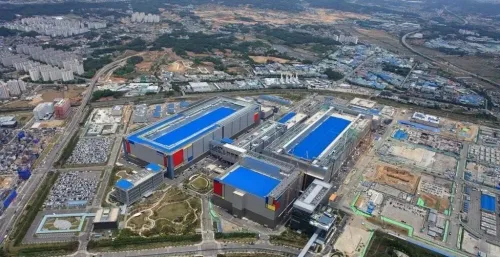
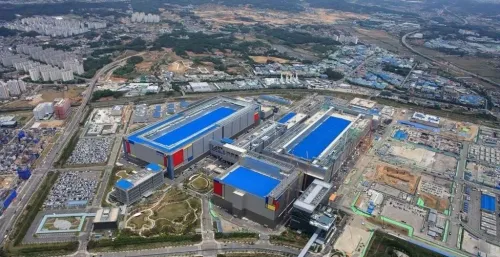
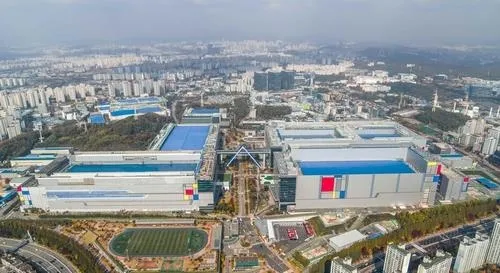
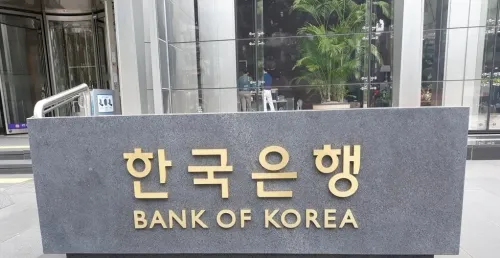
The Bank of Korea (BOK) has warned that a general strike at Samsung Electronics Co. could shave 0.5 percentage point off South Korea's economic growth in 2026, according to officials who confirmed the central bank's findings on Tuesday, 19 May. The BOK recently compiled a confidential report on the matter and submitted it to the finance ministry.
Scale of Potential Economic Damage
The BOK's internal report estimated total losses from a potential strike at approximately 30 trillion won (around US$20 billion). It noted that restoring production could take up to three weeks if the company's memory chip lines come to a complete halt. This is a significant concern given that the BOK had projected South Korea's economy to grow 2 percent in 2026. The country's economy had expanded 1.7 percent in the first quarter — its fastest growth in more than five years — driven largely by robust semiconductor exports.
Strike Plans and Union Demands
Unionised workers at Samsung announced plans to stage an 18-day large-scale strike beginning Thursday, with more than 50,000 members expected to participate. The core demand is higher bonuses directly linked to the company's operating profit. Labour and management remain sharply divided over performance-based bonuses tied to earnings from Samsung's artificial intelligence (AI)-related semiconductor business, amid an ongoing global memory supercycle.
Last-Ditch Mediation Talks
Samsung and its largest labour union resumed government-led wage mediation on Tuesday, entering the final day of talks in a bid to avert the strike. The two-day negotiations had resumed days after the first round of mediation ended without a deal. Park Soo-keun, chairman of the National Labor Relations Commission, indicated cautious optimism before entering the meeting. 'Ultimately, we will see whether the two parties can reach a settlement, and if not, we will issue a mediation proposal,' Park told reporters. 'There is still a possibility of a deal, so we will wait and see.'
The Gap Between Both Sides
Samsung has proposed maintaining the current excess profit incentive system while allowing the bonus pool to be calculated based on 10 per cent of operating profit. The company also proposed introducing a special compensation system, describing it as a more flexible incentive structure. In contrast, the union is demanding fixed performance bonuses equal to 15 per cent of the semiconductor division's operating profit, along with the removal of payout caps — a position the company has so far rejected.
What Happens Next
If mediation fails, the National Labor Relations Commission is expected to issue a formal mediation proposal. A prolonged work stoppage at the world's largest memory chipmaker would reverberate well beyond South Korea, given Samsung's dominant role in global DRAM and NAND supply chains. With the global AI-driven memory supercycle still in full swing, any disruption to chip output could have downstream consequences for technology manufacturers worldwide.
Point of View
Almost entirely on semiconductor momentum, and a prolonged Samsung shutdown would unwind that in a matter of weeks. The bonus dispute also surfaces a broader tension in AI-era manufacturing — workers in chip fabs that power the global AI supercycle are demanding a share of profits that companies have so far structured to flow primarily to shareholders. How Samsung resolves this will set a precedent for labour relations across the Korean chaebol system.
NationPress
19 Sept 2026
Frequently Asked Questions
How much could a Samsung strike affect South Korea's economy?
According to the Bank of Korea's internal report, a general strike at Samsung Electronics could reduce South Korea's 2026 GDP growth by 0.5 percentage point, with estimated losses of around 30 trillion won (approximately US$20 billion). Restoring production could take up to three weeks if memory chip lines halt completely.
Why are Samsung workers planning to strike?
More than 50,000 unionised Samsung workers plan an 18-day strike starting Thursday over performance-based bonuses. The union is demanding fixed bonuses equal to 15 per cent of the semiconductor division's operating profit with no payout caps, while Samsung has offered a bonus pool based on 10 per cent of operating profit.
What is the status of mediation between Samsung and its union?
Samsung and its largest labour union resumed government-led wage mediation on Tuesday, entering the final day of talks. The first round of mediation had ended without a deal. National Labor Relations Commission chairman Park Soo-keun said a settlement was still possible but that a formal mediation proposal would be issued if talks failed.
How strong is South Korea's economy ahead of this potential strike?
South Korea's economy expanded 1.7 percent in the first quarter of 2026 — the fastest growth in more than five years — driven by robust semiconductor exports. The BOK had projected full-year growth of 2 percent, a figure that could be materially reduced if the Samsung strike proceeds.
Why does a Samsung strike matter beyond South Korea?
Samsung Electronics is the world's largest memory chipmaker, supplying DRAM and NAND flash to technology manufacturers globally. A prolonged halt to its chip production lines could disrupt supply chains for AI hardware, consumer electronics, and data centre infrastructure worldwide, particularly during an ongoing global memory supercycle.