Samsung Electronics strike threat: South Korea's top policymakers demand swift resolution
Synopsis
South Korea's finance minister and three financial regulators issued a rare joint warning on 14 May, demanding Samsung Electronics and its union resolve their standoff before a 21 May strike deadline. With government-led mediation already collapsed and the AI semiconductor supercycle at full throttle, policymakers are treating this as a national economic emergency — not a routine wage dispute.
Key Takeaways
Finance Minister Koo Yun-cheol and three financial regulators jointly warned on 14 May that a Samsung Electronics strike could threaten South Korea's economic growth and exports.
Government-led mediation talks collapsed on Wednesday after two days, with no agreement reached.
The union demands performance bonuses equal to 15% of operating profit and removal of the payout cap; management has offered 10% plus a one-time package.
A strike is scheduled for 21 May , coinciding with a global semiconductor supercycle driven by AI demand.
Policymakers also flagged 'excessive' volatility in South Korea's foreign exchange market linked to foreign investor selling and speculative trading.
South Korea's senior economic and financial policymakers on Thursday, 14 May jointly called for the immediate resolution of a labour dispute at Samsung Electronics, warning that a planned walkout could inflict serious damage on the country's economy at a critical moment in the global semiconductor supercycle.
High-Level Emergency Meeting
Finance Minister Koo Yun-cheol convened a joint meeting with the heads of the country's top financial regulators to assess the potential fallout from a strike scheduled for 21 May. The meeting was attended by Bank of Korea Governor Shin Hyun-song, Financial Services Commission Chairman Lee Eog-weon, and Financial Supervisory Service Governor Lee Chan-jin.
According to a release from the Ministry of Finance and Economy, participants warned that a walkout 'could pose a significant risk to economic growth, exports and the financial market.' The joint statement added: 'There should never be a strike and the issue should be promptly settled through principle-based negotiations.'
Mediation Talks Collapse
The urgency follows the breakdown of two days of government-led mediation talks that concluded on Wednesday without an agreement — a last-ditch effort that ultimately failed to bridge the gap between Samsung management and the union.
The union is demanding performance bonuses equivalent to 15 percent of operating profit, along with the removal of an existing payout cap and the formal institutionalisation of the bonus system. The demands come against the backdrop of Samsung's record-breaking earnings during the global artificial intelligence boom.
Management, for its part, has proposed allocating 10 percent of operating profit to bonuses, supplemented by a one-time special compensation package that the company claims exceeds industry standards.
Why the Stakes Are So High
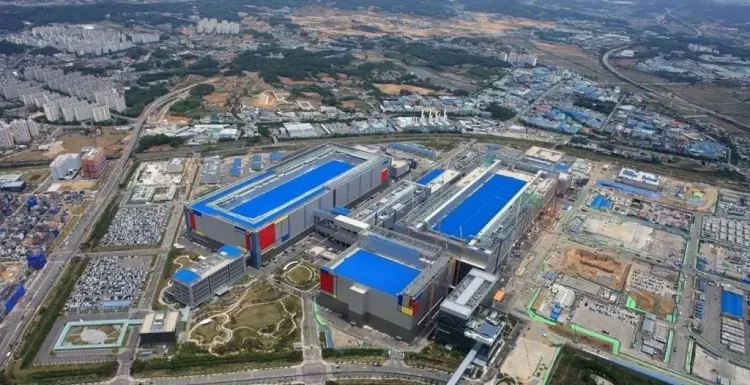
Samsung Electronics is not merely South Korea's largest company — it is the backbone of the country's export economy and a dominant force in global memory chip and semiconductor supply chains. A strike at this juncture, with the AI-driven semiconductor supercycle in full swing, risks disrupting chip output at a moment of peak global demand.
Notably, this is not the first time labour tensions at Samsung have reached a flashpoint, but the scale of government intervention — with the finance minister and three financial regulators issuing a joint warning — signals that policymakers view this dispute as a systemic risk, not merely a corporate matter.
Currency Market Concerns
The meeting also addressed volatility in South Korea's foreign exchange market. Policymakers noted that recent swings in the Korean won have been 'excessive relative to the country's economic fundamentals,' attributing the turbulence primarily to foreign investors selling local shares and speculative trading activity.
With the strike deadline now days away, the pressure is on both Samsung's management and union leadership to return to the negotiating table before markets and supply chains feel the impact.
Point of View
However, carries its own risk: by elevating the dispute to a national emergency, policymakers may inadvertently strengthen the union's hand, signalling just how much leverage workers hold. The bonus gap — 15% demanded versus 10% offered — is not insurmountable, but the union's push to institutionalise the bonus system is a structural demand that management has resisted for years. The real question is whether government pressure produces a genuine settlement or a temporary patch that resurfaces at the next earnings cycle.
NationPress
21 Sept 2026
Frequently Asked Questions
Why are South Korean policymakers intervening in the Samsung Electronics labour dispute?
Senior policymakers, including Finance Minister Koo Yun-cheol and the heads of three major financial regulators, intervened because they believe a strike could significantly harm South Korea's economic growth, exports, and financial markets. Samsung Electronics is central to the country's semiconductor export economy, and a work stoppage during the current AI-driven supercycle is seen as a systemic risk.
What are Samsung workers demanding?
The union is demanding performance bonuses equivalent to 15 percent of Samsung Electronics' operating profit, the removal of an existing bonus payout cap, and the formal institutionalisation of the bonus system. These demands reflect the company's record earnings during the global AI boom.
What has Samsung management proposed?
Samsung's management has offered to allocate 10 percent of operating profit to bonuses, along with a one-time special compensation package that the company says exceeds industry standards. The two sides failed to bridge the gap during two days of government-led mediation.
When is the Samsung strike scheduled?
The strike is scheduled for 21 May. Government-led mediation talks collapsed on the preceding Wednesday, leaving little time for a negotiated settlement before the deadline.
How does a Samsung strike affect global semiconductor supply?
Samsung Electronics is a leading global supplier of memory chips and semiconductors. A strike during the current AI-driven semiconductor supercycle could disrupt chip production at a moment of peak demand, with potential ripple effects on global technology supply chains.