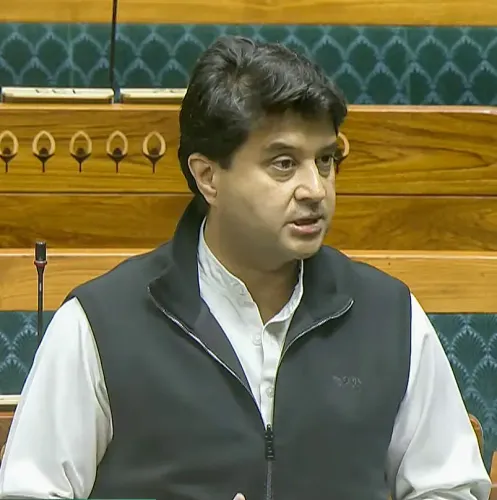
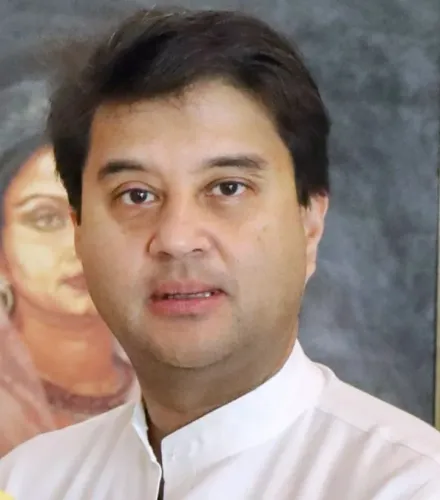
Scindia meets ISP body to fast-track telecom RoW, energy fixes
Synopsis
India's data consumption has hit 700 crore GB a month — but the infrastructure needed to handle that load is stuck in a maze of RoW red tape and power outages. Scindia's Tuesday meeting with ISP stakeholders is an attempt to cut through, but coordinating across municipal bodies, railways, MoRTH, and forest departments has defeated similar efforts before.
Key Takeaways
Union Minister Jyotiraditya M.
Scindia met the Internet Service Providers Stakeholder Advisory Committee on 10 November 2026 to discuss RoW and energy barriers.
India's data consumption has reached 700 crore GB per month , according to the GSMA , driving backhaul needs from 4 Mbps to 300 Mbps per BTS site.
Non-uniform RoW fees and misaligned local bylaws across states and union territories are causing project delays and cost escalation despite central DoT RoW Rules .
Rural telecom towers face 6–12 hours of daily power outages, forcing costly backup-power dependence.
The GatiShakti Sanchar Portal has partially improved clearance timelines but single-window access is still absent in several municipal bodies.
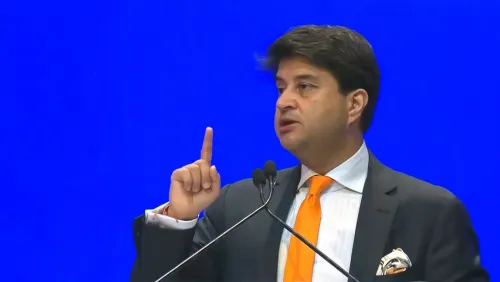
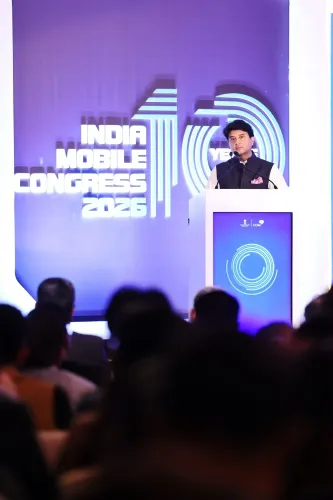
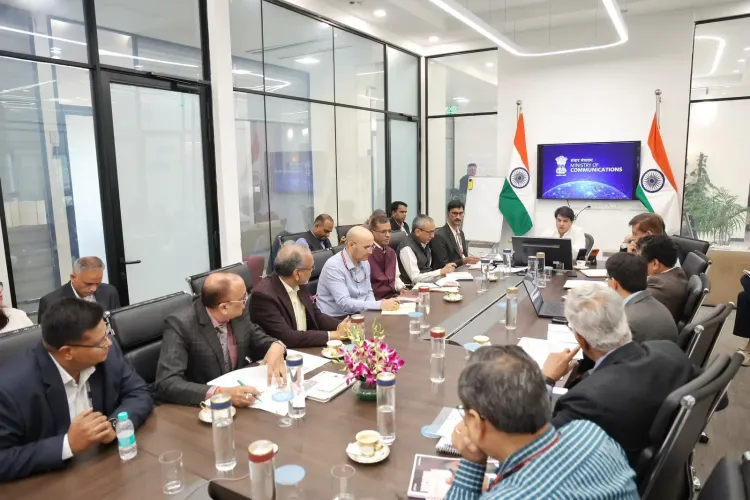
Union Minister Jyotiraditya M. Scindia on Tuesday, 10 November 2026, convened a meeting with the Internet Service Providers Stakeholder Advisory Committee in New Delhi to address two of the most persistent bottlenecks in India's telecom infrastructure buildout: right-of-way (RoW) barriers and unreliable power supply to remote towers. The session signals renewed urgency at the Centre to accelerate fibre and tower deployment ahead of full-scale 5G network densification.
Why the Meeting Was Called
'We remain committed to address industry concerns through coordinated policy action and strengthen the telecom infrastructure for a digitally connected India,' Scindia said after the meeting.
The backdrop is striking: according to the GSMA, the global body representing mobile network operators, India's overall data consumption has surged to 700 crore GB per month. That growth has pushed the backhaul requirement for a single mobile BTS site from just 4 Mbps earlier to 300 Mbps today — a scale-up that demands rapid fiberisation and fibre densification across the country.
The Right-of-Way Challenge
Laying underground optical fibre cables (OFC) is essential for broadband deployment, yet the process involves navigating a complex web of land-owning authorities — municipal bodies, the Ministry of Road Transport and Highways (MoRTH), the Ministry of Railways, and forest departments — each with separate approval requirements. This fragmentation routinely causes project delays and cost escalation.
Despite RoW Rules issued by the Centre's Department of Telecommunications (DoT), many state and union territory administrations reportedly retain non-uniform, high fee structures and misaligned local bylaws. Even the GatiShakti Sanchar Portal, which has improved digital processing timelines, has not fully resolved the problem: several regional and municipal bodies still lack single-window clearances, forcing telecom operators into repeated re-applications and, in some cases, receiving unauthorised-construction notices even after statutory deemed-approval windows have lapsed.
In the 5G era, network densification — driven by a large number of small and macro cells, as a recent GSMA study notes — makes RoW a critical enabler for government priorities such as Industry 4.0 and the Smart Cities mission.
The Power Problem at Remote Towers
Energy supply is an equally pressing concern. Rural and remote telecom towers frequently endure erratic grid electricity, with outages reportedly lasting 6 to 12 hours a day. This forces operators into heavy reliance on costly backup power systems, pushing up operational expenditure and undermining the economics of expanding coverage to underserved areas.
What Happens Next
The Tuesday meeting is part of an ongoing effort to forge coordinated policy responses between the Centre, states, and local bodies. Industry stakeholders and government officials are expected to work towards uniform RoW fee structures and improved single-window clearance mechanisms. The outcome of these consultations could directly shape the pace at which India's 5G and broadband networks reach tier-2 and tier-3 cities as well as rural regions.
Point of View
Multi-authority land approvals, and a power grid that cannot sustain rural towers. The GatiShakti Sanchar Portal was meant to cut through this, but its digital promise has not translated into on-ground single-window reality. Until the Centre can compel — not just recommend — uniform RoW fee structures on states and municipal bodies, meetings like Tuesday's risk producing commitment without compliance. The energy issue is separately urgent: subsidising backup power is not a long-term solution; pushing discoms to guarantee uptime for tower sites is.
NationPress
10 Nov 2026
Frequently Asked Questions
What was the purpose of Scindia's meeting with the ISP Stakeholder Advisory Committee?
The meeting on 10 November 2026 was called to deliberate on two key barriers to telecom infrastructure expansion: right-of-way (RoW) difficulties in laying underground fibre and energy supply challenges at remote towers. The minister reaffirmed the government's commitment to coordinated policy action to resolve these issues.
What is the right-of-way problem in India's telecom rollout?
Laying underground optical fibre cables requires approvals from multiple authorities — municipal bodies, MoRTH, railways, and forest departments — each with different rules. Despite central DoT RoW Rules, many states and union territories maintain non-uniform fees and local bylaws, causing delays and cost escalation for telecom operators.
How serious is India's telecom data demand, and why does it matter for infrastructure?
According to the GSMA, India's data consumption has reached 700 crore GB per month, pushing backhaul requirements for a single BTS site from 4 Mbps to 300 Mbps. Sustaining this level of traffic requires rapid fibre laying and tower installation, making infrastructure bottlenecks a direct threat to network quality.
What is the GatiShakti Sanchar Portal and has it helped?
The GatiShakti Sanchar Portal is a government platform designed to digitise and speed up RoW clearance processing for telecom projects. While it has improved processing timelines, many regional and municipal bodies still lack single-window clearances, forcing repeated re-applications even after deemed-approval deadlines pass.
What power supply challenges do rural telecom towers face?
Rural and remote telecom towers reportedly suffer from erratic grid electricity supply, with outages lasting 6 to 12 hours a day. This forces operators to rely heavily on backup power systems, raising operational costs and complicating the economics of rural coverage expansion.