SEBI plans graded broker compliance, AI sandbox and bond market reforms

Synopsis
SEBI Chairman Tuhin Kanta Pandey has laid out an ambitious regulatory overhaul — graded broker compliance tied to scale and tech-reliance, an AI sandbox with IOSCO-aligned safeguards, and tokenised corporate bonds under Demat 2.0. The agenda signals a structural shift in how India's capital markets regulator plans to govern an increasingly AI-driven, retail-heavy market.
Key Takeaways
SEBI is developing a graded compliance framework for stockbrokers, calibrated by scale, client exposure, and technology reliance.
A regulatory AI sandbox is being created to test new tools in a controlled environment, with guidelines aligned to IOSCO recommendations.
Under Demat 2.0 , tokenised corporate bonds will be permitted to trade in the secondary market, aimed at boosting liquidity and cutting settlement risk.
Approximately six in ten investors reportedly rely on finfluencers for investment decisions, prompting SEBI to introduce verified UPI handles and the SEBI Check platform .
The automated give-up and take-up facility will be extended to PMS and AIF custodial clients in the cash segment.
Digital onboarding and simplified KYC processes are planned to ease access for NRIs and overseas investors.
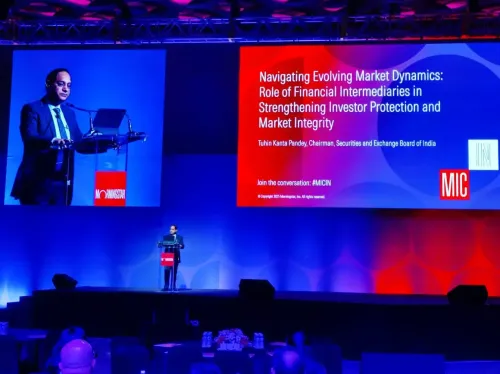
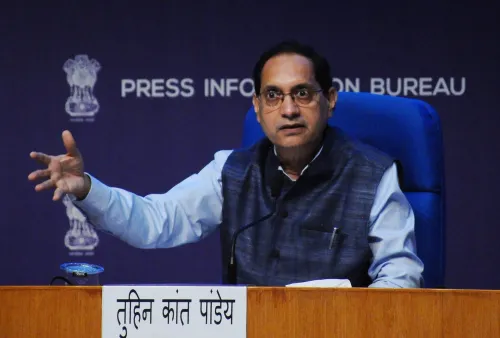
The Securities and Exchange Board of India (SEBI) is developing a graded compliance framework for stockbrokers, a regulatory sandbox for artificial intelligence (AI) applications, and a market-making mechanism for corporate bonds, Chairman Tuhin Kanta Pandey announced on Saturday, 24 October 2026. Pandey made these disclosures while addressing the 16th ANMI International Capital Market Convention in Mumbai, outlining a multi-pronged agenda to modernise market infrastructure and strengthen investor protection.
Graded Compliance for Brokers
SEBI is examining a compliance regime that would vary according to a broker's scale, client exposure, and reliance on technology. Pandey said the regulator was calibrating the framework to improve capital efficiency and reduce the regulatory burden on smaller market participants. 'We are fixing this to improve capital efficiency and lower the compliance burden,' he said.
The watchdog will also extend the automated give-up and take-up facility in the cash segment to custodial clients — including portfolio management services (PMS) and alternative investment funds (AIFs) — reducing the need to block funds while awaiting custodian confirmation.
Corporate Bond Market Overhaul
SEBI is working on a market-making framework to deepen secondary market trading in corporate bonds, a segment that has historically lagged equities in liquidity. Under the next phase of Demat 2.0, tokenised corporate bonds will be permitted to trade in the secondary market. According to Pandey, the move is expected to improve liquidity, reduce settlement risks, and speed up access to funds for issuers and investors alike.
AI Sandbox and Responsible Use Guidelines
The regulator is exploring a dedicated AI sandbox that would allow new tools to be tested in a controlled environment, giving SEBI an opportunity to build safeguards before wider deployment. Pandey said the regulator was finalising guidelines on responsible AI use based on a tiered framework covering accountability standards, data controls, kill switches, and human oversight — in line with recommendations from the International Organization of Securities Commissions (IOSCO).
Finfluencer Risk and Investor Protection
On investor protection, Pandey warned that unregistered investment advisers and social media influencers — commonly referred to as finfluencers — are increasingly shaping retail investment decisions. Notably, approximately six in ten investors reportedly rely on finfluencers for at least some of their investment choices, even as many such operators promise quick returns and fraudsters misuse the names of legitimate brokers to deceive investors.
To counter this, SEBI has introduced a suite of protective measures, including validated UPI handles, the SEBI Check platform, and verified labels for trading applications to help investors distinguish authentic entities from fraudulent ones.
Easier Access for Overseas Investors
SEBI also plans to simplify the investment pathway for overseas investors, including non-resident Indians (NRIs), through digital onboarding, streamlined know-your-customer (KYC) processes, and reduced paperwork — while maintaining existing regulatory safeguards. The initiative reflects SEBI's broader push to attract patient foreign capital into Indian markets. Concrete timelines for several of these measures are expected to be released in the coming weeks.
Point of View
Finfluencer-driven mis-selling has become a systemic risk, and AI is already embedded in algorithmic trading. The graded compliance framework is overdue: a one-size-fits-all regulatory burden has long disadvantaged smaller brokers relative to large tech-enabled players. The AI sandbox is the right instinct, but IOSCO guidelines are principles, not rules — SEBI will need hard enforcement teeth, not just tiered accountability standards, to keep pace with fast-moving AI applications. Most critically, the corporate bond market has been a structural weak spot for decades; tokenisation under Demat 2.0 is promising, but market-making viability will depend on whether SEBI can attract credible liquidity providers, not just mandate the mechanism.
NationPress
24 Oct 2026
Frequently Asked Questions
What is SEBI's graded compliance framework for stockbrokers?
SEBI is designing a compliance regime where regulatory requirements vary based on a broker's size, client exposure, and degree of technology dependence. Chairman Tuhin Kanta Pandey said the aim is to improve capital efficiency and reduce the compliance burden, particularly for smaller brokers.
What is the SEBI AI sandbox?
The SEBI AI sandbox is a controlled regulatory environment where new AI tools can be tested before broad market deployment, allowing the regulator to study risks and build safeguards. Guidelines are being finalised on a tiered framework covering accountability, data controls, kill switches, and human oversight, in line with IOSCO recommendations.
How will Demat 2.0 change corporate bond trading in India?
Under the next phase of Demat 2.0, tokenised corporate bonds will be allowed to trade in the secondary market. SEBI says this will improve liquidity, reduce settlement risks, and speed up access to funds for issuers and investors.
Why is SEBI concerned about finfluencers?
SEBI Chairman Pandey flagged that roughly six in ten investors rely on finfluencers for at least some investment decisions, and that unregistered advisers and social media influencers are increasingly influencing retail choices. Fraudsters are also misusing the names of legitimate brokers, prompting SEBI to roll out validated UPI handles, the SEBI Check platform, and verified labels for trading apps.
How will SEBI make it easier for NRIs to invest in India?
SEBI plans to introduce digital onboarding, simplified KYC processes, and reduced paperwork for non-resident Indians and other overseas investors, while maintaining existing regulatory safeguards. The initiative is part of SEBI's broader effort to attract more foreign and diaspora capital into Indian capital markets.