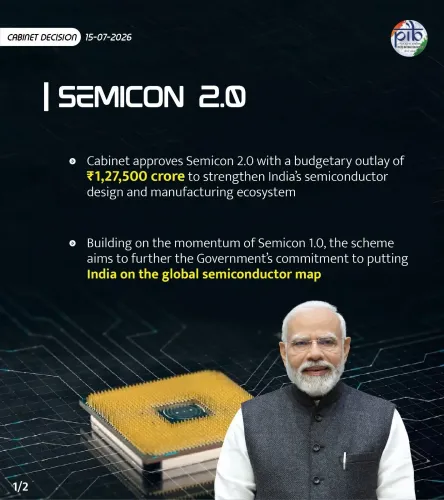
Semicon 2.0 can drive local chip design for India's 5G and 6G telecom push: IESA President
Synopsis
India's telecom networks run largely on imported chips — a strategic gap that IESA President Ashok Chandak says Semicon 2.0 must urgently address. His call for indigenous IP development and dedicated SME growth capital signals that the next phase of India's semiconductor push needs to go beyond factory incentives and into the design ecosystem that ultimately defines 5G and 6G readiness.
Key Takeaways
Ashok Chandak , President of IESA and CEO of SEMI India , said India's telecom infrastructure relies heavily on imported chips, with domestic chip design 'very limited or nothing.' The proposed Semicon 2.0 policy could incentivise local chip design and indigenous intellectual property development for 5G and 6G telecom networks.
Chandak highlighted access to growth capital for SMEs as a critical gap that must be addressed alongside policy incentives.
India Mobile Congress and Semicon India were described as complementary 'silicon to systems' pillars of the broader technology ecosystem.
India's rising global credibility in semiconductors creates a strategic window, but converting it into durable domestic IP requires faster action on Semicon 2.0.
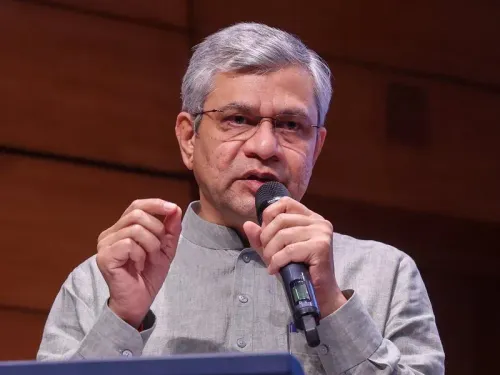
Ashok Chandak, President of the India Electronics and Semiconductor Association (IESA) and President and CEO of SEMI India, on Friday called for a concerted push to develop domestic chip design capabilities for telecom infrastructure, warning that India currently imports a significant portion of the components powering its networks. He argued that the proposed Semicon 2.0 policy could be the catalyst needed to change that equation.
The Import Gap in Indian Telecom
Chandak was unequivocal about the scale of the challenge. 'Most of the telecom infrastructure has the content which is of import. And there are hardly few chips those are, or very limited or nothing, those are designed in India,' he said. The statement underscores a structural vulnerability: as India races to roll out 5G and prepare for 6G, the underlying silicon largely originates overseas, exposing the country to supply-chain and strategic risks.
He added that a deeper understanding of India's own telecom requirements and technical specifications would be the starting point for building a meaningful domestic chip design ecosystem. Without that groundwork, even generous incentive schemes risk funding generic designs that do not address Indian network needs.
What Semicon 2.0 Could Change
The proposed Semicon 2.0 policy, according to Chandak, is positioned to incentivise local chip designs and the development of indigenous intellectual property (IP). 'The Semicon 2.0 policy would encourage and help the local designs of those chips — so local design and IPRs to meet the requirements those are required for telecom infrastructure,' he said.
This comes amid a broader government push to build out the full semiconductor value chain on Indian soil. The first iteration of the Semicon India programme committed ₹76,000 crore to attract chip fabrication and design investment, with companies such as Tata Electronics and Micron Technology having signed agreements under that framework. Semicon 2.0 is expected to go further, targeting not just manufacturing but also deepening domestic IP generation.
Growth Capital for SMEs a Critical Gap
Beyond policy incentives, Chandak flagged access to growth capital as a critical missing piece for small and medium enterprises (SMEs) in the semiconductor and electronics space. India's chip design community is largely composed of startups and mid-sized firms that struggle to compete with well-funded international counterparts. Without dedicated risk capital and scale-up support, even technically capable Indian firms may fail to reach commercial viability.
He argued that bridging this financing gap is as important as the incentive architecture itself — a point that industry bodies including IESA have repeatedly raised with policymakers.
Silicon to Systems: The Bigger Picture
Chandak also drew a distinction between two complementary national initiatives: India Mobile Congress, which focuses on telecom infrastructure, equipment, and deployment, and Semicon India, which targets the full semiconductor value chain from design through manufacturing. He described them as 'different but interconnected components' of the same technology ecosystem — a relationship he characterised as 'silicon to systems.'
Notably, the convergence of these two tracks is increasingly seen as essential for India's ambitions in 6G, where nations that control both the network infrastructure and the underlying chip IP will hold a decisive strategic advantage.
India on the Global Semiconductor Map
Chandak expressed cautious optimism about India's rising global standing. 'India is at a very different stage now, where globally, with the efforts of Prime Minister Modi and his policies and his colleagues and departments, India has been brought to the global map where globally, the international, worldwide, many companies and countries are trusting now India, actually,' he said.
The remarks reflect a broader industry sentiment that geopolitical shifts — particularly the drive to diversify supply chains away from a single geography — have created a window of opportunity that India must act on swiftly. Whether Semicon 2.0 arrives with the right design and funding architecture will determine how much of that opportunity is converted into durable industrial capacity.
Point of View
Not just manufacturing, are where value and strategic leverage reside; a country can host a chip plant and still be dependent on foreign IP. Semicon 2.0 will be tested on whether it shifts incentives toward design output and verifiable IP filings, not just investment commitments. The SME capital gap Chandak flags is equally structural: India has design talent but not the patient capital to scale it — and without that, the 6G race could see India as an assembly destination rather than an innovation hub.
NationPress
9 Oct 2026
Frequently Asked Questions
What is the Semicon 2.0 policy and why does it matter for telecom?
Semicon 2.0 is the proposed successor to India's current Semicon India programme, expected to expand incentives beyond chip fabrication to include domestic chip design and indigenous intellectual property creation. It matters for telecom because India currently imports most of the chips used in its 5G and 6G network infrastructure, creating supply-chain and strategic vulnerabilities.
What did IESA President Ashok Chandak say about India's chip design gap?
Chandak stated that most of India's telecom infrastructure relies on imported components and that domestic chip design for the sector is 'very limited or nothing.' He called for Semicon 2.0 to specifically incentivise local designs and IP development tailored to Indian telecom requirements.
Why is access to growth capital important for India's semiconductor SMEs?
India's chip design community is dominated by startups and mid-sized firms that lack the capital to scale and compete internationally. Chandak argued that without dedicated growth funding for SMEs, even technically capable Indian firms may not reach commercial viability, making capital access as critical as policy incentives.
How are India Mobile Congress and Semicon India related?
India Mobile Congress focuses on telecom infrastructure, equipment, and deployment, while Semicon India targets the full semiconductor value chain from design to manufacturing. Chandak described them as complementary 'silicon to systems' components of the same broader technology ecosystem.
What is India's current standing in the global semiconductor industry?
India's global profile in semiconductors has risen significantly, with companies such as Tata Electronics and Micron Technology having committed to projects under Semicon India 1.0. However, domestic chip design and IP generation remain nascent, and Semicon 2.0 is seen as the next step to convert geopolitical goodwill into durable industrial capacity.