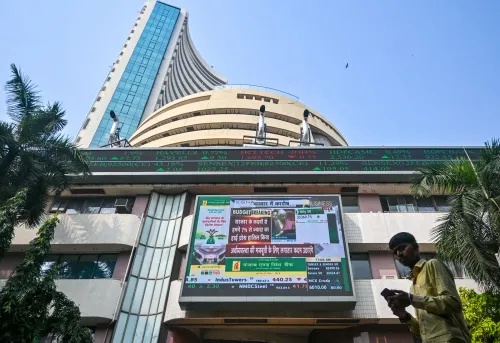
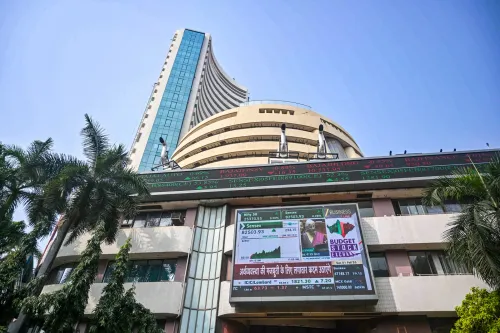
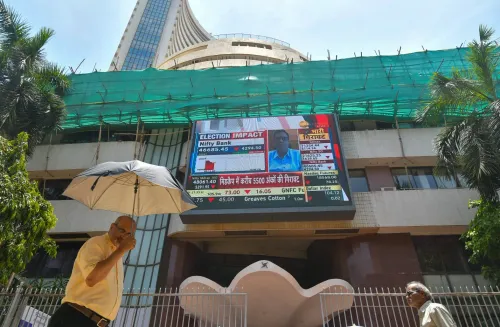
Sensex drops 479 points, Nifty at 23,913 as US strikes Iran

Synopsis
Fresh US military strikes in southern Iran — reportedly to protect American troops — derailed peace hopes and sent Indian equities tumbling on Tuesday. The Sensex lost 479 points and Nifty settled below 24,000, even as mid-caps held firm and metal stocks bucked the trend. With crude oil risk back on the table, the geopolitical overhang is far from over.
Key Takeaways
BSE Sensex closed down 479.26 points at 76,009.7 on 26 May ; Nifty50 settled at 23,913.7 , down 118 points .
Fresh US defensive strikes in southern Iran triggered the sell-off, according to the US Central Command .
Nifty Consumer Durables was the worst-hit sector, falling more than 1% ; Nifty Financial Services and Nifty Private Bank also declined.
Top Sensex losers: Trent , TCS , Bajaj Finance , Bharti Airtel ; gainers included Adani Ports and Tech Mahindra .
Nifty MidCap rose 0.54% and Nifty SmallCap gained 0.35% , showing broader market resilience.
Analysts peg immediate Nifty support at 23,850 and resistance at 24,000–24,100 .
Indian benchmark indices closed sharply lower on Tuesday, 26 May as escalating Middle East tensions rattled investor confidence after the United States carried out fresh defensive strikes in southern Iran, dimming prospects of a peace settlement. The BSE Sensex ended the session down 479.26 points or 0.63% at 76,009.7, while the NSE Nifty50 shed 118 points or 0.49% to settle at 23,913.7.
Key Developments
The trigger for Tuesday's sell-off was a fresh round of US military action in southern Iran, reportedly aimed at protecting American troops from Iranian forces, according to the US Central Command. The strikes came even as diplomatic negotiations remained ongoing, significantly reducing hopes of a near-term ceasefire and injecting fresh uncertainty into global markets. This is the latest in a series of geopolitical flashpoints that have periodically unsettled Indian equities in recent months.
Sectoral Damage and Top Movers
The Nifty Consumer Durables index was the session's worst performer, closing more than 1% lower. The Nifty Financial Services and Nifty Private Bank indices also recorded notable declines amid broad-based weakness in banking and financial stocks.
On the Sensex, top losers included Trent, TCS, Bajaj Finance, and Bharti Airtel. Bucking the trend, Adani Ports, Eternal, and Tech Mahindra closed in positive territory. Among Nifty losers, Apollo Hospitals Enterprise, Wipro, and Bharti Airtel featured prominently. The Nifty Metal and Nifty Chemical indices outperformed, closing in the green and helping cushion broader market losses.
Broader Markets Show Resilience
Despite the weakness in frontline indices, mid- and small-cap segments held up relatively well. The Nifty MidCap index ended 0.54% higher after touching a fresh intraday high, while the Nifty SmallCap index gained 0.35%. Analysts noted that selective buying in metal and chemical counters reflected a rotation away from rate-sensitive and discretionary sectors.
Technical Outlook
Market analysts flagged 24,000 as the immediate resistance level for Nifty, describing a classic role reversal from support to resistance. 'Above this, 24,100 remains another key hurdle where higher Open Interest build-up is visible, indicating active Call writing and supply pressure from institutional participants,' one analyst noted. On the downside, 23,850 is seen as immediate support, with the 23,500–23,600 zone acting as a critical demand area backed by significant Put OI concentration.
What to Watch
Analysts cautioned that investor sentiment will remain fragile as long as the Iran situation stays unresolved, given its potential to push crude oil prices higher and tighten global risk appetite. Any further escalation could accelerate selling in financial and consumer-facing sectors. The trajectory of US-Iran negotiations and the next round of global crude benchmarks will be the key variables to track in the sessions ahead.
Point of View
But through the broader risk-off impulse that geopolitical shocks generate. The fact that mid-caps outperformed even as large-caps sold off suggests institutional defensiveness rather than a broad market breakdown. The more telling signal is in consumer durables and financials: both are domestic-demand proxies, and their underperformance hints that markets are beginning to price in a potential inflation overhang from rising crude. If US-Iran talks collapse entirely, the Nifty's 23,500–23,600 demand zone will face a genuine test.
NationPress
22 Sept 2026
Frequently Asked Questions
Why did the Sensex and Nifty fall on 26 May 2025?
The Sensex dropped 479 points and Nifty fell 118 points on 26 May after reports of fresh US defensive strikes in southern Iran dampened hopes of a peace deal and rattled global risk sentiment. The geopolitical escalation triggered broad-based selling, particularly in consumer durables and financial stocks.
What are the key Nifty support and resistance levels to watch?
Analysts place immediate Nifty resistance at 24,000, with a stronger hurdle at 24,100 due to high Call OI build-up. On the downside, 23,850 is the first support, and the 23,500–23,600 zone is a critical demand area backed by significant Put OI concentration.
Which sectors and stocks were the biggest losers on 26 May?
The Nifty Consumer Durables index was the worst performer, falling more than 1%. Nifty Financial Services and Nifty Private Bank also declined. On the Sensex, Trent, TCS, Bajaj Finance, and Bharti Airtel led losses, while Apollo Hospitals Enterprise and Wipro were top Nifty losers.
Did any sectors or indices manage to gain despite the market fall?
Yes — the Nifty MidCap index rose 0.54% and the Nifty SmallCap index gained 0.35%, demonstrating broader market resilience. The Nifty Metal and Nifty Chemical indices also closed in positive territory, with Adani Ports, Eternal, and Tech Mahindra among Sensex gainers.
How could the US-Iran situation affect Indian markets going forward?
Analysts warn that sustained US-Iran tensions could push crude oil prices higher, stoking inflation fears and dampening risk appetite globally. Indian markets — particularly rate-sensitive financial stocks and import-heavy consumer sectors — remain vulnerable to any further escalation in the region.