US-Italy critical minerals MOU signed at UN General Assembly 2026
Synopsis
On the sidelines of the UN General Assembly, Washington and Rome formalised a critical minerals partnership — one that goes beyond mining to focus on recycling, recovery, and blocking adversarial acquisitions of strategic industries. With global demand for battery and semiconductor minerals surging, this MOU joins a rapidly expanding web of allied-nation mineral diplomacy that countries like India are watching closely.
Key Takeaways
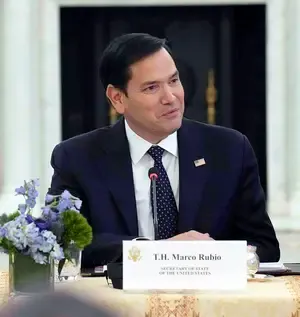
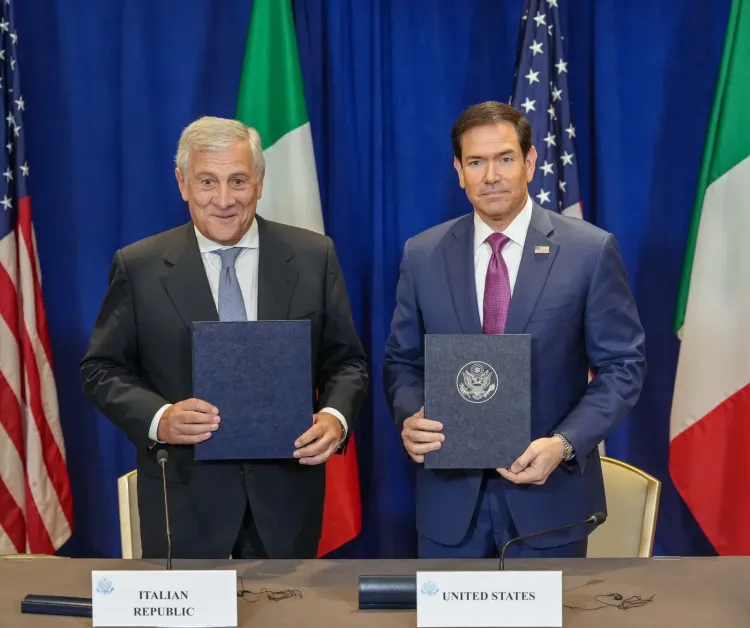
US Secretary of State Marco Rubio and Italian Deputy PM Antonio Tajani signed a critical minerals MOU on 22 September 2026 in New York .
The deal was signed on the sidelines of the 81st UN General Assembly session .
A joint working group has been established to drive practical cooperation on recycling and recovery of critical minerals.
Both sides discussed shielding strategic industries from acquisitions linked to adversarial countries or entities .
Covered minerals are expected to include those used in batteries, semiconductors, defence systems , and power infrastructure .
The agreement is an MOU — its effectiveness will depend on projects and investments developed through the working group.
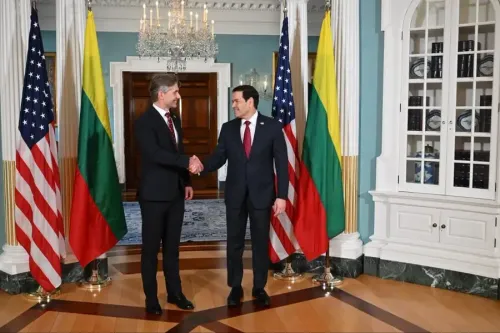
US Secretary of State Marco Rubio and Italian Deputy Prime Minister and Foreign Minister Antonio Tajani signed a memorandum of understanding (MOU) on 22 September 2026 in New York, on the sidelines of the 81st session of the United Nations General Assembly, formalising cooperation between the two countries on critical minerals — including recycling, recovery, and protection of strategic supply chains.
What the Agreement Covers
The MOU establishes a joint working group tasked with advancing practical cooperation on the recycling and recovery of critical minerals. According to the State Department, the group's mandate is centred on technical and operational work rather than broad political dialogue.
The cooperation is expected to extend to minerals used in batteries, semiconductors, defence systems, power infrastructure, and other advanced technologies — though the State Department did not provide a detailed sector-by-sector breakdown.
Supply Chain Diversification and Strategic Acquisitions
Beyond recycling, Rubio and Tajani discussed efforts to diversify supply chains and shield industries considered strategically important from acquisitions linked to adversarial countries or entities. This signals a shared concern — common among Western allies — about over-reliance on concentrated overseas processing networks, particularly in China.
The emphasis on recycling and recovery reflects a broader strategic logic: expanding mineral supplies not only through new mining, but through the reclamation of valuable materials from used products, industrial waste, and end-of-life manufacturing. Such circular approaches can reduce exposure to primary supply disruptions while keeping critical resources within allied manufacturing ecosystems.
Scope and Limitations of an MOU
A memorandum of understanding records governmental intent to cooperate but does not itself commit specific funding or binding policy. The real-world impact of the US-Italy arrangement will depend on the projects, investments, and policies that emerge from the newly formed working group over time.
Experts note that recycling alone cannot replace primary mineral production but can provide an important supplementary domestic or regional source, reducing vulnerability to disruptions in overseas processing.
Why This Matters Beyond the Atlantic
Critical minerals — materials regarded as essential to economic or national security and susceptible to supply disruption — have seen sharply rising demand with the global expansion of electric vehicles, renewable energy systems, digital infrastructure, and defence technologies.
The US-Italy deal will also be closely watched in India, which is actively expanding its own critical-mineral partnerships and domestic processing capacity. New Delhi has signed similar cooperation frameworks with Australia, Japan, and the United States in recent years and is seeking to position itself as a processing hub. This agreement adds to a growing web of allied-nation mineral diplomacy that is reshaping global supply chains.
The joint working group is expected to hold its first round of technical consultations in the months ahead.
Point of View
Particularly for battery-grade lithium and rare earths. What remains absent is the specifics — no list of sectors, no funding commitments, no timeline. MOUs without enforcement mechanisms have a poor track record in mineral diplomacy, and the true test will be whether the joint working group produces binding investments rather than talking-shop outcomes. For India, this is another signal that the 'friendshoring' of supply chains is accelerating — and that the window for Delhi to position itself as a processing partner is narrowing.
NationPress
22 Sept 2026
Frequently Asked Questions
What did the US and Italy agree to in their critical minerals MOU?
The US and Italy signed a memorandum of understanding on 22 September 2026 to cooperate on critical minerals, including recycling, recovery, and protection of strategic supply chains from adversarial acquisitions. The deal was signed by Secretary of State Marco Rubio and Italian Deputy Prime Minister Antonio Tajani on the sidelines of the 81st UN General Assembly in New York.
What is the joint working group established under the MOU?
The joint working group is a technical body created to advance practical cooperation on the recycling and recovery of critical minerals between the US and Italy. Its mandate, as described by the State Department, focuses on operational work rather than broad political dialogue.
Which sectors could the US-Italy mineral cooperation cover?
The cooperation is expected to cover minerals used in batteries, semiconductors, defence systems, power infrastructure, and advanced electronics, though the State Department did not release a detailed sector list.
Why are the US and Italy focusing on recycling, not just mining?
Recycling and recovery of minerals from used products and industrial waste can supplement primary mining, reduce reliance on concentrated overseas processing networks, and help both countries retain strategic materials within their own manufacturing systems. It is part of a broader allied strategy to reduce dependence on Chinese processing capacity.
What does this deal mean for India?
India is closely watching the US-Italy agreement as it expands its own critical-mineral partnerships and domestic processing ambitions. New Delhi has already signed similar frameworks with Australia, Japan, and the United States, and the growing web of allied mineral diplomacy adds pressure — and opportunity — for India to accelerate its positioning as a processing hub.