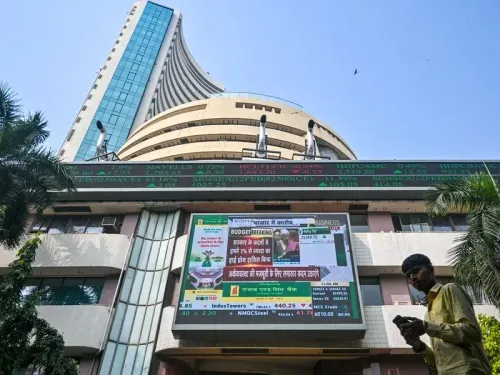
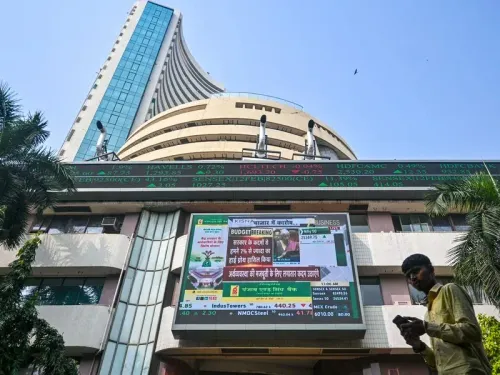
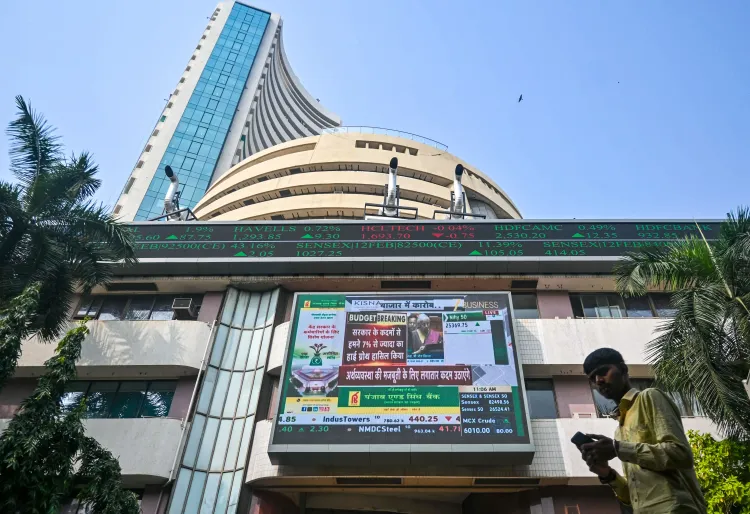
Sensex falls 251 points, Nifty at 24,032 as West Asia tensions rattle markets
Synopsis
Indian markets took a geopolitical hit on Tuesday as reports of fresh US-Iran hostilities near the Strait of Hormuz sent banking, realty, and oil stocks into retreat. With crude above $100 and the rupee slipping past 95.25, the pressure on India's import bill and corporate margins is building — and US jobs data this week could determine whether this is a brief wobble or the start of a deeper risk-off move.
Key Takeaways
Sensex fell 251.61 points to 77,017.79 and Nifty50 dropped 86.50 points to 24,032.80 on 5 May .
Banking , real estate , and oil and gas sectors led the decline; auto and FMCG stocks held firm.
Reports of US-Iran exchange of fire near the Strait of Hormuz broke a month-long ceasefire, stoking energy market fears.
Crude oil prices remained above $100 per barrel , pushing the rupee to near 95.30 against the dollar.
Nifty MidCap gained 0.17% and Nifty SmallCap rose 0.28% , reflecting a selective rather than broad-based sell-off.
Markets await US non-farm payrolls and unemployment data for further directional cues.
Indian equity benchmarks closed in the red on Tuesday, 5 May, as escalating geopolitical tensions in West Asia rattled investor sentiment and dragged down banking, realty, and oil and gas stocks. The BSE Sensex declined 251.61 points, or 0.33%, to settle at 77,017.79, while the Nifty50 slipped 86.50 points, or 0.36%, to close at 24,032.80.
Key Developments
The benchmarks erased all gains from the previous session as selling pressure intensified through the day. Sectorally, banking, real estate, and oil and gas stocks emerged as the steepest laggards, reflecting growing concerns over global growth and rising uncertainty in energy markets. In contrast, auto and FMCG stocks showed resilience, providing a partial cushion to the broader market.
The broader indices painted a mixed picture. The Nifty MidCap index ended 0.17% higher, while the Nifty SmallCap index gained 0.28% — suggesting that the selling was concentrated in large-cap, rate-sensitive, and commodity-linked names rather than a broad market rout.
West Asia Conflict Fuels Market Anxiety
Market sentiment remained cautious amid reports that the United States and Iran exchanged fire near the Strait of Hormuz, reportedly breaking a ceasefire that had been in place for over a month. The renewed conflict has raised fears of prolonged instability in a region critical to global oil supplies. Elevated crude prices above $100 per barrel added to the pressure, amplifying concerns about inflation and energy import costs for oil-dependent economies like India.
This is not the first time West Asia tensions have rattled Dalal Street — similar risk-off episodes in 2022 and 2023 saw oil-sensitive sectors bear the brunt of geopolitical flare-ups. Notably, India imports over 85% of its crude oil requirements, making the market acutely sensitive to any sustained disruption in the Strait of Hormuz, through which a significant share of global oil trade flows.
Rupee Under Pressure
The Indian rupee extended its weakness during the session, slipping below 95.25 to trade near 95.30 against the US dollar, as elevated crude prices kept pressure on the currency. According to an analyst, 94.70 is likely to act as resistance in the near term, while 95.50 is seen as immediate support. Markets are closely tracking US non-farm payrolls and unemployment data due this week for further directional cues.
What Experts Are Watching
According to a market expert,
Point of View
Every West Asia escalation is simultaneously an inflation risk, a current account risk, and a sentiment risk. The fact that mid- and small-caps held up suggests institutional money is rotating rather than fleeing — but if crude stays above $100 and the rupee breaches 95.50, the calculus changes quickly. The real test will come with US jobs data: a strong print could strengthen the dollar further, compounding rupee weakness at the worst possible time.
NationPress
21 Sept 2026
Frequently Asked Questions
Why did the Sensex and Nifty fall on 5 May 2025?
The Sensex fell 251.61 points and the Nifty dropped 86.50 points on 5 May due to escalating geopolitical tensions in West Asia. Reports of fresh hostilities between the US and Iran near the Strait of Hormuz, combined with crude oil prices above $100 per barrel, dampened investor sentiment across banking, realty, and oil and gas sectors.
Which sectors were worst hit in Tuesday's market fall?
Banking, real estate, and oil and gas stocks were the biggest laggards on Tuesday. Auto and FMCG sectors bucked the trend and showed resilience, providing partial support to the broader market.
How did mid-cap and small-cap stocks perform?
Despite the large-cap sell-off, the Nifty MidCap index ended 0.17% higher and the Nifty SmallCap index gained 0.28%, indicating the decline was concentrated in rate-sensitive and commodity-linked large-cap names rather than a broad market rout.
What happened to the Indian rupee on 5 May?
The rupee slipped below 95.25 to trade near 95.30 against the US dollar, weighed down by elevated crude oil prices above $100 per barrel. Analysts see 94.70 as near-term resistance and 95.50 as immediate support.
What should investors watch next?
Market experts suggest tracking geopolitical developments in West Asia and upcoming corporate earnings for directional cues. US non-farm payrolls and unemployment data due this week are also being closely watched, as they could influence dollar strength and, by extension, the rupee and FII flows into Indian markets.