KOSPI rises 0.46% to 6,820 despite hawkish Fed chief Warsh at Jackson Hole
Synopsis
Seoul's KOSPI opened 2.58% lower on Fed Chair Warsh's hawkish Jackson Hole signal, then staged a full reversal to close 0.46% higher — driven entirely by tech. With all three investor classes net sellers and Middle East tensions flaring, the rebound is fragile rather than confident.
Key Takeaways
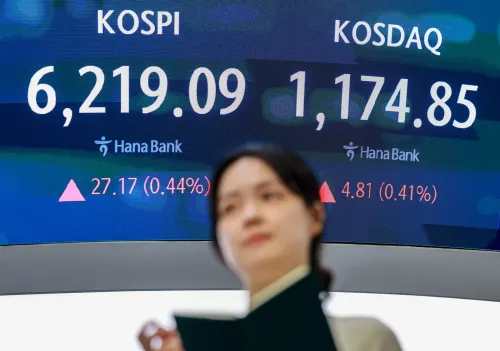
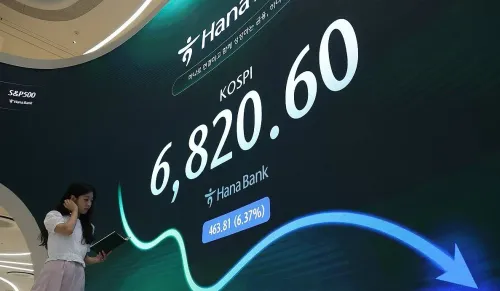
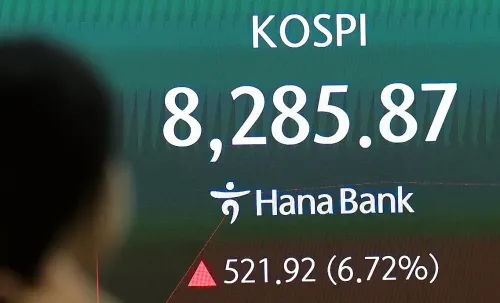
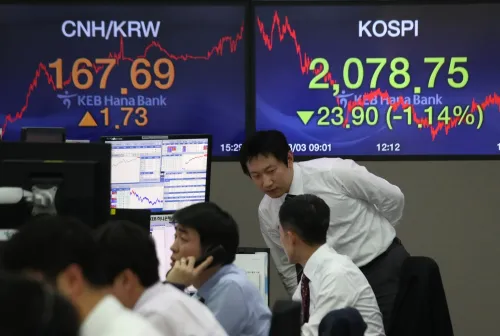
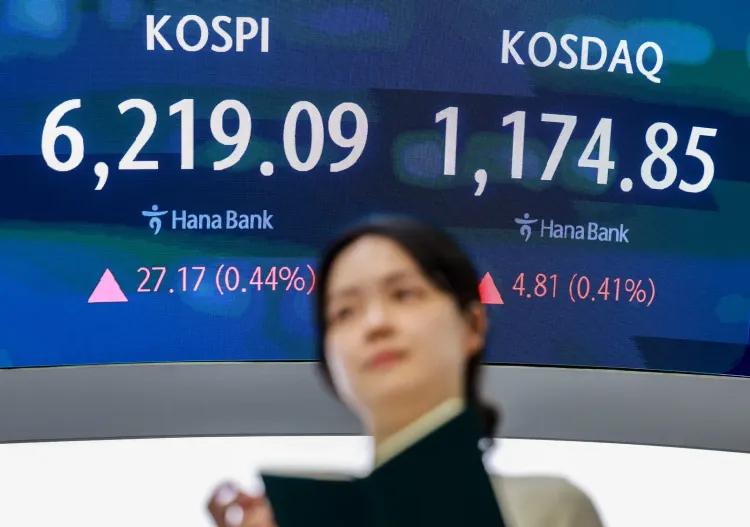
KOSPI closed up 31.14 points (0.46%) at 6,820.02 on 31 August , reversing an opening loss of 2.58 percent .
Samsung Electronics rose 1.17% and SK hynix gained 1.27% , leading the tech-driven rebound.
Fed Chair Kevin Warsh warned at Jackson Hole that inflation remains a concern, keeping further rate hikes on the table.
Institutions, foreign, and retail investors were all net sellers, offloading a combined 1.58 trillion won worth of stocks.
Hanwha Aerospace fell 4.75% and Korean Air shed 2.09% among notable decliners.
The Korean won strengthened to 1,368.6 per US dollar, up 3.9 won on the day.
Seoul's benchmark Korea Composite Stock Price Index (KOSPI) closed up 31.14 points, or 0.46 percent, at 6,820.02 on Monday, 31 August, as a rebound in technology stocks offset early losses triggered by US Federal Reserve Chair Kevin Warsh's hawkish remarks at the Jackson Hole symposium. The index had opened 2.58 percent lower before erasing those losses through the session. The Korean won also strengthened against the US dollar, closing at 1,368.6 won per dollar, up 3.9 won from the previous session.
Tech Stocks Lead the Recovery
Technology heavyweights drove the turnaround on the Seoul bourse. Market bellwether Samsung Electronics rose 1.17 percent to 260,000 won, while chipmaking rival SK hynix climbed 1.27 percent to 1.67 million won. Top carmaker Hyundai Motor gained 1 percent to 403,500 won, and leading battery maker LG Energy Solution advanced 2.16 percent to 378,000 won.
Notable Decliners
Not all sectors shared in the gains. Defence conglomerate Hanwha Aerospace fell 4.75 percent to 1.1 million won, and national flag carrier Korean Air shed 2.09 percent to 28,100 won. Selling pressure was broad-based: institutions, foreign investors, and retail investors were all net sellers, offloading 793.12 billion won (approximately US$579 million), 639.86 billion won, and 144.33 billion won worth of stocks respectively, limiting the index's overall gains.
Warsh's Jackson Hole Warning Keeps Markets on Edge
In his first major address since assuming the chairmanship of the US Federal Reserve, Kevin Warsh cautioned that inflation remains a concern, leaving open the possibility of further interest rate hikes in 2025. The remarks, delivered at the closely watched Jackson Hole symposium, reinforced expectations of a tighter monetary policy stance from Washington. This comes amid fresh geopolitical risk: investors were also on alert following renewed US strikes in the Strait of Hormuz, which escalated Middle East tensions further.
Wall Street Divergence and Bond Market Reaction
Seoul's gains bucked a negative close on Wall Street on Friday. The Dow Jones Industrial Average fell 0.02 percent, while the tech-heavy Nasdaq Composite declined 0.52 percent. In Seoul's bond market, prices fell as yields rose. The yield on three-year Korean Treasurys climbed 5 basis points to 3.838 percent, while the five-year government bond yield added 3.2 percentage points to 4.053 percent.
With Fed rate-hike expectations still elevated and Middle East tensions unresolved, markets are likely to remain volatile in the sessions ahead.
Point of View
But the underlying data tells a more cautious story. All three investor categories — institutions, foreigners, and retail — were net sellers, meaning the index was lifted by thin liquidity and short-covering rather than genuine conviction. Warsh's Jackson Hole debut signals a Fed less inclined to pivot, which is structurally negative for rate-sensitive Asian markets. Add renewed Strait of Hormuz strikes to the mix, and Seoul's Monday close may be less a recovery and more a pause before further pressure.
NationPress
31 Aug 2026
Frequently Asked Questions
Why did the KOSPI rise on 31 August despite negative global cues?
The KOSPI rose 0.46% to 6,820.02 primarily on a rebound in technology stocks, particularly Samsung Electronics and SK hynix, which offset early losses triggered by Fed Chair Warsh's hawkish Jackson Hole remarks. The index had opened 2.58% lower before recovering through the session.
What did Fed Chair Kevin Warsh say at the Jackson Hole symposium?
In his first major speech as US Federal Reserve Chair, Kevin Warsh warned that inflation remains a concern and left the door open to further interest rate hikes in 2025. His remarks reinforced expectations of a tighter monetary policy stance from the US central bank.
Which stocks gained and which fell on the KOSPI on 31 August?
Samsung Electronics rose 1.17%, SK hynix gained 1.27%, Hyundai Motor added 1%, and LG Energy Solution advanced 2.16%. On the downside, Hanwha Aerospace fell 4.75% and Korean Air shed 2.09%.
How did the Korean won perform on 31 August?
The Korean won strengthened against the US dollar, closing at 1,368.6 won per dollar — up 3.9 won from the previous trading session.
What is the significance of the Strait of Hormuz tensions for markets?
Renewed US strikes in the Strait of Hormuz, a critical global oil shipping lane, added a geopolitical risk layer that kept investors cautious. Escalating Middle East tensions can drive oil price volatility, which affects energy costs and broader market sentiment across Asia.