Pakistan's ISKP gamble turns Islamic State into a global threat
Synopsis
Pakistan set out to weaponise a weakened ISKP against the Afghan Taliban and TTP — but the strategy has backfired on a global scale. With ISI-linked elements allegedly training ISKP operatives in AI and dark-web tools, and 45 IS-linked attacks recorded across Europe in 2025 alone, Islamabad's regional proxy gamble has produced a terror outfit with worldwide reach.
Key Takeaways
The Berlin van and knife attack by Islamic State operative Abdul Ballout highlights the group's sustained global reach despite minimal territorial presence in Syria or Iraq .
Pakistan is accused by officials of providing the ISKP with technological, financial, and logistical support to use the group against the Afghan Taliban and TTP .
ISI -linked elements allegedly trained ISKP cadres in dark web operations, AI , and chatbot-based radicalisation tools.
In 2025 alone, 45 Islamic State-linked attacks were reported across 10 European countries .
The Al-Azaim Foundation , ISKP's media arm, now circulates propaganda in 8 languages including Malayalam , Tamil , and Kannada .
Officials warn that Islamabad's proxy strategy has transformed a near-defunct ISKP into a threat spanning South Asia , Europe , and beyond.
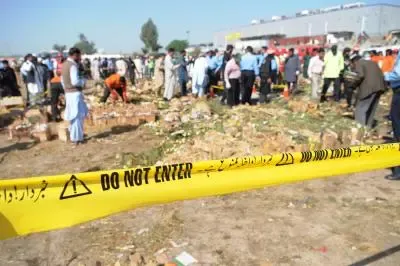
The Islamic State Khorasan Province (ISKP), once on the verge of collapse, has re-emerged as a credible threat to Europe, South Asia, and beyond — with intelligence officials pointing to Pakistan's covert support as a primary driver of this resurgence. The deadly van and knife attack in Berlin, carried out by an Islamic State operative identified as Abdul Ballout, has brought renewed attention to how the group sustains its reach despite holding almost no territory in Syria or Iraq.
Pakistan's Calculated Gamble with ISKP
According to officials, Islamabad has been deliberately engaging the ISKP as a proxy instrument — deploying the group against the Afghan Taliban and the Tehreek-e-Taliban Pakistan (TTP). The strategy, officials say, reflects a calculated but increasingly reckless bet: use a designated terror outfit to weaken regional adversaries. An Intelligence Bureau official said the problem extends far beyond Afghanistan, with Pakistan reportedly facilitating the movement of Islamic State operatives into European countries.
In the Berlin case, Abdul Ballout was reportedly frustrated at his inability to travel abroad and join the outfit directly. According to officials, he redirected that anger toward civilians on the streets of Berlin. The incident illustrates how ISKP's radicalisation pipeline — increasingly digital and decentralised — can produce lone-wolf attackers without requiring direct operational contact.
Technology and the ISI Connection
Officials allege that Pakistan's Inter-Services Intelligence (ISI) has provided the ISKP with significant technological, financial, and logistical support. ISKP cadres are reportedly trained by ISI-linked elements in the use of the dark web, Artificial Intelligence (AI), and chatbot creation. The Al-Azaim Foundation Media Production, established by the ISKP following the Taliban's takeover of Afghanistan, was initially struggling for reach but has since grown into a widely circulated propaganda operation.
The foundation now publishes and distributes content in Malayalam, Tamil, Kannada, Urdu, Hindi, Russian, English, and Pashto. In recent months, the ISKP has added AI-driven chatbots to its toolkit — tools used to identify and target vulnerable individuals in Pakistan, Afghanistan, India, and across Europe. Once identified, these individuals are radicalised and, in several documented cases, have gone on to carry out lone-wolf attacks.
Europe Under Pressure: 45 Attacks in 2025
In 2025 alone, 45 Islamic State-linked attacks were reported across 10 European countries, according to officials — a striking figure given that the group had been struggling with recruitment and funding just a few years prior. In June, European law enforcement and the FBI jointly targeted ISKP financing and operational networks. Investigators found that while battlefield activity in Syria and Iraq had sharply declined, the group's overseas financing, recruitment pipelines, and operational cells remained largely intact. Many of the recruits entering Europe were found to have transited through Pakistan, North Africa, and the Sahel.
A Monster of Islamabad's Own Making
Officials argue that Pakistan's border operations and alleged atrocities in frontier areas have fuelled widespread grievance — grievances that the ISKP has systematically exploited for radicalisation and recruitment. The group, which had been largely suppressed by the Afghan Taliban, was given what officials describe as 'a fresh lease of life' by Islamabad. While Pakistan has publicly accused the Afghan Taliban of backing the TTP — a charge Kabul disputes — ties between the two neighbours have deteriorated sharply, creating the very instability that ISKP has capitalised on.
Counter-terrorism experts warn that the Islamic State's ideological reach, amplified by technology and sustained by external state support, makes it structurally different from territorially-bounded groups like Jaish-e-Mohammad or Lashkar-e-Taiba. An official summed it up starkly: Islamabad, in pursuit of short-term regional leverage, has revived an organisation that now threatens South Asia, Europe, and well beyond.
Point of View
Directed ISKP could serve as a manageable pressure valve against the Taliban and TTP; what it has produced instead is a technologically upgraded, ideologically diffuse network with a European strike record. The 45 IS-linked attacks across Europe in 2025 are not incidental — they are the downstream cost of state-facilitated terror infrastructure. What mainstream coverage underplays is the language dimension: ISKP propaganda now targets Tamil, Malayalam, and Kannada speakers, signalling a deliberate southward expansion of the recruitment map inside India itself. The question is not whether Pakistan's strategy has failed — it demonstrably has — but whether the international community will treat state facilitation of ISKP with the same urgency it once applied to state sponsorship of Al-Qaeda.
NationPress
31 Aug 2026
Frequently Asked Questions
What is ISKP and why is it considered a global threat?
The Islamic State Khorasan Province (ISKP) is the Afghan-based affiliate of the Islamic State, operating primarily from mountain regions in Afghanistan. Despite holding virtually no territory in Syria or Iraq, it has maintained overseas financing, recruitment networks, and operational cells — enabling attacks across Europe and South Asia, including 45 IS-linked strikes across 10 European countries in 2025 alone.
How is Pakistan linked to the rise of ISKP?
Officials allege that Pakistan has provided ISKP with technological, financial, and logistical support, using the group as a proxy against the Afghan Taliban and TTP. ISI-linked elements are reportedly training ISKP cadres in dark web use, AI tools, and chatbot-based radicalisation — a significant upgrade from the group's earlier capabilities.
What was the Berlin attack and how does it connect to ISKP?
The Berlin attack was a van and knife assault carried out by an Islamic State operative identified as Abdul Ballout. Officials say Ballout was radicalised after being unable to travel abroad to join the group, and redirected his anger toward Berlin civilians — a pattern consistent with ISKP's chatbot-driven lone-wolf radicalisation strategy.
What is the Al-Azaim Foundation and what role does it play?
The Al-Azaim Foundation Media Production is ISKP's propaganda arm, established after the Taliban's takeover of Afghanistan. With reported Pakistani funding and technical support, it now publishes content in eight languages — including Malayalam, Tamil, Kannada, Urdu, Hindi, Russian, English, and Pashto — significantly widening ISKP's recruitment reach into South Asia.
What has international law enforcement done to counter ISKP?
In June, European law enforcement agencies and the FBI jointly targeted ISKP's financing and operational networks. While investigators found that ISKP's battlefield activity in Syria and Iraq had sharply declined, the group's overseas recruitment pipelines and financing structures remained largely intact, with many European recruits traced back to Pakistan, North Africa, and the Sahel.