SHANTI Bill 2025: A Game-Changer for India’s Nuclear Energy Growth
Synopsis
The SHANTI Bill 2025 is a pivotal reform aimed at revolutionizing India's nuclear energy sector by improving project execution and addressing long-standing challenges in capacity expansion. Discover how this legislation will impact the future of energy in India.
Key Takeaways
SHANTI Bill 2025 strengthens India's nuclear energy framework.
Addresses long-standing challenges in nuclear capacity expansion.
Expected growth to 22 GW by FY2032.
Enhances investor confidence and private sector participation.
Critical for achieving net-zero emissions commitments.
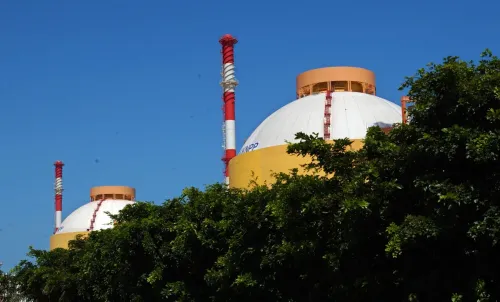
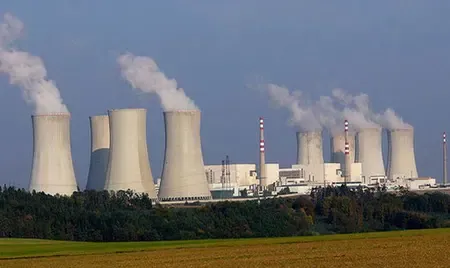
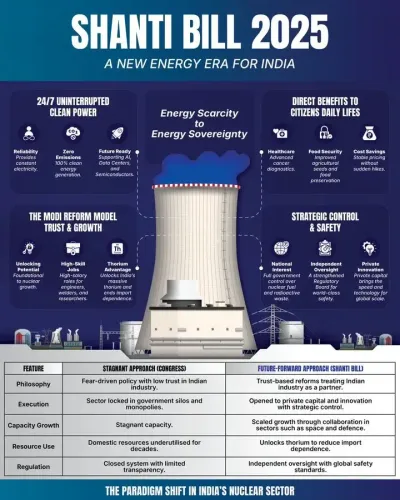
New Delhi, March 11 (NationPress) The Sustainable Harnessing and Advancement of Nuclear Energy for Transforming India (SHANTI) Bill of 2025 marks a significant advancement in enhancing India's nuclear power framework, as indicated by a report released on Wednesday.
Infomerics Ratings characterized the bill as a "structural long-term positive" development for the Indian energy sector, tackling persistent barriers to the expansion of nuclear capacity, notably issues related to liability and participation.
The anticipated growth in nuclear power is projected to be gradual, with an increase to approximately 22 Giga Watts (GW) by FY2032, factoring in both ongoing and planned projects, according to the firm.
The SHANTI Bill 2025 will supersede the Atomic Energy Act of 1962 and the Civil Liability for Nuclear Damage Act of 2010, establishing a comprehensive legal framework that addresses development, safety, security, safeguards, and nuclear liability.
This legislation allows government entities, companies, joint ventures, or other individuals specifically authorized by the central government to construct, own, operate, or decommission nuclear facilities as well as produce nuclear fuel, including its conversion.
With commitments to achieve net-zero emissions and growing electricity demand, nuclear energy emerges as a pivotal element in India's future energy landscape, especially as the intermittency of renewable resources inhibits their capacity to meet the consistent base load demand, even with storage solutions in place, the firm pointed out.
“The bill introduces operator liability caps categorized by type and limits recourse to suppliers to defined contractual and intentional fault scenarios, which mitigates supplier risk, enhances investor confidence, and encourages increased private sector involvement in upcoming nuclear initiatives,” stated Rohit Inamdar, Chief Ratings Officer at Infomerics Ratings.
Nonetheless, the report emphasized that the expansion of nuclear power capacities will also hinge on tariff competitiveness and the establishment of a domestic vendor ecosystem.
Crucial factors for the growth of nuclear capacity will include long-term sovereign-backed fuel supply agreements, the creation of strategic reserves, and the development of domestic fuel-cycle infrastructure, the firm noted.
aar/na
Point of View
I believe the SHANTI Bill 2025 signifies a crucial turning point for India’s energy policy, promoting nuclear energy as an essential component of our energy mix. It tackles historical challenges while paving the way for future investments, ensuring energy security and sustainability.
NationPress
20 Sept 2026
Frequently Asked Questions
What does the SHANTI Bill 2025 aim to achieve?
The SHANTI Bill 2025 aims to strengthen India's nuclear power framework by addressing liability issues and improving project execution to facilitate capacity expansion.
How will the SHANTI Bill impact nuclear energy investments?
The bill is expected to enhance investor confidence by reducing supplier risks and allowing greater private sector participation in nuclear projects.
What is the expected growth of nuclear capacity in India by FY2032?
Nuclear capacity in India is projected to increase to approximately 22 Giga Watts (GW) by FY2032, based on ongoing and planned projects.
What are the key features of the SHANTI Bill?
The SHANTI Bill replaces outdated laws, establishes a unified legal framework for nuclear energy development, and allows authorized entities to manage nuclear plants and fuel production.
What challenges remain for nuclear power expansion in India?
Challenges include ensuring tariff competitiveness and developing a robust domestic vendor ecosystem to support nuclear capacity growth.