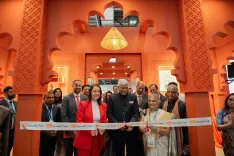
Sonowal visits Hanwha Ocean shipyard in South Korea under Maritime Amrit Kaal Vision 2047
Synopsis
India's shipping minister flew to one of the world's most capable shipyards to signal that the ₹69,725 crore Maritime Amrit Kaal Vision 2047 is more than a policy document. With a $4 billion HD Hyundai greenfield yard in Thoothukudi, KOMEA's first India office, and 400-plus vessel procurement on the horizon, New Delhi is making its most concentrated push yet to move from being a shipping consumer to a global shipbuilding force.
Key Takeaways
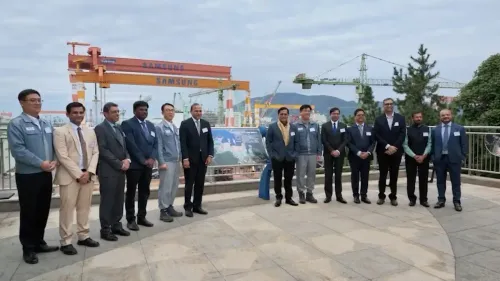
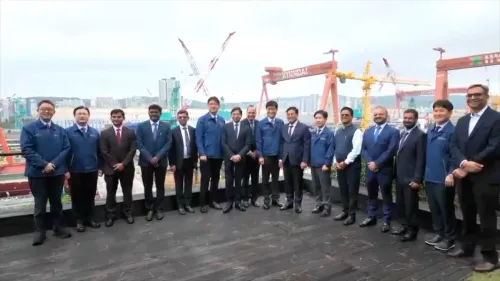
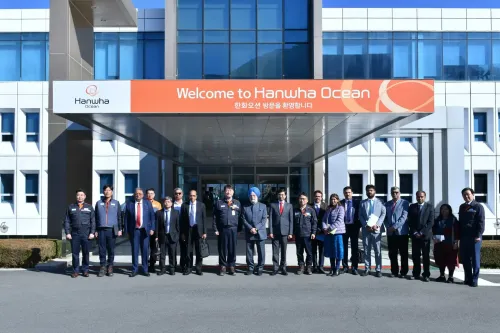
Sarbananda Sonowal visited the Hanwha Ocean shipyard in Geoje, South Korea on 3 November 2026 as part of the Maritime Amrit Kaal Vision 2047 .
The Union Cabinet has approved ₹69,725 crore to support India's goal of entering the top five global shipbuilding nations by 2047 .
HD Hyundai is developing a $4 billion greenfield shipyard in Thoothukudi, Tamil Nadu — set to be India's largest commercial shipyard.
The government plans to procure over 400 vessels worth nearly $23 billion over the next decade for public sector entities.
The updated SBFAS offers 15–25% capital support for domestically built vessels; KOMEA has opened its first Indian office in Mumbai .
MDL , GRSE , GSL , and CSL are all pursuing international technology and investment partnerships.
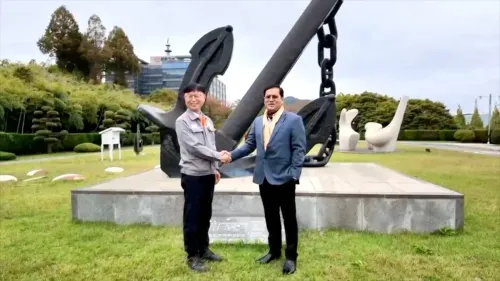
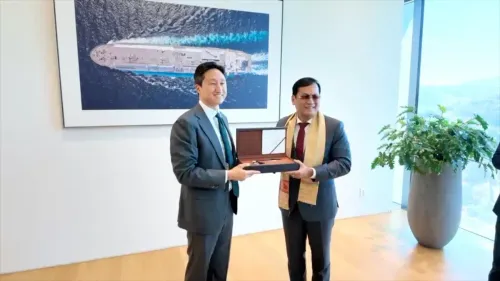
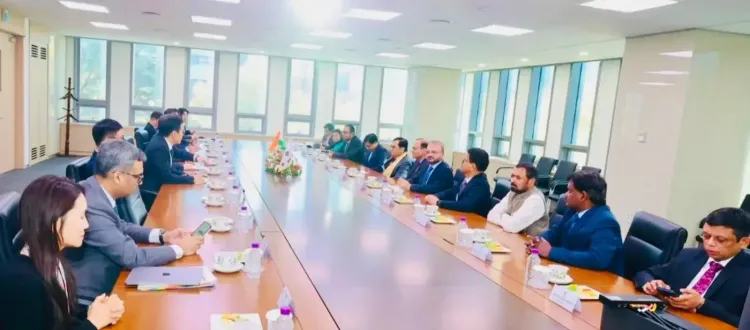
Union Minister for Ports, Shipping and Waterways Sarbananda Sonowal on 3 November 2026 visited the Hanwha Ocean shipyard in Geoje, South Korea, as part of the government's Maritime Amrit Kaal Vision 2047 — an ambitious plan to propel India into the top five global shipbuilding nations within the next two decades. During the visit, the minister met Chang-yong Kim, executive vice president of manufacturing at Hanwha Ocean, and received a firsthand briefing on the yard's operations.
Ravi Kumar M, ship surveyor-cum-deputy director general (technical) of the Directorate General of Maritime Administration (DGMA), accompanied the minister during the visit.
Inside One of the World's Premier Shipyards
The Hanwha Ocean Geoje shipyard spans approximately 4.9 million square metres and is equipped with a one-million-ton dock and a 900-ton Goliath crane. The facility constructs LNG carriers, VLCCs, mega container ships, FLNG units, offshore plants, and naval vessels including submarines. Notably, the yard delivered its 200th LNG carrier in February 2025 — a milestone that underlines its scale and technical capability.
The Indian delegation's visit signals continued momentum in the bilateral maritime engagement between India and South Korea, and comes at a time when New Delhi is aggressively pursuing global shipbuilding partnerships.
India's Shipbuilding Ambition and the ₹69,725 Crore Push
The Union Cabinet has approved a ₹69,725 crore outlay to operationalise the Maritime Amrit Kaal Vision 2047, with the Centre deploying these funds to attract global players — particularly from South Korea, Japan, and Europe — to anchor new manufacturing hubs and modernise existing yards.
South Korea has emerged as India's primary maritime partner under the VOYAGES framework signed in 2026. Under this framework, HD Hyundai signed an MoU to develop a $4 billion mega greenfield shipyard in Thoothukudi, Tamil Nadu, which is set to become India's largest commercial shipyard. India is also courting Samsung Heavy Industries and Hanwha Ocean for technical support and yard expansions.
Japanese and European Partners Also in the Frame
Beyond South Korea, the Ministry of Ports, Shipping and Waterways is in active discussions with major Japanese shipbuilders — including Imabari Shipbuilding, Japan Marine United Corporation (JMUC), and Mitsubishi Heavy Industries — to establish joint ventures with Indian yards.
On the European front, Damen Shipyards, Europe's largest private shipbuilder, is expanding existing joint ventures in India to manufacture electric tugs, ferries, and specialised vessels. Garden Reach Shipbuilders and Engineers (GRSE) Ltd has signed an MoU with Norway's Kongsberg Maritime, while Cochin Shipyard Limited (CSL) is expanding into green shipping and cruise tourism through MoUs with European firms including Germany's Everllence SE.
Domestic Yards and Supply Chain Developments
To reduce dependence on foreign shipping companies, the government plans to procure over 400 vessels worth nearly $23 billion over the next decade for public sector entities — giving foreign joint ventures substantial order-book visibility.
Supporting domestic production further, the updated Shipbuilding Financial Assistance Scheme (SBFAS) offers 15–25% capital support for vessels built in India. The Shipbuilding Development Scheme (SbDS) is focused on developing greenfield shipbuilding clusters with common infrastructure.
On the supply chain side, the Korea Marine Equipment Association (KOMEA) has opened its first Indian office in Mumbai to help component manufacturers set up local production alongside Indian yards. State-owned defence shipbuilders are also actively seeking global investors: Mazagon Dock Shipbuilders (MDL) is pursuing strategic partners for two proposed shipbuilding hubs in Maharashtra and Andhra Pradesh, while both GRSE and Goa Shipyard Limited (GSL) are pursuing advanced global technology integrations.
With Sonowal's Geoje visit, India's shipbuilding diplomacy is clearly moving beyond MOUs — the next milestone will be whether headline commitments translate into steel in the water.
Point of View
Japan, and Europe, backed by a ₹69,725 crore outlay and a 400-vessel procurement pipeline, suggests a more structurally serious attempt than previous iterations. The real test is execution: greenfield yards in India have historically taken far longer to commission than projected, and joint ventures often stall at the MoU stage. The VOYAGES framework and the HD Hyundai Thoothukudi deal will be early indicators of whether this cycle is different. If India can get even two or three of these partnerships to construction stage before 2030, the 2047 top-five target becomes credible.
NationPress
3 Nov 2026
Frequently Asked Questions
What is India's Maritime Amrit Kaal Vision 2047?
It is India's national maritime policy framework that aims to make the country one of the top five global shipbuilding nations by 2047. The Union Cabinet has approved a ₹69,725 crore outlay to fund the plan, which includes attracting foreign joint ventures, building greenfield shipyard clusters, and procuring over 400 vessels for public sector entities.
Why did Sarbananda Sonowal visit the Hanwha Ocean shipyard?
Sonowal visited the Hanwha Ocean facility in Geoje, South Korea, to get a firsthand view of world-class shipbuilding operations as part of India's push to court global partners under the Maritime Amrit Kaal Vision 2047. India is actively engaging Hanwha Ocean for technical support and yard expansion in Indian facilities.
What is the HD Hyundai shipyard project in Thoothukudi?
HD Hyundai has signed an MoU to develop a $4 billion mega greenfield shipyard in Thoothukudi, Tamil Nadu, which would become India's largest commercial shipyard. The deal was signed under the VOYAGES framework, through which South Korea became India's primary maritime partner in 2026.
Which Indian shipyards are seeking global partnerships?
Mazagon Dock Shipbuilders (MDL) is seeking strategic partners for two proposed hubs in Maharashtra and Andhra Pradesh. Garden Reach Shipbuilders and Engineers (GRSE) has signed an MoU with Norway's Kongsberg Maritime, Goa Shipyard Limited (GSL) is pursuing global tech integrations, and Cochin Shipyard Limited (CSL) is expanding into green shipping and cruise tourism through European partnerships.
How is the government supporting domestic shipbuilding financially?
The government offers 15–25% capital support for domestically built vessels under the updated Shipbuilding Financial Assistance Scheme (SBFAS). The Shipbuilding Development Scheme (SbDS) provides common infrastructure for greenfield clusters, while a plan to procure over 400 vessels worth nearly $23 billion over the next decade gives joint ventures long-term order-book visibility.