Has tax transfer to states surged by Rs 2.7 lakh crore in Budget 2026-27?
Synopsis
Discover how the 2026-27 Budget unveils a remarkable increase in tax transfers to states, with Finance Minister Nirmala Sitharaman highlighting key initiatives aimed at boosting economic growth and supporting various sectors. This budget aims to reinforce state resources while addressing critical areas like healthcare and education.
Key Takeaways
Tax transfer to states increased by Rs 2.7 lakh crore Total allocation stands at Rs 25.44 lakh crore 41% of net tax proceeds allocated to states Focus on high-value agriculture and horticulture Encouragement for states to propose key initiatives
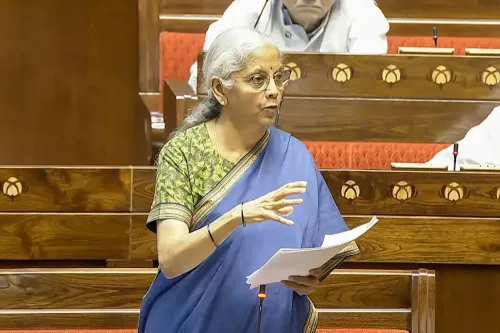
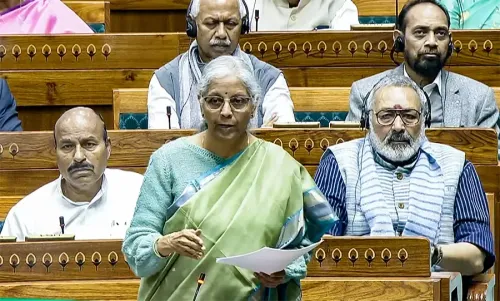
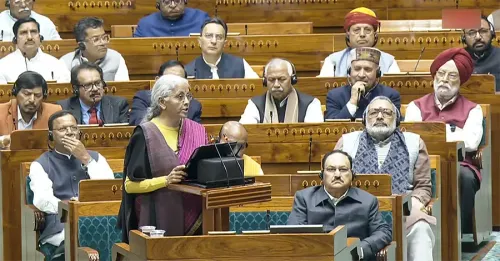
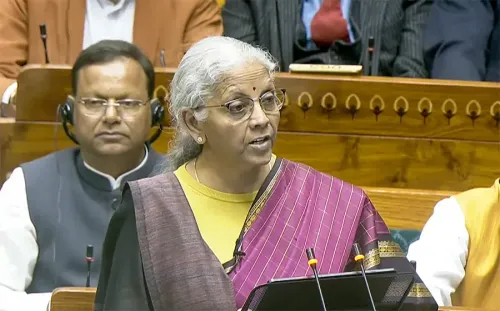
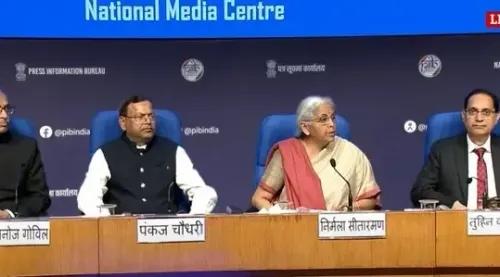
In New Delhi, on February 11 (NationPress), Finance Minister Nirmala Sitharaman announced that the overall resources allocated for transfer to the states, which encompasses the devolution of state tax shares and releases through centrally sponsored schemes in the Budget 2026-27, is projected to reach Rs 25.44 lakh crore. This marks an increase of Rs 2.7 lakh crore from the previous fiscal year, 2025-26.
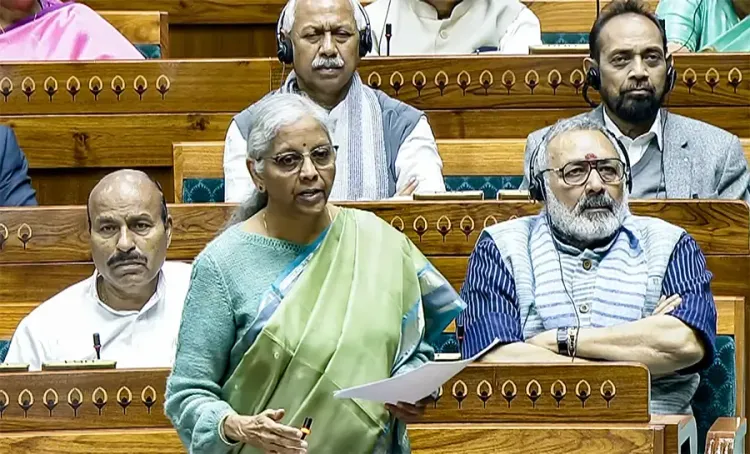
While addressing the Lok Sabha, she dismissed the Opposition's claims that the Centre has curtailed resource transfers to states, emphasizing that the funding allocated to states has indeed risen. All dues owed to the states have been duly transferred, leaving no room for doubt, she asserted.
The Finance Minister elaborated that 41 percent of the net tax revenues is being transferred to the states as per Constitutional guidelines, with figures being verified by the CAG.
Additionally, the cess collected under various categories, including health, education, and infrastructure, is also routed to the states. For example, funds from cess collections will benefit the states significantly.
The Budget for 2026-27 allocates a total capital investment of Rs 17.15 lakh crore, boasting a 4X multiplier effect aimed at bolstering economic growth towards a developed India.
She highlighted that the Centre's capital expenditure stands at Rs 12.22 lakh crore, which is 3.1 percent of the GDP, reflecting an 11.5 percent increase from the previous fiscal year.
With the transfers to states under various Centrally sponsored schemes, the capital expenditure of Rs 17.15 lakh crore accounts for 4.4 percent of GDP.
This further counters the opposition's allegation that the fiscal deficit has been curtailed to 4.3 percent in the Budget by slashing developmental spending.
She also affirmed that the Centre's schemes are accessible to all states, with no intention of excluding any. The Finance Minister encouraged state governments to seek assistance from the Centre for major initiatives such as mega food parks, IT parks, smart cities, and waterways.
“Any state can aspire—by navigating through the PM Gati Shakti filters—if they present a viable proposal. States can propose the establishment of Allied and Health Services hubs, aimed at creating medical centres. This initiative focuses on consolidating all facets of medical education and treatment facilities in one location, making it accessible to any state,” Sitharaman remarked.
This proposition is significant, particularly considering India's potential in medical tourism, as it will evolve into a hub for multi-purpose, multi-speciality Allied Health Services, further promoting medical tourism.
Furthermore, all states are eligible to join the initiative to create mega centres combining education and skill development for youth.
“These mega centres will empower students to become entrepreneurs, with the potential to be situated adjacent to any industrial hub in a state,” she noted.
“These centres will foster entrepreneurship as educational hubs, and we are prepared to collaborate with states to establish this vast higher education network,” she added.
The Finance Minister emphasized the budget's focus on labour-intensive sectors to allocate more resources for enhancement, while also addressing the revitalization of legacy industries.
She pointed out that the budget prioritizes high-value agriculture and horticulture, particularly in promoting coconuts, which is set to benefit 1 crore farmers.
The agricultural sector will receive significant attention through digital initiatives like the Agri stack, which will encompass comprehensive data on soil and fertilizer to enhance productivity and farmer earnings. This stack will provide insights into scientific farming practices, including quality seed usage and timely irrigation.
Point of View
The budget underscores a proactive approach to economic development, promoting collaboration between the Centre and states. NationPress remains committed to delivering unbiased insights on governmental initiatives.
NationPress
27 Sept 2026
Frequently Asked Questions
What is the total tax transfer to states for Budget 2026-27?
The total resources allocated for transfer to states in Budget 2026-27 are estimated at Rs 25.44 lakh crore.
How much has the tax transfer increased from the previous year?
The tax transfer has increased by Rs 2.7 lakh crore compared to 2025-26.
What percentage of net tax proceeds is transferred to states?
41 percent of the net proceeds of taxes are transferred to the states as per Constitutional norms.
How does the Budget support the agricultural sector?
The Budget focuses on high-value agriculture and horticulture, aiming to benefit 1 crore farmers with digital support through initiatives like the Agri stack.
What initiatives are being introduced to boost state economies?
The Budget invites states to propose mega food parks, IT parks, smart cities, and health services hubs to enhance economic growth.